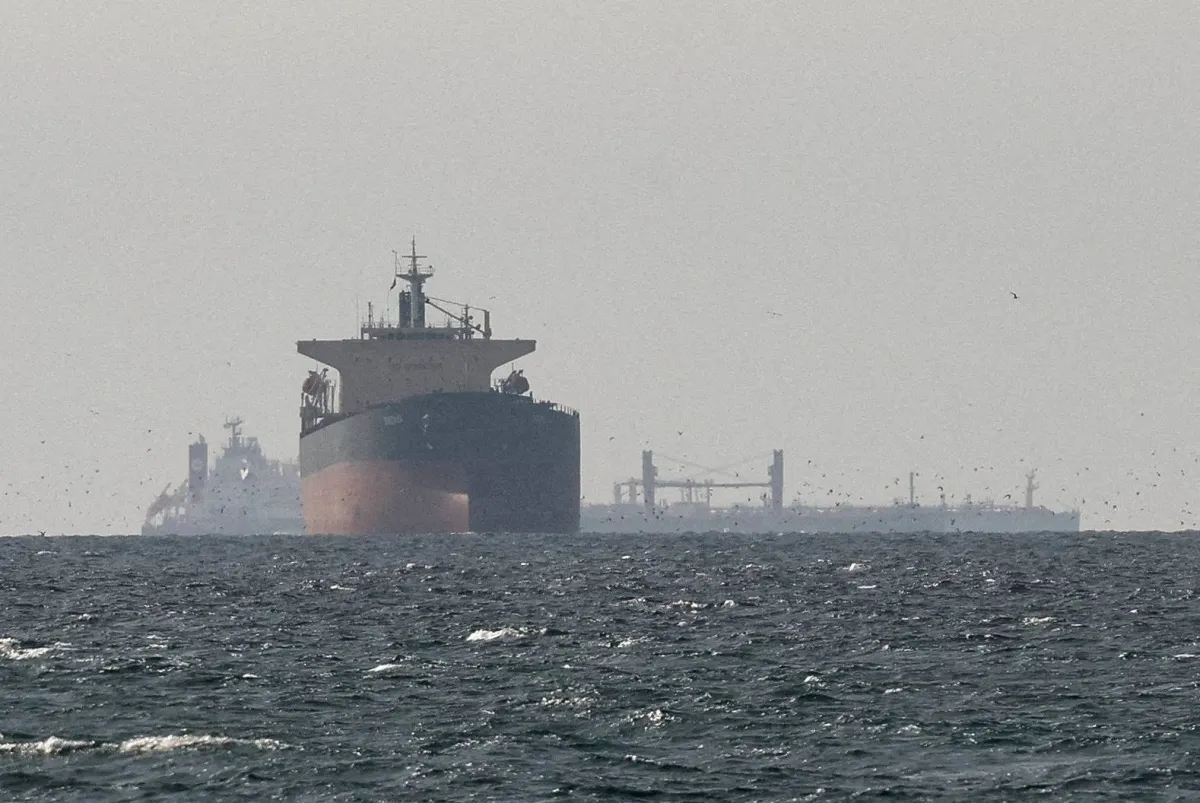
Britain is preparing to equip the Royal Navy's amphibious assault ship, 'Lime Bay', with advanced drone systems designed for mine detection and removal, as part of its efforts to help reopen the vital Strait of Hormuz to international shipping.
According to a report published by the Times, Britain announced last week the deployment of the ship, which was undergoing routine maintenance in Gibraltar, to the Mediterranean Sea for military exercises. However, informed sources reported that British Defense Minister Gavin Williamson has approved plans to send the ship to the Strait of Hormuz to assist in mine clearance.
Details of the Deployment
The ship will be equipped with “rapidly deployable” systems, including underwater drones and specialized boats for detecting and dismantling mines while docked at the port of Gibraltar. A defense source confirmed to the newspaper that “no decision” has yet been made regarding the ship's deployment to the Strait of Hormuz, but added: “This precautionary step gives ministers options if necessary to help resume commercial shipping normally.”
The Strait of Hormuz is a vital shipping route, through which about one-fifth of the world's oil passes. The corridor was closed to commercial vessels on March 2 after the Iranian Revolutionary Guard announced its complete control over the waterway two days later. Iran threatened to set fire to ships attempting to pass, escalating tensions in the region.
Background & Context
Since the onset of the war in Iran, up to 16 ships have been attacked in the Strait of Hormuz, resulting in at least three fatalities. U.S. intelligence assessments indicate that there are about 12 mines in the waterway, including “Mission 3” and “Mission 7” mines, which operate by attaching to the hulls of ships.
There are also concerns that Iran's small submarines, known as Ghadir, could further restrict trade through the strait. In this context, the United States has bolstered its military presence in the Middle East, with approximately 3,500 soldiers and sailors aboard the amphibious assault ship USS Tripoli, reflecting ongoing efforts to protect navigation in the region.
Impact & Consequences
The blockade of the Strait of Hormuz has had significant economic repercussions, with oil prices rising to around £85 per barrel compared to £50 before the crisis, while approximately 2,000 ships remain trapped within the Gulf. The British government is considering providing financial support to families to cope with rising energy costs if the war continues.
In this context, U.S. President Donald Trump stated that negotiations with Iran are “going very well,” announcing an extension of the deadline given to Tehran to reopen the strait, despite its continued denial of any negotiations with Washington. These moves come after U.S. calls for Britain and its allies to engage more in securing the shipping lane.
Regional Significance
These developments are of great importance to the Arab region, as the Strait of Hormuz is a vital artery for oil and gas trade. Any escalation in tensions could directly affect energy prices and increase economic pressures on energy-importing Arab countries.
In conclusion, the situation in the Strait of Hormuz remains under observation, with military and political maneuvers expected to continue as part of efforts to secure navigation and ensure regional stability.