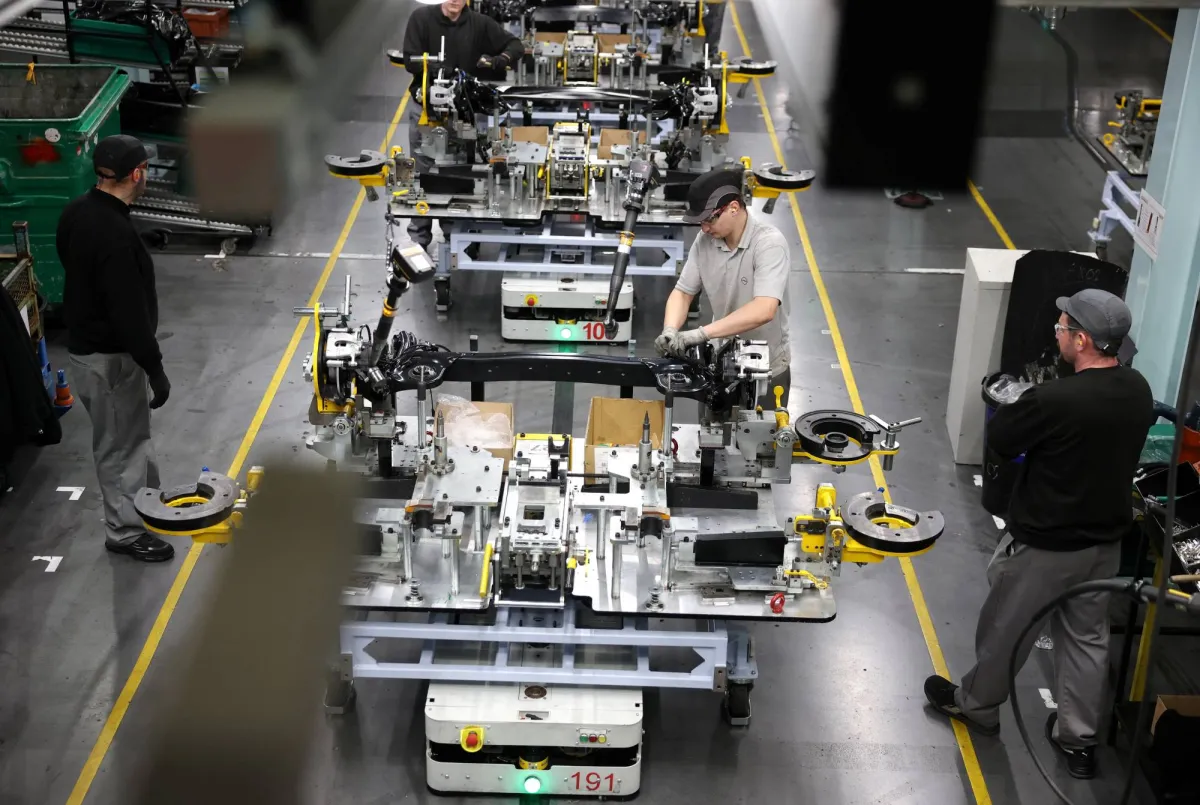
British factory cost pressures rose sharply in March, with delivery delays reaching their highest levels since mid-2022 due to ships avoiding the Hormuz Strait. These developments come amid escalating conflict in the Middle East and its direct impact on the British economy.
According to a survey conducted by Standard & Poor's Global, the British manufacturing Purchasing Managers' Index (PMI) for March dropped to 51.0, compared to the preliminary estimate of 51.4, and down from 51.7 in February. The production index also fell to 49.2, marking its first contraction since September, as new orders growth slowed.
Details of the Event
The cost of manufacturing inputs recorded its fastest increase since October 2022, reaching 71.0, the largest monthly jump since October 1992. This rise is primarily attributed to increasing oil and gas prices, along with rising transportation costs due to the escalating conflict in the region.
Product prices also saw their highest increase in nearly a year, as manufacturers began passing on their rising costs to consumers. Rob Dobson, director of global market information at Standard & Poor's, explained that the war in the Middle East and ongoing concerns about domestic economic policy have led to a contraction in production.
Background & Context
These disruptions come at a sensitive time, as the UK has already experienced a slowdown in economic growth. The US and Israeli attacks on Iran in late February led to the closure of the Hormuz Strait, directly affecting maritime traffic and global trade.
This region is considered one of the most critical maritime corridors in the world, through which approximately one-fifth of global liquefied natural gas flows. Therefore, any disruptions in this area significantly impact the global economy, including the British economy.
Impact & Consequences
Data indicates that the Bank of England faces significant challenges under these circumstances, with investors expecting interest rate hikes two or three times this year to try to contain inflation resulting from the war. However, most economists believe the bank may prefer to wait until the impact of the conflict on the British economy becomes clearer.
The manufacturing employment PMI has also declined for the seventeenth consecutive month, reflecting a decrease in business optimism about the future. UK government bond yields have sharply declined, reflecting reduced investor expectations regarding interest rate hikes.
Regional Significance
These disruptions directly affect Arab countries, as the Gulf region is one of the most important oil and gas exporting areas. Any escalation in conflict could lead to rising energy prices, impacting the economies of Arab countries and increasing inflationary pressures.
Moreover, a decline in demand for gas and oil from major countries could affect Arab exports, necessitating a reassessment of their economic strategies.
In conclusion, these developments indicate that the situation in the Middle East remains unstable, requiring concerned countries to take proactive measures to address potential economic challenges.