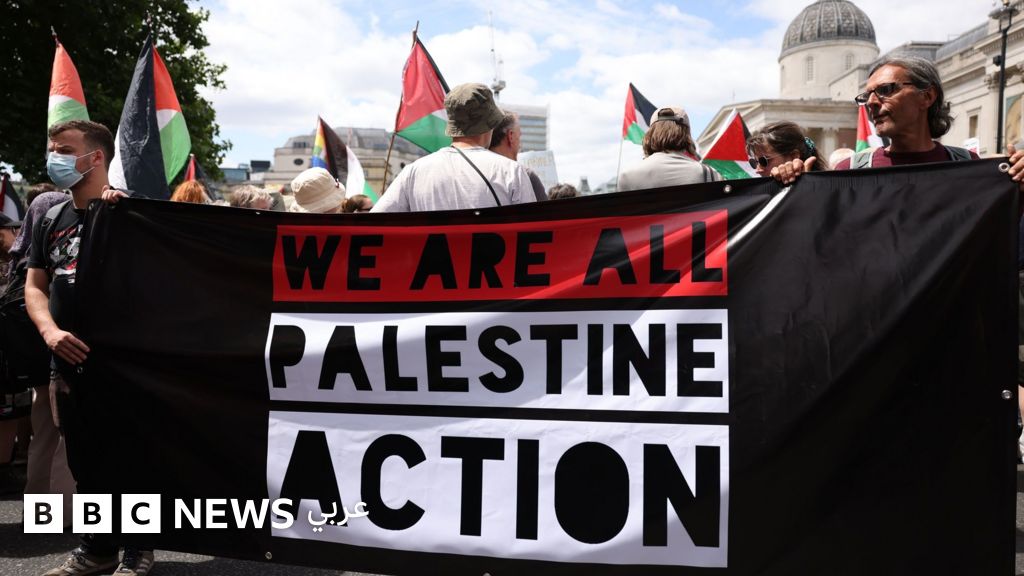
The Metropolitan Police in London announced they will resume arrests of demonstrators expressing support for the banned group Palestine Action, despite a Supreme Court ruling that deemed the ban under anti-terrorism laws illegal. This decision comes at a time when the government’s appeal against the judicial ruling is still ongoing, raising questions about freedom of expression and protest in the United Kingdom.
In a statement, Deputy Assistant Commissioner James Harman confirmed that supporting Palestine Action is still considered a crime, noting that the police are obliged to enforce the law as it stands now, not as it may be in the future. He explained that the Supreme Court found that Palestine Action's activities did not reach the threshold required to classify it as a terrorist organization, but the ban remains in effect until the government’s appeal is heard.
Details of the Event
In a ruling issued last month, the Supreme Court determined that Palestine Action had used illegal methods to promote its goals, but did not exceed the limits that would classify it as a terrorist organization. Home Secretary Shabana Mahmood expressed her disappointment with this ruling and confirmed that the government would appeal. Since the group was banned last summer, over 2,700 individuals have been arrested for supporting it, sparking widespread debate about freedom of expression in the country.
The Supreme Court confirmed that the impact of the ruling will not take effect until the appeal is considered, meaning arrests will continue. Trials for hundreds of individuals accused of possessing signs supporting Palestine Action have been postponed pending the outcome of the appeal.
Background & Context
Palestine Action was founded in 2020, aiming to support Palestinian rights through protests and direct actions. The group has sparked significant controversy in the UK, with some viewing it as a voice for justice, while others see it as a threat to public safety. The ban on the group came amid rising tensions surrounding the Palestinian issue, with recent years witnessing an increase in protests against Israeli occupation.
In 2000, the Anti-Terrorism Act was enacted, allowing the government to ban organizations it deems a threat to security. However, the application of this law to Palestine Action has raised questions about the extent to which the government uses its powers to suppress freedom of expression.
Impact & Consequences
The recent decision by the British police reflects the growing tension between the government and the rights of protesters. While the government seeks to maintain public order, many believe these measures represent a violation of fundamental human rights. The continuation of arrests may exacerbate protests and increase social polarization in the UK.
This situation may also affect relations between the UK and Arab countries, where support for Palestinian rights is viewed as a central issue. Any actions perceived as suppressing freedom of expression could lead to negative reactions from governments and peoples in the region.
Regional Significance
The Palestinian issue is one of the most sensitive topics in the Arab world, symbolizing the struggle against occupation. The British government's continued arrests of Palestine Action supporters may be seen as implicit support for Israeli policies, potentially escalating tensions between Arab nations and the UK.
At the same time, these events may encourage increased Arab solidarity with the Palestinian cause, as many activists in the Arab world express their support for Palestine Action. The continuation of this dynamic could strengthen Palestinian advocacy efforts on the international stage.