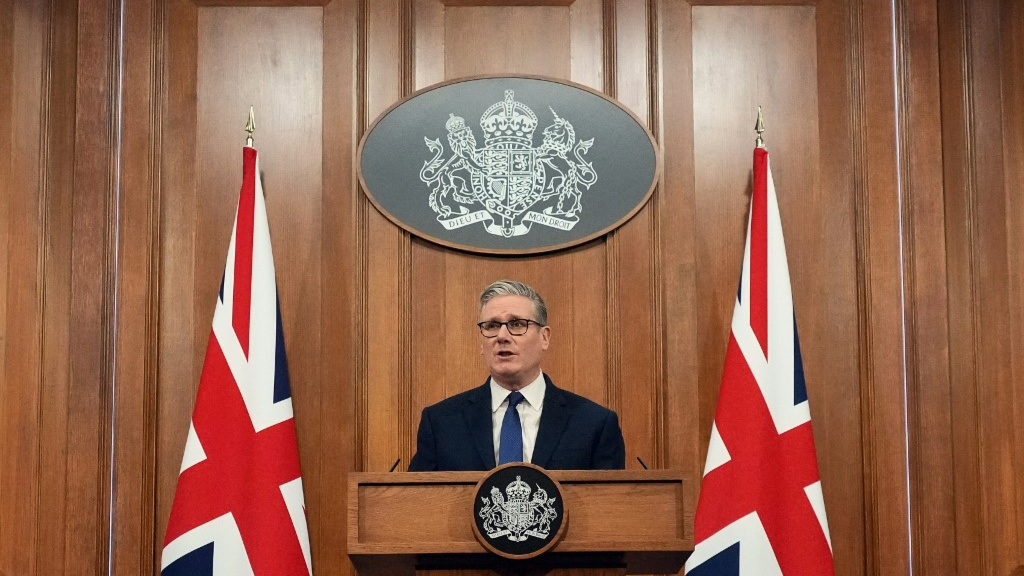
In light of escalating tensions in the Middle East, British Prime Minister Keir Starmer confirmed that the UK will not engage in the ongoing conflict between the US and Iran. This statement was made during a press conference at Downing Street, where he announced plans to enhance maritime security in the Gulf.
Starmer, who appeared tired and serious while wearing a blue tie, spoke from the Downing Street podium, emphasizing that Britain has not been drawn into US-Israeli military operations. He noted that the UK has convened with 35 countries to unify efforts in enhancing maritime security in the Gulf region.
Details of the Event
During his speech, Starmer stated, "This is not our war," addressing citizens' concerns about the UK's involvement in the conflict. He explained that the British government is working to ensure the safety of the Strait of Hormuz, which is under the effective control of Iran, and that this task will not be easy. He also announced that the British Foreign Secretary will hold a meeting with concerned nations later this week.
Meanwhile, Starmer pointed out the presence of 23 long-range US bombers at RAF Fairford, which are being used as a launch base for military operations against Iran. This situation has raised concerns among many Britons, with some viewing it as indirect involvement in the conflict.
Context and Background
These remarks come at a sensitive time, as tensions between Iran and the US escalate, following the UK's allowance for the US to use its military bases to target Iranian sites. The Iranian Foreign Minister has warned that this is considered "participation in aggression," increasing the likelihood of Iranian retaliation.
The Iranian ambassador to London, Seyed Ali Mousavi, stated that Tehran is considering the possibility of targeting British bases as a form of response to US military escalation. These statements reflect the growing tensions in the region, where fears of military escalation could impact both regional and international security.
Impact and Consequences
Concerns are rising that these tensions could lead to military escalation affecting regional and international security. Starmer indicated that how the UK navigates this crisis will determine the country's future for decades to come. He also confirmed that the government is investing in clean energy to enhance the UK's energy security.
While US President Donald Trump speaks of the imminent end of the war, Starmer warned that easing tensions does not necessarily mean reopening the Strait of Hormuz. This statement reflects a deep understanding of the geopolitical dimensions of the current crisis.
Impact on the Arab Region
These developments directly affect Arab countries, especially those that rely on the Strait of Hormuz as a vital route for oil transportation. Any military escalation in the region could lead to rising oil prices and impact Arab economies.
Ultimately, the question remains about how Arab countries will respond to these tensions and whether they will take steps to enhance their security and stability amid these changing circumstances.