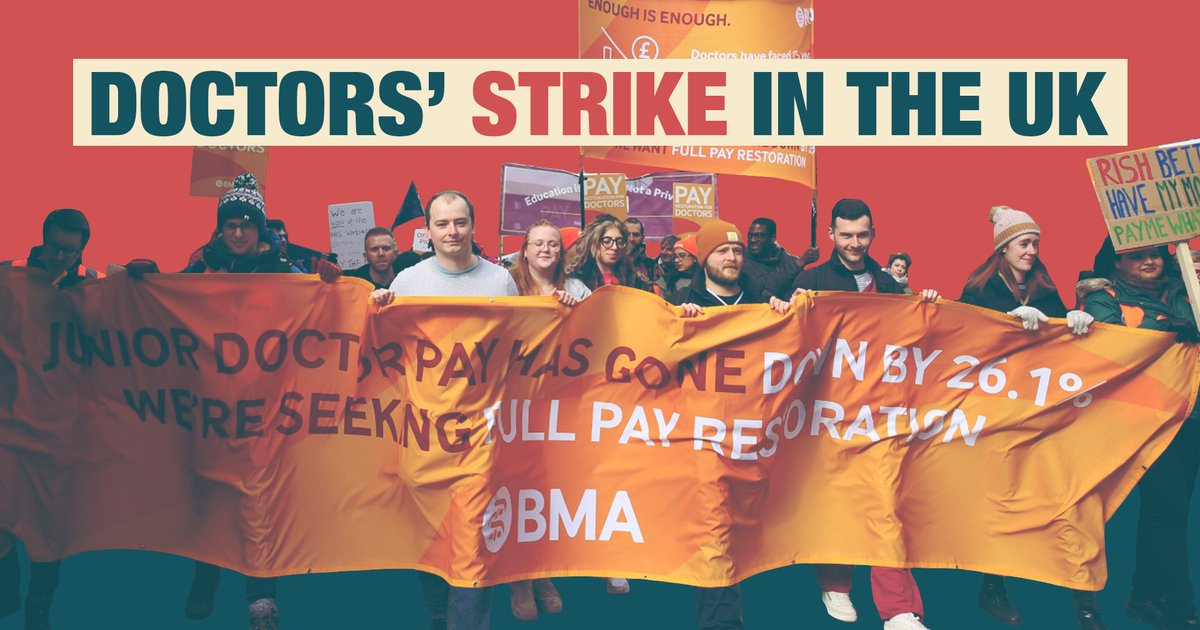
British Prime Minister Keir Starmer has announced a 48-hour deadline for the British Medical Association (BMA) to end the planned strike by junior doctors in England, which is set to last for six days following Easter. This warning comes after negotiations between the government and doctors broke down, prompting the association to decide on the strike, marking the fifteenth in a series of ongoing disputes.
In an article published in The Times, Starmer described the association's decision to reject the offer made to them as "reckless." He noted that junior doctors would receive a 3.5% salary increase this year, which he deemed insufficient given the rising inflation rates expected due to the ongoing conflict with Iran.
Details of the Strike
The proposed salary increase is part of a comprehensive package aimed at improving working conditions for junior doctors. The government had anticipated providing an additional 1000 training opportunities this year as part of a plan to create at least 4000 new specialty positions over the next three years. The government had also pledged to cover expenses related to examinations and expedite progress on the salary scale for junior doctors.
Despite previous increases totaling around 30% over the past three years, the BMA asserts that junior doctors' salaries remain 20% lower than they were in 2008 when adjusted for inflation. Doctors have pointed out a shortage of job opportunities when transitioning to specialty training in their third year, where they must choose their field of specialization.
Background & Context
Negotiations between the government and the BMA have been ongoing since the beginning of the year, following two strikes in November and December of last year. Health Secretary Wes Streeting has expressed his inability to offer further increases to junior doctors, citing previous raises.
Junior doctors are considered a vital part of the National Health Service (NHS), representing about half of the doctors working within the system, with two-thirds being members of the BMA. The strike is expected to commence at 7 AM British Summer Time on Tuesday, making it the longest joint strike in the history of the dispute.
Impact & Consequences
This crisis raises numerous questions about the future of the healthcare system in Britain, as pressures mount on the government to meet doctors' demands. The strike serves as a warning to the government that doctors will not accept less than their rights amid challenging economic conditions.
If the strike continues, it could delay healthcare services and negatively impact patients who rely on healthcare. Additionally, the loss of additional training opportunities may exacerbate the shortage of doctors in the future.
Regional Significance
Arab countries are also affected by such health crises, as many suffer from a shortage of medical personnel. Britain's experience in handling doctors' strikes may serve as a lesson for Arab nations facing similar challenges in their healthcare systems.
In conclusion, hope remains that the government and the British Medical Association can reach an agreement that satisfies all parties, ensuring the continuity of healthcare services while safeguarding doctors' rights.