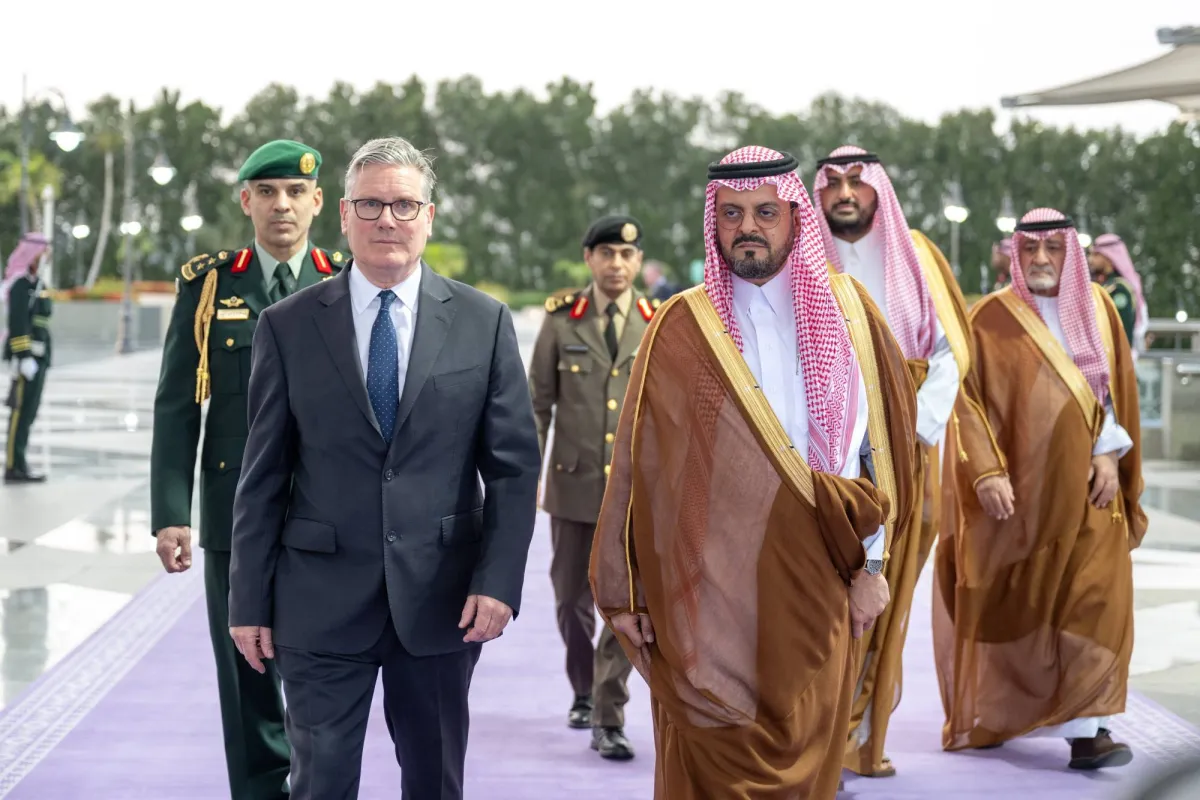
British Prime Minister Keir Starmer arrived in Jeddah on Wednesday, where he was greeted by Prince Saud bin Mishal bin Abdulaziz, Deputy Governor of the Makkah Region, and Prince Abdullah bin Khalid bin Sultan bin Abdulaziz, the Saudi Ambassador to the United Kingdom. He was also welcomed by several officials, including Saleh Al-Turki, Secretary of Jeddah Province, and Major General Saleh Al-Jabri, Director of Police for the Makkah Region.
The Prime Minister's office reported that Starmer will visit Gulf countries to hold talks with regional leaders, aiming to strengthen the ceasefire following the agreement reached between the United States and Iran. Starmer expressed his support for this agreement, highlighting its significance in easing tensions in the region and globally.
Details of the Visit
Starmer's visit comes at a sensitive time, as the region has witnessed an escalation in Iranian attacks on several Gulf countries, despite the declaration of a ceasefire. Iran has launched 94 drones and 30 missiles towards Gulf nations, raising deep concerns about the stability of the region. A significant number of these drones and missiles have been intercepted by air defenses in Kuwait, Bahrain, and the United Arab Emirates.
In this context, Dr. Khalid Al-Habbas, a Saudi political analyst, asserted that the continuation of Iranian attacks indicates the fragility of the truce and points to ongoing aggressive behavior from Tehran towards Gulf states. He also emphasized the need to reconsider the current diplomatic efforts, especially with Pakistan as a mediator.
Background & Context
These developments occur amid rising tensions between Iran and the United States, as the latter seeks to enhance regional stability through diplomatic agreements. Relations between Gulf states and Iran have seen increasing tensions over the past years, leading to repeated military escalations.
Historically, the Gulf region has been prone to conflicts and disputes, with major powers playing a role in influencing events. The current agreements aim to achieve long-term stability, but the ongoing Iranian attacks raise questions about the effectiveness of these efforts.
Impact & Consequences
These events directly affect regional security, as Iranian attacks pose a threat to the national security of Gulf states. Furthermore, the continued escalation may lead to negative economic repercussions, especially in the energy sector, which is the lifeblood of Gulf economies.
Moreover, ongoing tensions could impact relationships between major powers, complicating peace efforts in the region. It is crucial for Gulf states to collaborate with international partners to ensure regional stability.
Regional Significance
These developments are of great importance to the Arab world, reflecting the security and political challenges faced by Arab nations. Strengthening cooperation among Arab countries to confront common threats is essential for maintaining security and stability.
In conclusion, hopes remain that Starmer's visit will contribute to enhancing peace efforts and achieving lasting stability in the region, despite the existing challenges.