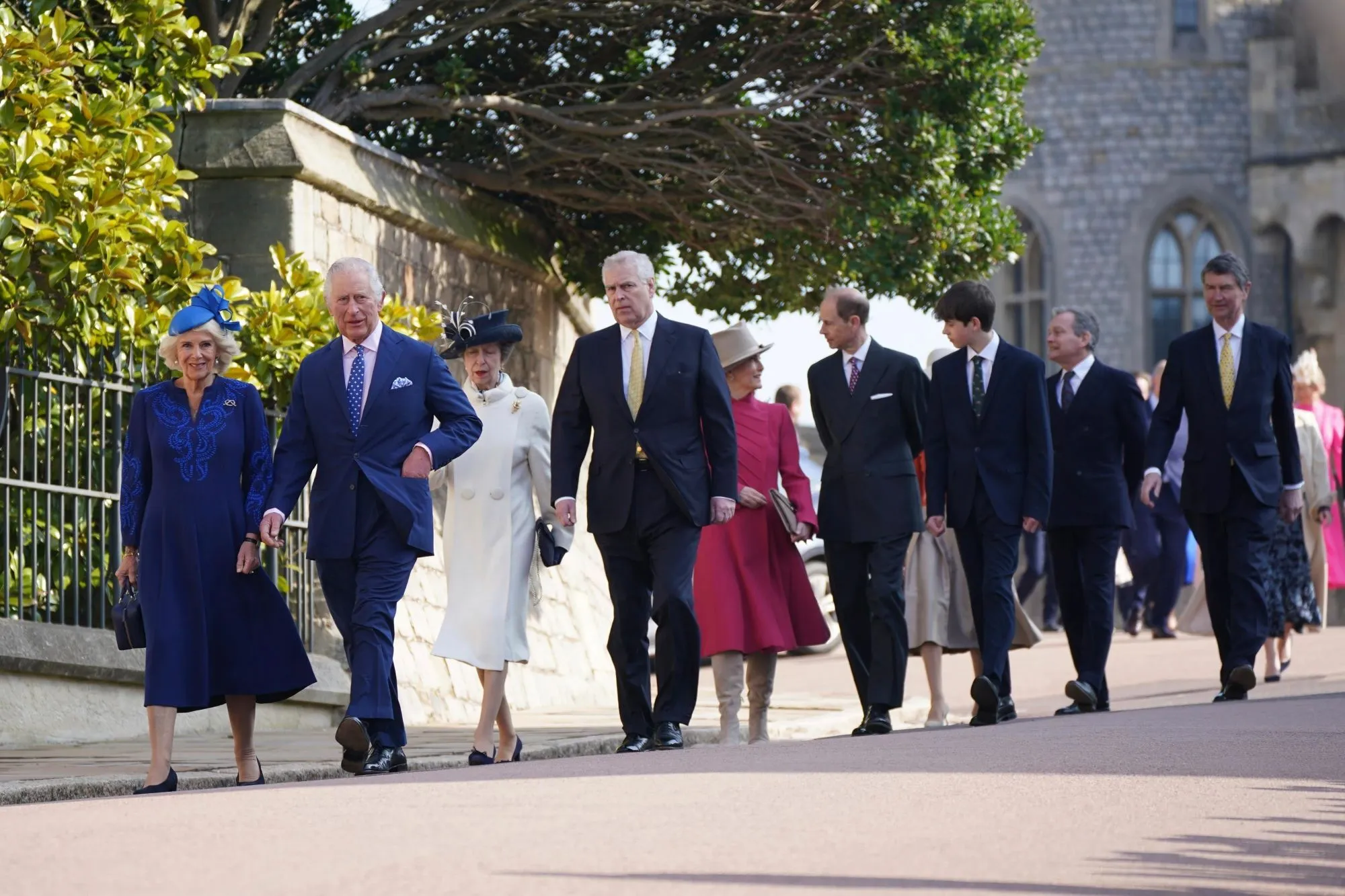
The Easter service at St. George's Church in Windsor was graced by the presence of King Charles and Queen Camilla, accompanied by several members of the royal family. Despite the absence of Prince Andrew and his family, who attended last year's celebration, the atmosphere was filled with joy and interaction with the gathered crowds.
Prince William and Princess Kate brought their children to the church, where Princess Charlotte waved to the fans behind the barriers. Also present were Princess Anne and her husband Sir Timothy Laurence, along with Prince Edward and his family.
Details of the Event
The Easter service is considered more of a family tradition than an official event, as King Charles did not issue an Easter message this year. The King and Queen also attended the traditional Maundy service in Denbighshire, Wales, which honors the Last Supper and emphasizes humility and service to others.
During that occasion, the King presented gifts to 77 men and 77 women from the United Kingdom in recognition of their outstanding Christian services and support for their communities. This event showcases the royal family's commitment to humanitarian and social values.
Background & Context
Prince Andrew, who has been stripped of his royal title, remains under investigation following allegations of misconduct related to his public role. He has moved to live in Sandringham, Norfolk. These developments come amid the Jeffrey Epstein scandal, where questions about his connections with the American offender persist.
Prince Andrew denies any wrongdoing concerning his relationships with Epstein, complicating his family and royal situation. His absence from the Easter service reflects ongoing tensions within the royal family.
Impact & Consequences
These events illustrate how the royal family is facing both internal and external challenges, impacting its public image. The absence of Prince Andrew and his family from the traditional celebration may affect family ties and reflects changes in royal dynamics.
Moreover, the appearance of the King and Queen at such occasions signifies their desire to strengthen connections with the British public, especially during times of crisis. These dynamics may influence how the public perceives the royal family in the future.
Regional Significance
Although this event may seem distant from the Arab region, the values represented by King Charles and Queen Camilla in community service and humility could inspire many Arab countries. Amid the challenges facing the region, these values can serve as a model to emulate.
The call from Archbishop Justin Welby, the new Archbishop of Canterbury, to end violence and destruction in the Middle East reflects global trends towards peace, highlighting the importance of international cooperation in achieving stability.