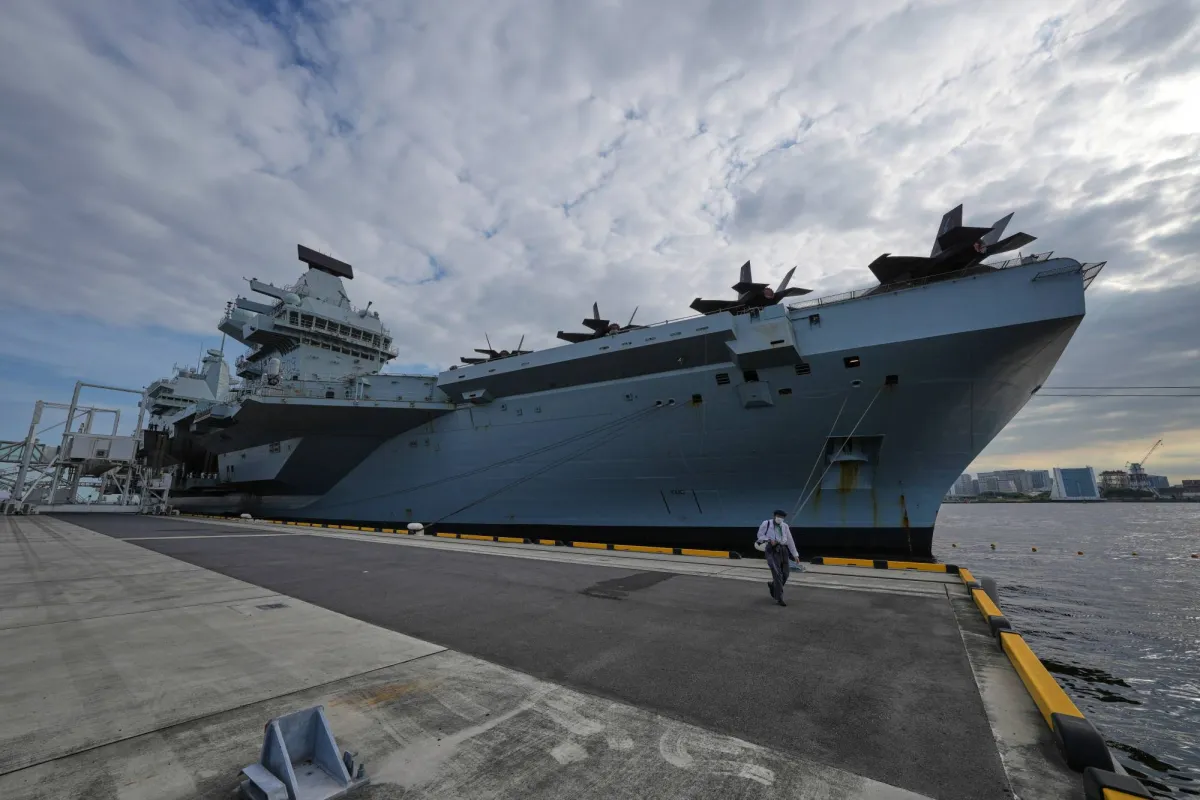
The British Royal Navy is facing sharp criticism from U.S. President Donald Trump and his Defense Secretary Pete Hegseth, as its capabilities have notably declined since the Cold War. This situation has sparked calls for increased defense spending in light of rising international threats.
Historically, the United Kingdom was considered a great naval power, but the current situation reflects a significant decline in its capabilities. Trump pointed out that the British Navy has become weak, describing its two aircraft carriers as "toys," reflecting his dissatisfaction with Prime Minister Keir Starmer not granting the U.S. military access to British bases at the onset of the war with Iran.
Details of the Incident
On February 28, war broke out with Iran, and Starmer refused to grant the United States the right to use British bases, which angered Trump. Although the decision was partially reversed, Trump continued to criticize Starmer, indicating that the British Navy is no longer what it used to be.
Hegseth, for his part, mocked the Royal Navy, suggesting it needs to engage in securing the Strait of Hormuz. However, the Royal Navy is not as weak as Trump implies; it is considered comparable to the French Navy in terms of capabilities.
Background & Context
Since World War II, the size of the British fleet has significantly decreased, with the number of combat ships dropping from 466 in 1975 to an expected 66 ships by 2025. This decline reflects the military and technological changes witnessed globally, alongside the end of the British Empire.
Historically, Britain spent between 4 to 8 percent of its national income on the military, but this percentage has significantly decreased since the end of the Cold War, reaching 1.9 percent of GDP in 2018. This decline in defense spending has provided Trump with additional material for his criticisms.
Impact & Consequences
As international threats escalate, political awareness in Britain is beginning to shift, with the British government reconsidering its defense budget. Following the Russian invasion of Ukraine, the Conservatives have started to gradually increase military spending, while Starmer aims to raise defense spending to 2.5 percent of GDP by 2027.
However, financial challenges remain, especially in light of the economic repercussions stemming from the war with Iran. Significant investments in military equipment are required, raising questions about how to secure these funds.
Regional Significance
The Arab region is significantly affected by the decline in British military capabilities, as tensions in the Middle East are on the rise. The instability in the region, particularly in light of Iranian threats, underscores the urgent need for greater military cooperation between Arab countries and Britain.
In conclusion, the future of the British Royal Navy remains in question amid increasing American criticisms and internal pressures to boost defense spending. The challenges facing the British Navy could impact its role in the region, necessitating a reevaluation of defense and security strategies.