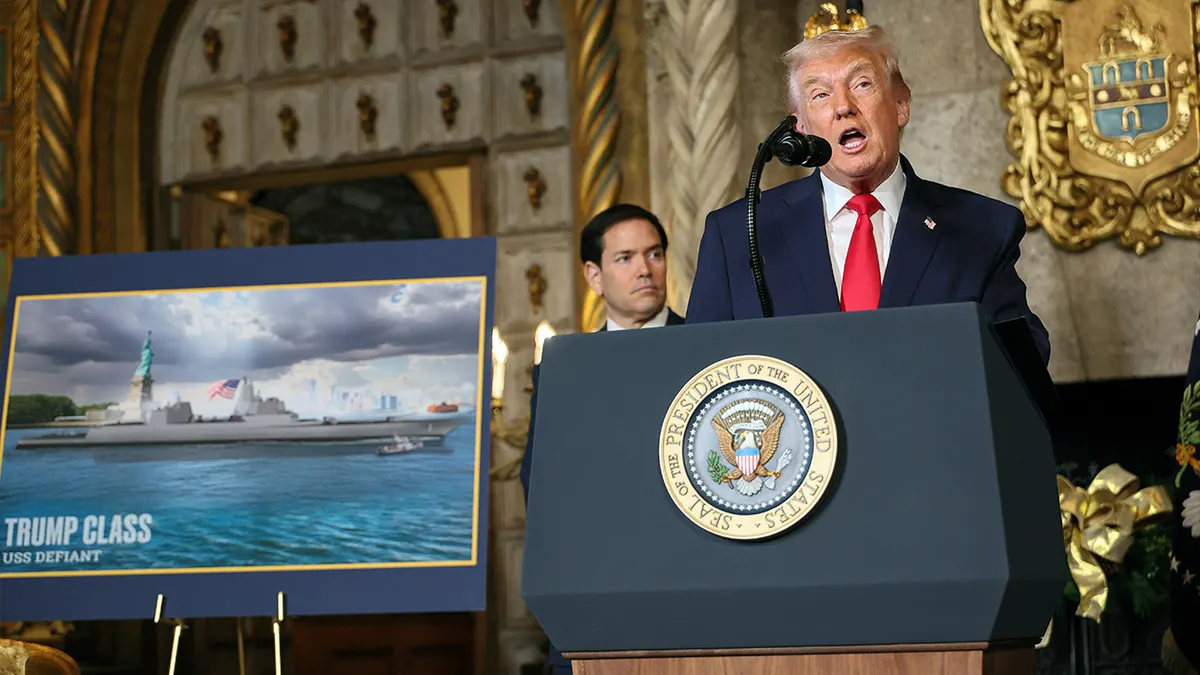
The British Royal Navy is under repeated criticism from political and media figures, most notably former U.S. President Donald Trump and political analyst Beth Higgsit. This criticism comes at a sensitive time for the Navy, which is facing significant challenges regarding its ability to address increasing threats on the international stage.
In recent years, the Royal Navy has undergone significant changes in its strategies and operations, raising questions about its efficiency and capability to confront rising security challenges. The criticisms directed at it by Trump, concerning the perceived weakness of naval power, reflect a broader concern about the ability of major powers to maintain their security amid escalating tensions.
Details of the Criticism
Trump's criticisms come in the context of his discussions about the importance of strengthening U.S. military power, where he noted that the Royal Navy is not what it used to be. These statements were not surprising, as Trump is known for his critiques of many of the United States' traditional allies, raising questions about the future of military relations between the two nations.
On the other hand, Higgsit, who works as a political analyst, expresses concerns regarding the Royal Navy's ability to carry out its missions under limited budgets and aging technologies. This criticism arises at a time when the Royal Navy is striving to modernize its fleet and expand its capabilities, which requires substantial investments in technology and training.
Background & Context
Historically, the British Royal Navy has been one of the strongest naval forces in the world, playing a pivotal role in numerous military conflicts. However, in recent years, it has seen a decline in its budget and operational capacity, affecting its ability to maintain an effective presence in international waters.
This criticism coincides with rising geopolitical tensions in areas such as the South China Sea and the Middle East, where major powers are competing for influence. In this context, the Royal Navy is considered an essential part of British defense strategy, making the criticisms it faces even more significant.
Impact & Consequences
The criticisms directed at the Royal Navy could impact Britain's image as a global military power. If these criticisms persist, it could lead to a loss of confidence in the Navy's ability to protect British interests abroad. Additionally, these criticisms may affect military relations with the United States, which relies on close cooperation with allies.
Moreover, these criticisms could lead to calls within the British Parliament for an increase in the defense budget, which may affect the government's priorities in other areas such as health and education. Given the current economic crises, it may be challenging for the British government to meet these demands.
Regional Significance
While the British Royal Navy faces internal challenges, the situation in the Arab region remains complex. The tensions in the Middle East require a strong military presence from major powers, including Britain. If the Royal Navy continues to face criticism, it may impact its ability to effectively participate in peacekeeping operations or intervene in regional crises.
In conclusion, the British Royal Navy remains at the heart of discussions surrounding security and defense, as current challenges demand an effective and robust response. The ongoing criticisms may serve as an indicator of the need to reassess British defense strategies in a rapidly changing world.