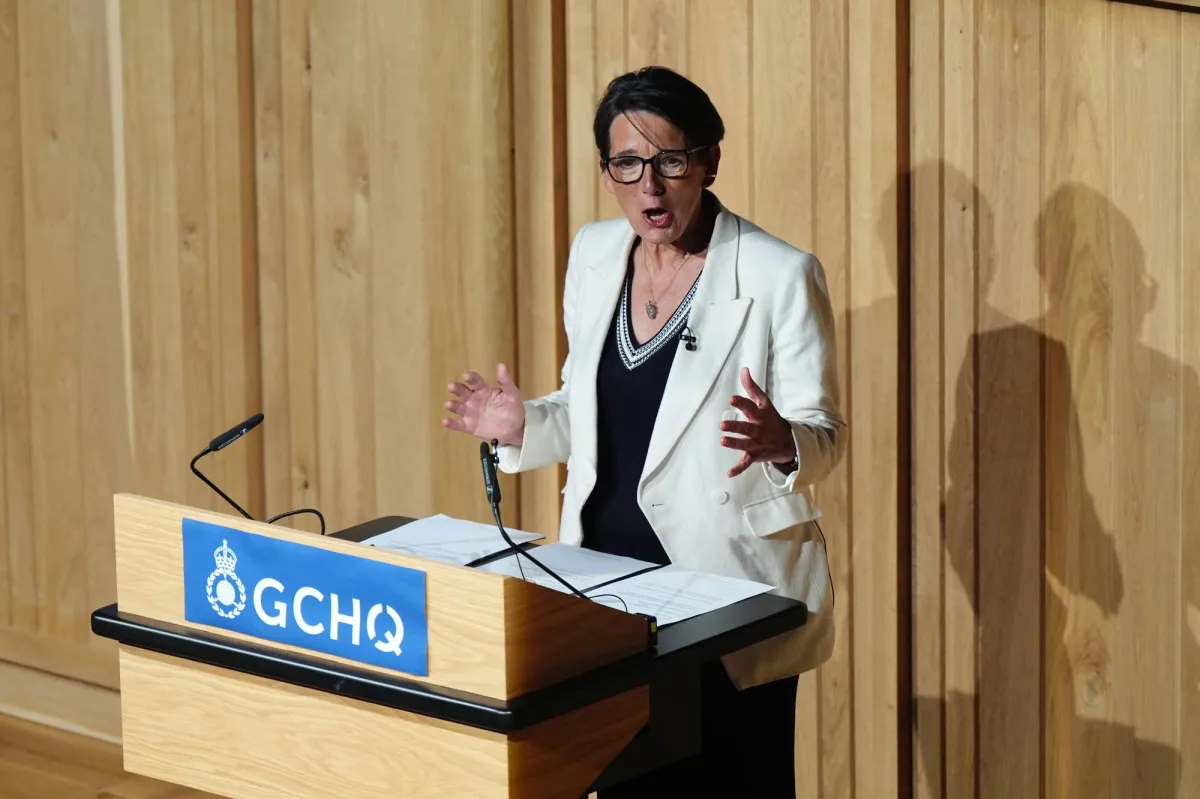
The head of the British Cyber Intelligence Agency, Anne Keast-Butler, warned that artificial intelligence has become an 'unstoppable force,' placing Western nations in a sensitive position between peace and war. This statement was made during a speech at the historic Bletchley Park near London, where she confirmed that Britain and its allies face the risk of losing control in cyberspace.
Keast-Butler pointed out that AI-driven innovations are accelerating at an astonishing rate, creating unforeseen consequences. She explained that this technology is being used to weaponize algorithms, making it a threat that transcends the boundaries of traditional warfare.
Details of the Event
In her speech, Keast-Butler emphasized that the risk of miscalculation in national security is at an unprecedented level, noting that Russia and other adversaries are targeting critical infrastructure and democratic processes in Britain and Europe. She mentioned that Russia is expanding its hybrid activities, from cyberattacks to sabotage, which requires an urgent response from Western nations.
Keast-Butler also addressed the importance of protecting data and the energy flowing through vital cables and pipelines, stressing the need to uncover Russia's intentions and motivations in this context. She affirmed that the rapid developments in AI mean that 'the ground is shaking beneath our feet,' necessitating swift action from the UK and its allies.
Background & Context
These warnings come at a time when the world is witnessing a rise in hostile Russian activities, particularly in the 'gray zone' that remains below the threshold of direct war. Countries such as Sweden, Poland, and Denmark have reported that hackers linked to Russia are targeting their critical infrastructure, raising concerns about cybersecurity.
The head of the UK’s National Cyber Security Centre, Richard Horne, noted that hostile nations like Russia, China, and Iran are behind the most dangerous cyberattacks facing the country, warning that these attacks could escalate significantly if Britain becomes involved in an international conflict.
Impact & Consequences
The increasing challenges in cybersecurity require a coordinated response among Western nations, with Keast-Butler highlighting the importance of international partnerships in addressing these threats. She also pointed out that the 'America First' policy pursued by former President Donald Trump has strained relations between London and Washington, necessitating enhanced intelligence cooperation between the two countries.
The warnings issued by Keast-Butler reflect the growing concern regarding cybersecurity amid escalating threats, calling for urgent steps to bolster defensive capabilities in this area.
Regional Significance
The Arab region is also affected by developments in artificial intelligence and cybersecurity, as Arab countries could become targets for increasing cyber threats. This necessitates strengthening regional and international cooperation to tackle these challenges.
In conclusion, the warnings from the head of the British Cyber Intelligence Agency underscore the importance of enhancing cybersecurity in light of rapid technological changes, calling for an effective response from both Western and Arab nations alike.