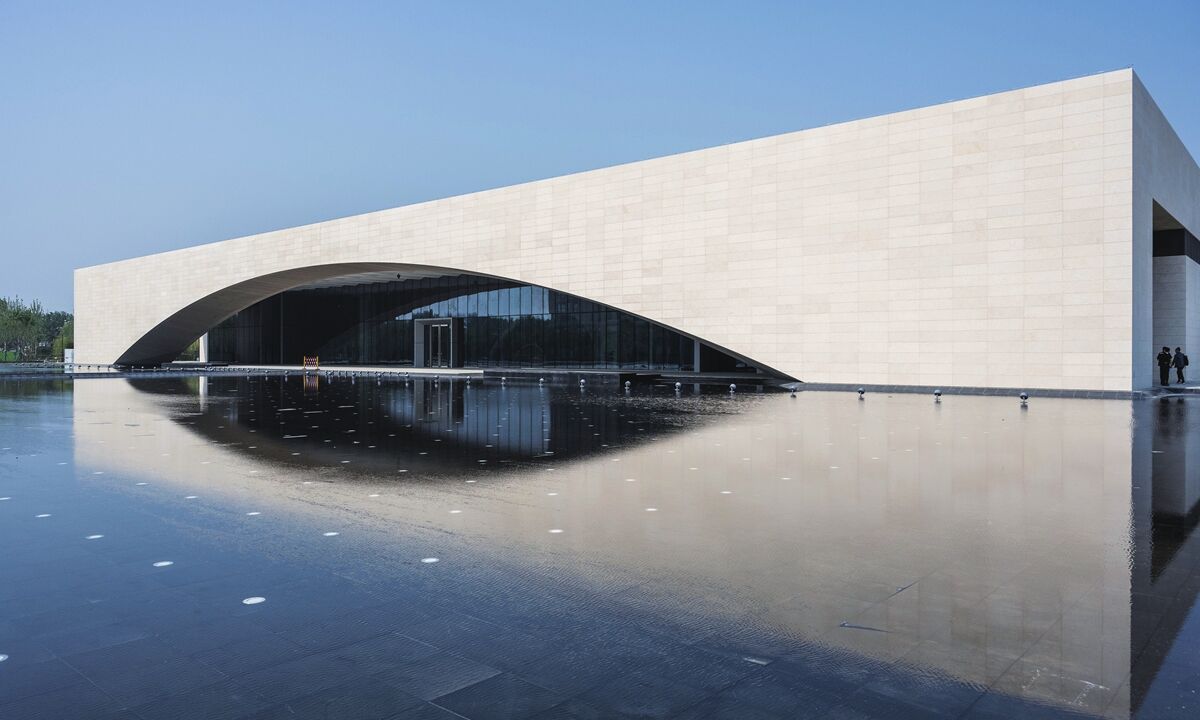
The new Xiong'an city, located just an hour from the Chinese capital Beijing, is an ambitious project aimed at easing the burdens on the capital and promoting sustainable development in the Beijing-Tianjin-Hebei region. Spanning approximately 215 square kilometers, the city is set to become home to over 1.41 million residents, reflecting the Chinese government's vision for developing new areas capable of accommodating population and economic growth.
This initiative is part of a comprehensive strategy to redistribute the population and economic activities away from Beijing, which is grappling with congestion and pollution issues. The Chinese government also aims to enhance cooperation among major cities in the region, contributing to balanced and sustainable development.
Details of the Development Plan
The development plan for Xiong'an includes the construction of over 5,300 buildings, indicating the scale of this massive project. The new city will also host 669 high-tech companies, reflecting a shift towards enhancing innovation and technology in the Chinese economy. These companies are expected to play a significant role in driving economic development in the region.
This project is part of China's vision for 2035, which aims to transform the country into a fully developed nation across all fronts. The new city is also expected to improve the quality of life for citizens by providing modern infrastructure and advanced services.
Background & Context
Historically, China has witnessed significant transformations in urban development, with many new cities being established in recent years. However, the Xiong'an project is considered one of the largest and most ambitious, aiming to restructure urban areas in northern China. The project was announced in 2017, and since then, numerous plans and initiatives have been implemented to develop the area.
This new city is part of China's efforts to address the environmental and social challenges facing the country, including pollution and population congestion. By creating new cities, the government hopes to enhance the quality of life and reduce pressure on major cities like Beijing.
Impact & Consequences
The Xiong'an project is expected to have significant impacts on both the local and national economy. The new city will contribute to the creation of new job opportunities and foster innovation across various sectors. Additionally, the project is anticipated to attract both domestic and foreign investments, boosting economic growth in the region.
Furthermore, the success of the Xiong'an project could encourage other countries in the region to adopt similar models for developing new cities, reflecting a shift in urban planning approaches in the 21st century.
Regional Significance
The experience of Xiong'an could serve as a model for Arab countries facing similar urban development challenges. Many major cities in the region suffer from congestion and pollution, making it essential to consider innovative solutions such as the establishment of new cities.
Additionally, cooperation between Arab countries and China in technology and infrastructure could contribute to achieving sustainable development in the region, enhancing economic and political relations between the two sides.