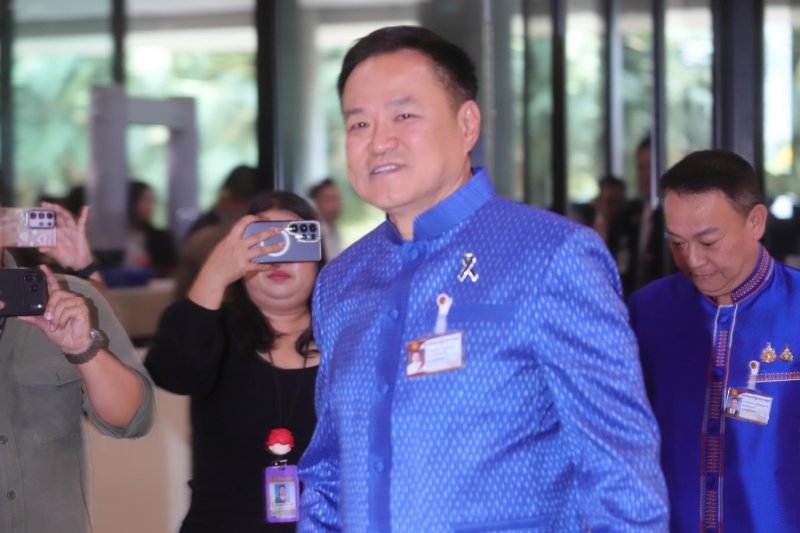
Business leaders in Thailand have welcomed the formation of the new government led by Prime Minister Anutin Charnvirakul, expressing hope for a more effective response to the escalating economic challenges, ranging from rising fuel prices to broader issues affecting the Thai economy. This welcome came after the announcement of government members in the royal gazette, paving the way for a government with full authority to address these issues.
Poj Aramwatananon, President of the Thai Chamber of Commerce, expressed confidence that the new government would perform its duties effectively, pointing to the importance of cooperation between the public and private sectors in facing challenges. He emphasized the need for the government to act as a united team, with swift decision-making and monitoring of global competition.
Event Details
The private sector has urged the government to look beyond short-term solutions and focus on clear, practical plans that can be implemented quickly. Poj highlighted the importance of managing global geopolitical dynamics and energy costs, stressing the need to develop smart business strategies with both China and the United States to maintain political stability and attract investments.
He also noted that structural reforms are essential to reduce national costs, as streamlining bureaucracy and data integration can help alleviate burdens on individuals and businesses. He underscored the importance of taking strict action against corruption to prevent the loss of opportunities.
Background & Context
Thailand is facing increasing economic challenges, including oil prices that have surpassed $100 per barrel, affecting citizens' purchasing power and leading to higher production costs. Amid ongoing tensions in the Middle East, managing oil resources has become one of the new government's main challenges.
Historically, Thailand has experienced frequent government changes, impacting the stability of economic policies. However, the new government, dominated by the Bhumjaithai Party, hopes to achieve greater stability in economic policies.
Impact & Consequences
Managing the energy crisis is one of the primary challenges facing the new government, with experts predicting that high energy prices will persist for an extended period. Abhisit Vejjajiva, Vice President of the Federation of Thai Industries, warned that rising energy prices could lead some companies to halt production if immediate action is not taken.
There are also calls to adopt new policies that help companies transition from traditional manufacturing to high-value-added industries, focusing on green manufacturing and artificial intelligence technology.
Regional Significance
The Arab region is significantly affected by changes in energy prices, as many Arab countries are among the largest oil producers in the world. Therefore, any changes in Thai economic policies could impact trade relations between Thailand and Arab countries, especially in the fields of energy and trade.
In conclusion, the formation of the new government in Thailand represents an opportunity to improve responses to economic challenges, but success depends on the government's ability to implement effective structural reforms and collaborate with the private sector.