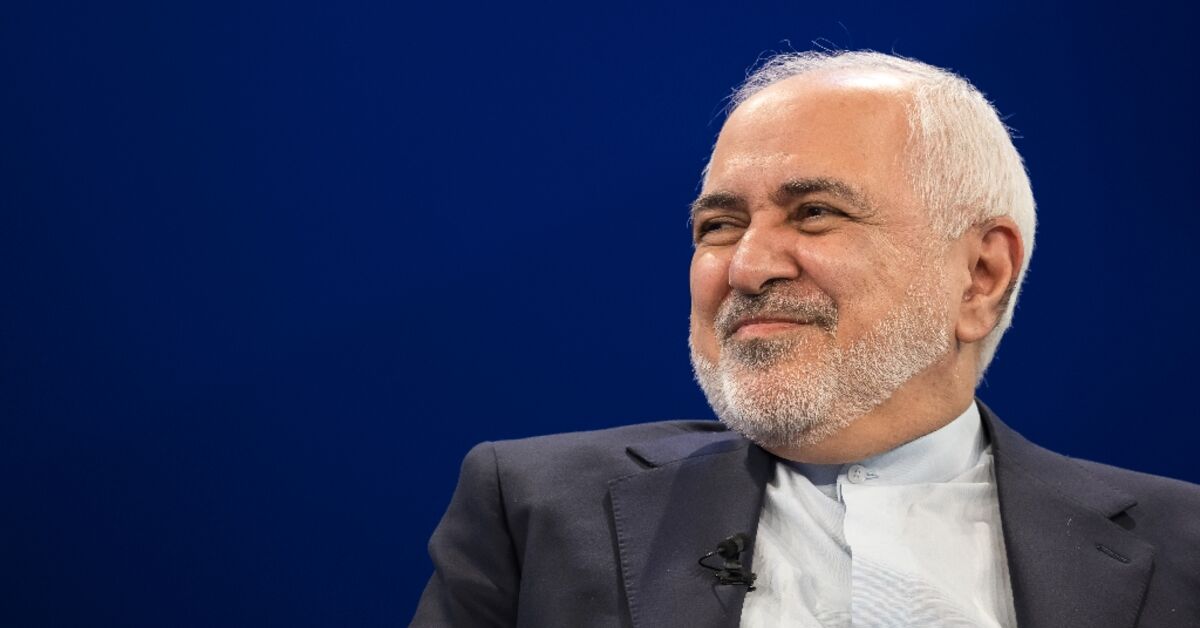
Former Iranian Foreign Minister Mohammad Javad Zarif has called for the necessity of reaching an agreement with the United States to end the ongoing war, through concessions related to the Iranian nuclear program and the reopening of the Strait of Hormuz in exchange for easing sanctions imposed on Tehran. Zarif, who served as Foreign Minister from 2013 to 2021, stated in an article for the American magazine "Foreign Affairs" that Iran holds the upper hand in the ongoing conflict against the United States and Israel, but warned that the continuation of the war could lead to further civilian casualties and destruction of infrastructure.
Zarif asserted that the time has come for Iran to change its strategy, noting that reaching an agreement with the United States could contribute to achieving stability in the region and alleviating existing tensions. He explained that Iran needs to take serious steps towards dialogue and negotiation, rather than military escalation that could have dire consequences for the Iranian people and the region as a whole.
Details of the Event
Zarif's remarks come at a sensitive time when tensions between Iran and the United States are escalating, with increasing pressures on Tehran due to its nuclear program. The American sanctions imposed on Iran have elicited strong reactions from the Iranian government, which considers these sanctions illegal and contrary to international laws.
Moreover, the Strait of Hormuz, which is a vital transit point for oil transportation, has witnessed rising tensions in recent years, with the United States accusing Iran of attempting to threaten freedom of navigation in the region. In this context, Zarif considered that reopening the strait could be part of the deal that Iran seeks to achieve with Washington.
Background & Context
Historically, Iranian-American relations have experienced significant tensions since the Islamic Revolution in 1979. These tensions have led to a series of military and economic conflicts, including the Iran-Iraq War, which lasted from 1980 to 1988. Since then, American sanctions on Iran have continued, significantly impacting the Iranian economy.
In recent years, a nuclear agreement was reached between Iran and major powers in 2015, but the United States' withdrawal from the agreement in 2018 brought matters back to square one, leading to a resurgence of tensions. Iran has attempted in recent years to bolster its military capabilities, raising concerns in the international community.
Impact & Consequences
Reaching an agreement between Iran and the United States could have significant implications for regional and international security. If Tehran manages to achieve sanctions relief, it could contribute to improving the economic situation in the country and reduce military tensions. Additionally, this could open the door for broader dialogue between Iran and Arab countries, contributing to regional stability.
On the other hand, failure of the negotiations could lead to greater escalation in the conflict, threatening regional security and increasing civilian suffering. Thus, the international community is closely monitoring developments in this issue, as any escalation could affect oil prices and global markets.
Regional Significance
The Iranian-American relations are pivotal in determining the future of the Arab region. The tensions between Iran and the United States directly affect neighboring countries, with many Arab nations fearing the rise of Iranian influence in the region. If an agreement is reached, it could lead to a reduction in tensions between Iran and Arab countries, contributing to enhanced security and stability.
In conclusion, the question remains: Will Iran and the United States be able to overcome the current obstacles and reach an agreement that achieves peace in the region? The answer to this question could determine the course of events in the Middle East in the coming years.