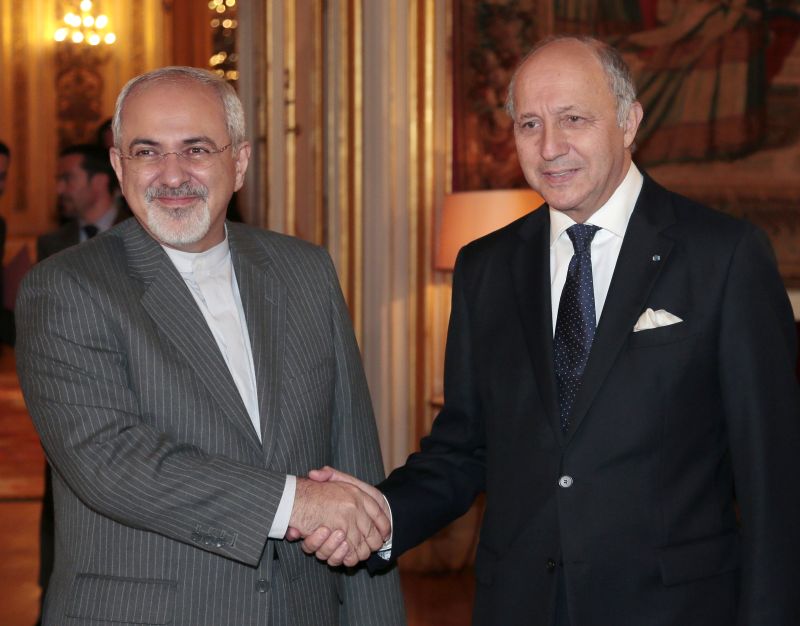
Former Iranian Foreign Minister Mohammad Javad Zarif has called for the necessity of an agreement with the United States to end the war being waged by Washington, with the participation of Israel, against his country. In an op-ed published in the American magazine Foreign Affairs, Zarif asserted that Tehran holds the "upper hand" in the conflict, but stressed the importance of halting the fighting to limit human losses and prevent further destruction.
Zarif, who served as Foreign Minister from 2013 to 2021, believes that Iran should leverage its military superiority not to continue fighting but to declare victory and reach an agreement that ends the conflict. He noted that this agreement should include restrictions on Iran's nuclear program and the reopening of the Strait of Hormuz in exchange for the easing of sanctions imposed on Tehran.
Details of the Proposal
In his article published on Thursday evening, Zarif stated, "Iran should offer to impose restrictions on its nuclear program and reopen the Strait of Hormuz in exchange for lifting all sanctions, an agreement that Washington would not have accepted previously, but may consider now." He also emphasized the need for Iran to be prepared to accept a mutual "non-aggression pact" with the United States, in addition to establishing economic relations.
It is worth noting that diplomatic relations between Tehran and Washington have been severed since the 1979 Islamic Revolution, complicating any future discussions. While Zarif calls for peace, senior Iranian military and political officials continue to assert the necessity of continuing the fight against the United States and Israel.
Background & Context
Zarif is one of the architects of the 2015 Iranian nuclear agreement, which collapsed three years after former President Donald Trump unilaterally withdrew from it. Zarif is considered a relatively moderate figure within the Iranian elite, yet he holds no official position in the current government.
In a related context, Zarif warned that "continuing the fight against the United States and Israel may be psychologically satisfying, but it will only lead to further destruction of civilian lives and infrastructure." He expressed his conflicting feelings on the platform X, where he indicated his anger at Trump's aggression while simultaneously expressing pride in his country's forces.
Impact & Consequences
Zarif's call comes at a sensitive time, as tensions between Iran and the United States escalate, particularly following Trump's remarks about ongoing talks with Tehran. Despite Trump's threats to return the country to the "Stone Age" if Iran does not agree to his terms, Zarif's call may open the door for new discussions about peace.
Any potential agreement between Iran and the United States could significantly impact the regional situation, as Iran's stability directly affects neighboring countries, especially amid ongoing tensions in the Middle East.
Regional Significance
If an agreement is reached between Iran and the United States, it could lead to a de-escalation of tensions in the region, positively reflecting on neighboring Arab countries. Additionally, Iran's stability may contribute to improving relations between Arab states and Iran, which have historically experienced tensions.
In conclusion, Zarif's call for peace represents an unusual step from a prominent Iranian figure under current circumstances, raising questions about the possibility of achieving peace in the region and how this might affect the future of Iranian-American relations.