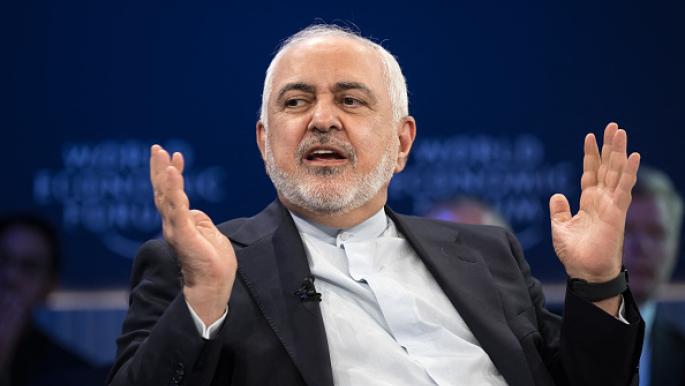
Former Iranian Foreign Minister Mohammad Javad Zarif urges the necessity of an agreement with the United States as a step towards ending the war. This call was made in an opinion piece published on Thursday evening, emphasizing the importance of dialogue and understanding between the two parties.
Zarif, who served as Iran's foreign minister from 2013 to 2021, pointed out that the continuation of the conflict does not serve the interests of either side, and that reaching a comprehensive agreement could contribute to achieving stability in the region. He believes that such an agreement should encompass multiple issues, including regional security and the economy.
Details of the Call for Agreement
In his article, Zarif clarified that Iran and the United States need to reassess their relations, noting that the current tensions negatively impact security and stability in the Middle East. He emphasized that dialogue is the only way to overcome the obstacles hindering peace.
He also pointed out that the nuclear agreement reached in 2015 was a positive step but faced setbacks after the United States withdrew from it in 2018. Zarif argued that returning to the negotiating table should be driven by strong political will from both sides.
Background & Context
The roots of the conflict between Iran and the United States go back decades, with increasing tensions since the Islamic Revolution in 1979. Since then, the United States has imposed strict economic sanctions on Iran, affecting its economy and exacerbating humanitarian crises.
In recent years, the region has witnessed an escalation in armed conflicts, increasing the need for political solutions. Several countries, including European nations, have attempted to mediate between Iran and the United States, but talks have yet to yield tangible results.
Impact & Consequences
Reaching an agreement between Iran and the United States could have significant implications for the regional and international arena. On one hand, it could lead to a reduction in military tensions in the region, contributing to the stability of global markets, particularly in the energy sector.
On the other hand, this agreement could open the door for improved relations between Iran and the Gulf Arab states, which are concerned about Iran's nuclear program. It could also enhance cooperation in other areas such as counter-terrorism and trade.
Regional Significance
The neighboring Arab countries to Iran are among the most affected by the developments in Iranian-American relations. Any agreement could lead to a shift in the balance of power in the region, which may reflect on ongoing conflicts in Yemen, Syria, and Iraq.
Moreover, improving relations between Tehran and Washington could help ease tensions between Iran and the Gulf Cooperation Council countries, opening up new opportunities for regional cooperation.
In conclusion, the question remains about the willingness of the United States and Iran to make the necessary concessions to achieve peace. Dialogue and understanding are the only ways to overcome the current crises and build a better future for the region.