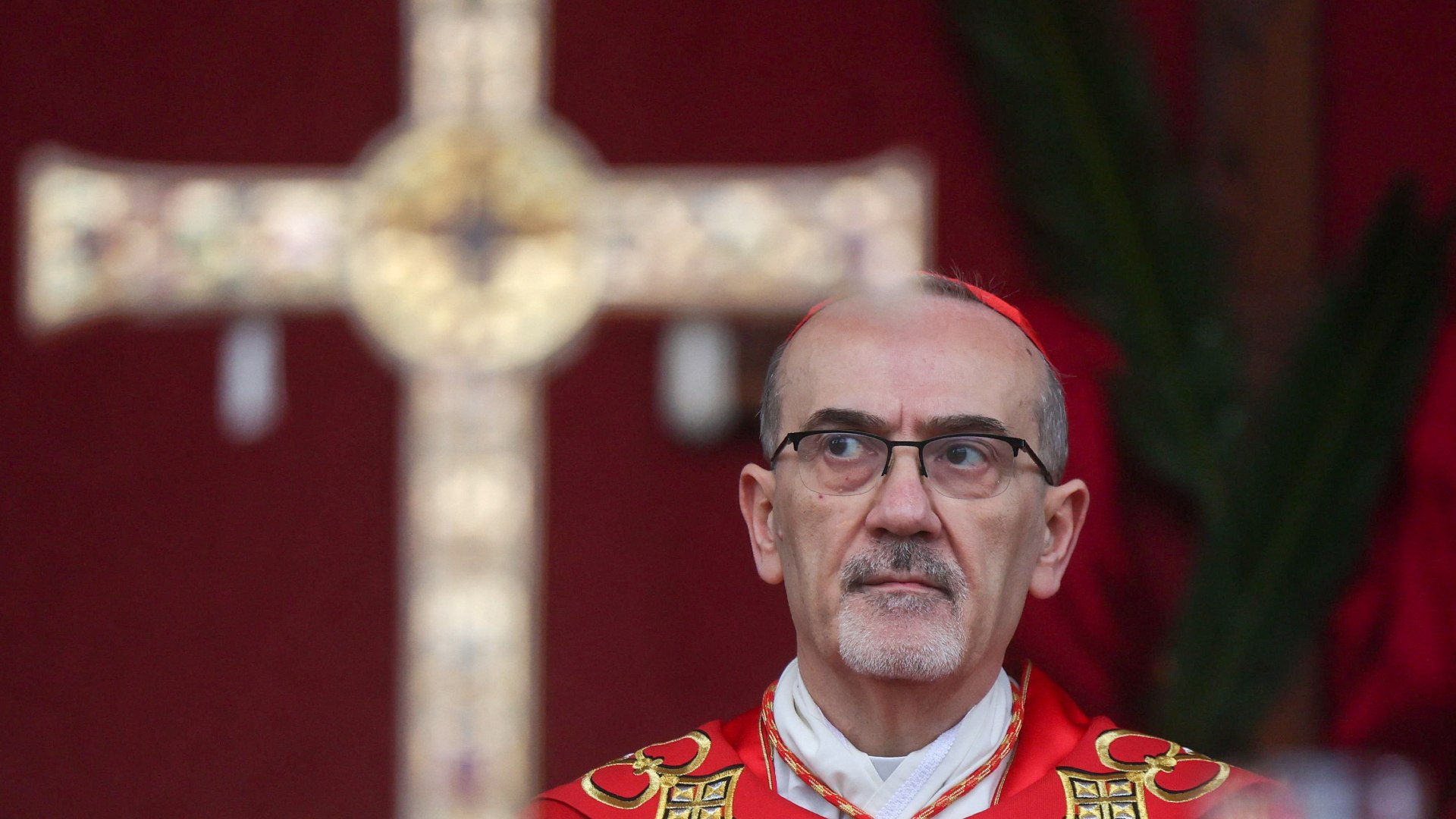
Christian communities in Jerusalem have called upon their church leaders to adopt a resolute stance against the Israeli restrictions imposed on holy sites, particularly after the Catholic Patriarch Pierbattista Pizzaballa was barred from entering the Church of the Holy Sepulchre during Palm Sunday celebrations. This incident has sparked a wave of global sympathy for the Patriarch, while also revealing mixed feelings among Christians in the city.
For weeks, as tensions escalated following Israel's alignment with the United States in attacks on Iran, the Old City has been nearly closed to visitors, with Israeli security forces stationed at the gates and imposing restrictions on access to holy sites. The Al-Aqsa Mosque has also been closed to Muslims, a situation that was repeated throughout most of Ramadan and Eid al-Fitr.
Details of the Incident
On the Sunday coinciding with Palm Sunday celebrations, Patriarch Pizzaballa was prevented from entering the Church of the Holy Sepulchre, which caused widespread discontent among his congregation. The following day, some Christians expressed disappointment that the Patriarch did not confront the soldiers who barred his entry, believing he should have challenged the decision instead of retreating.
A Catholic merchant, who preferred to remain anonymous for security reasons, stated, "He should have found a way to enter, even if it meant praying in the street." After being denied entry, the Patriarch led a service at the Church of All Nations on the Mount of Olives, outside the walls of the Old City.
Background & Context
Israel's occupation of East Jerusalem since 1967 is considered illegal under international law, a fact reaffirmed by the International Court of Justice in 2024. However, many Palestinians view the current restrictions not merely as security measures but as efforts to reinforce Israeli control over the Old City.
Historically, churches in Jerusalem, whether Catholic, Orthodox, or Armenian, have faced pressure from Israeli authorities, leading to accusations that they adopt a submissive stance. Some have argued that these positions by religious leaders enhance the image of Israeli Prime Minister Benjamin Netanyahu as a hero in the eyes of the Israeli public.
Impact & Consequences
The restrictions on access to holy sites during festive periods, such as Easter, are seen as an affront to many Christians. Denying them entry to the Church of the Holy Sepulchre, regarded as the holiest Christian site, clearly illustrates the impact of occupation on religious life.
The International Center for Justice for Palestinians noted that the barring of the Patriarch's entry constitutes a blatant act of religious persecution, reflecting ongoing violations of Palestinians' rights to practice their religious rituals.
Regional Significance
The ramifications of these events extend beyond Jerusalem, raising concerns among Arab communities regarding the future of Christian presence in the Holy Land. The continuation of these restrictions could exacerbate sectarian tensions and deepen divisions among different communities.
In conclusion, the current situation in Jerusalem necessitates urgent action from both religious and political leaders to address these challenges and ensure freedom of worship for all faiths in the holy city.