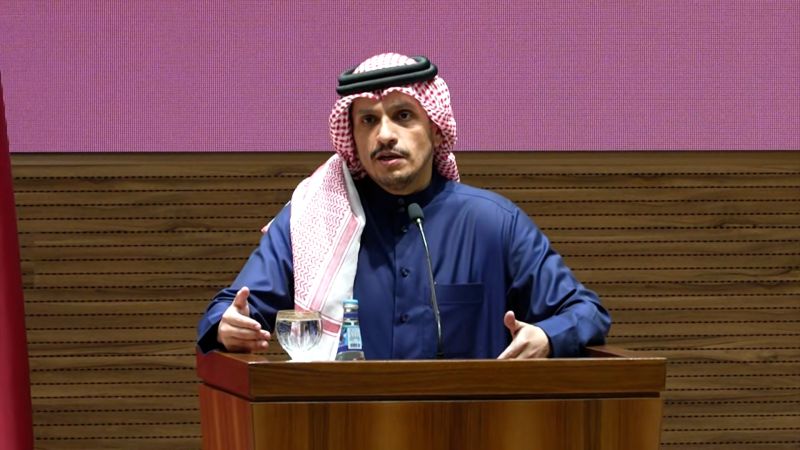
Qatar's Prime Minister and Minister of Foreign Affairs, Sheikh Mohammed bin Abdulrahman Al Thani, called for prioritizing reason and wisdom to contain the increasing military escalation in the region. He stressed that this is essential to ensure global energy security, freedom of navigation, and environmental safety, contributing to the stability of the region.
This statement came during a phone call received by Sheikh Mohammed bin Abdulrahman from Jonas Gahr Støre, Prime Minister of Norway, where they discussed the current situation in the region and ways to enhance bilateral cooperation.
Details of the Event
The Qatari official's call comes at a sensitive time, as the region is witnessing a growing military escalation that threatens to have negative impacts on regional and international security. Sheikh Mohammed bin Abdulrahman pointed out that military escalation not only threatens the stability of the region but also affects global energy markets, necessitating dialogue and understanding among the concerned parties.
He also emphasized the importance of maintaining freedom of navigation in maritime corridors, which are vital arteries for global trade, stressing the need for immediate steps to reduce tensions.
Background & Context
Historically, the region has experienced numerous military crises that have exacerbated humanitarian and economic conditions. The current military escalation occurs against a backdrop of ongoing tensions between certain countries, complicating the regional landscape. These tensions have impacted oil prices and energy markets, calling for urgent international intervention.
Qatar is considered one of the countries playing a pivotal role in promoting regional stability, as it consistently seeks to offer diplomatic initiatives to resolve conflicts. Doha has shown resilience in dealing with crises, reflecting its commitment to security and peace in the region.
Impact & Consequences
If military escalation continues, it could lead to serious repercussions for regional and international security. Global trade flows are likely to be affected, potentially resulting in rising prices and increased economic pressures on affected countries. Furthermore, the continuation of tensions may exacerbate humanitarian crises in the region.
These circumstances require a coordinated international response, as the global community must work to calm the situation and prevent any further escalation. In this context, Qatar plays an important role as a mediator in many conflicts, enhancing its position on the international stage.
Regional Significance
The escalating military situation in the region directly impacts Arab countries, raising concerns about the outbreak of new conflicts. The stability of the Arab region is closely linked to regional security, necessitating cooperation and coordination among Arab nations to face common challenges.
Qatar's call for wisdom and reason is a positive step towards promoting peace and stability in the region. Arab countries should adopt a similar approach to avoid escalation and provide peaceful solutions to conflicts.
In conclusion, dialogue and understanding remain the optimal paths to maintaining security and peace in the region. All concerned parties must collaborate to achieve this common goal.