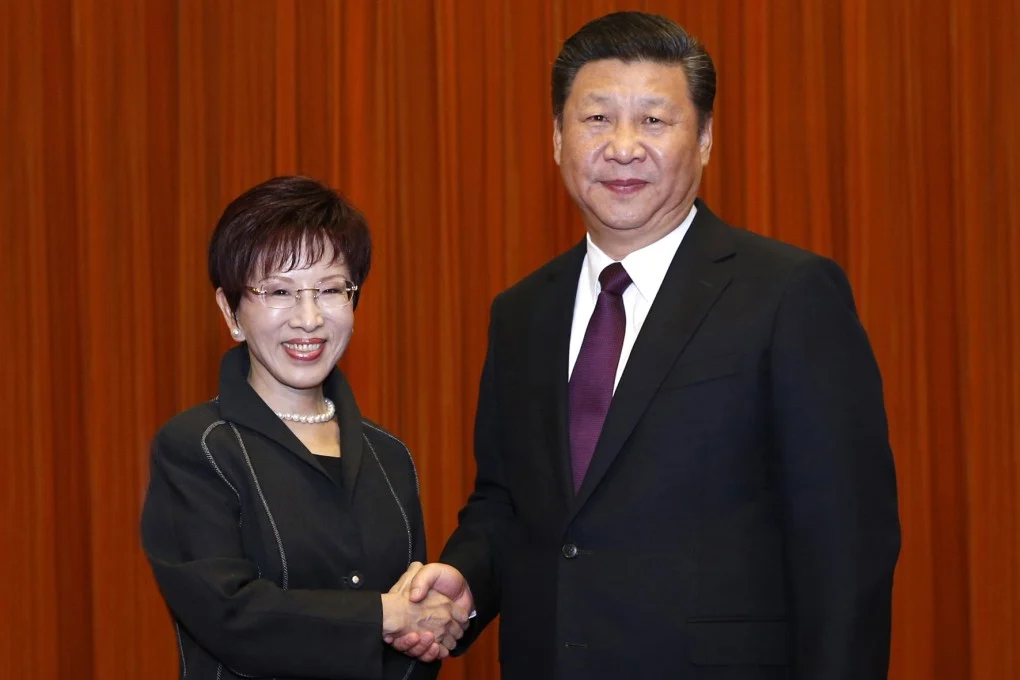
The former leader of Taiwan's main opposition party, the Kuomintang (KMT), Hong Shiu-chu, has called for the necessity of dialogue across the Taiwan Strait to end the prevailing state of "cold peace" between both sides. She pointed out that enhancing mutual trust is the key to better relations between Taiwan and China, warning that escalation would only lead to more tensions.
In a post on a popular online platform in China, Hong affirmed that "the key to cross-strait relations does not lie in radical confrontation, but in deep mutual trust." She also called for a return to the 1992 consensus, an informal agreement reached between Beijing and the then-ruling party in Taiwan, which stipulates the principle of "one China" with each side acknowledging the other's viewpoint.
Details of the Call for Dialogue
This call comes at a sensitive time as tensions between Taiwan and China escalate, particularly following a series of military maneuvers conducted by China near the island. Hong considered dialogue the only way to avoid conflict, emphasizing the importance of building trust between the two sides. This stance is part of a broader strategy by the opposition party to strengthen relations with Beijing, amid increasing pressure on the current government in Taiwan.
Historically, cross-strait relations have been tense, experiencing periods of conflict and military confrontations, but also times of cooperation and understanding. The 1992 consensus is regarded as a turning point in these relations, helping to ease tensions during that period.
Background & Context
The Kuomintang (KMT) was founded in the early 20th century and played a significant role in the history of Taiwan. After the Chinese Civil War, the party moved to Taiwan where it continued to govern until the 1990s. With the rise of democracy in Taiwan, the KMT became the opposition party, but it still maintains historical ties with Beijing.
In recent years, relations between Taiwan and China have noticeably deteriorated, especially after the election of the current president, Tsai Ing-wen, who adopts a more independent policy. This policy has led to strong reactions from Beijing, which considers Taiwan part of its territory.
Impact & Consequences
Hong's call for dialogue could open a new door in relations between the two sides, but it may also face resistance from other political forces in Taiwan. While some view dialogue as the solution, others believe that any rapprochement with Beijing could threaten Taiwan's sovereignty and independence.
The ongoing tensions in the region may also affect regional stability, as any escalation in conflict could have repercussions for neighboring countries, including Japan and South Korea, as well as the United States, which is a key ally of Taiwan.
Regional Significance
Although the situation in the Taiwan Strait may seem distant from the Arab region, geopolitical tensions in any part of the world can impact Arab interests. Changes in international relations could lead to a reshaping of alliances, affecting economic and political stability in the region.
In conclusion, Hong's call for dialogue is an important step towards improving cross-strait relations, but challenges remain. Enhancing mutual trust requires ongoing efforts from all parties involved.