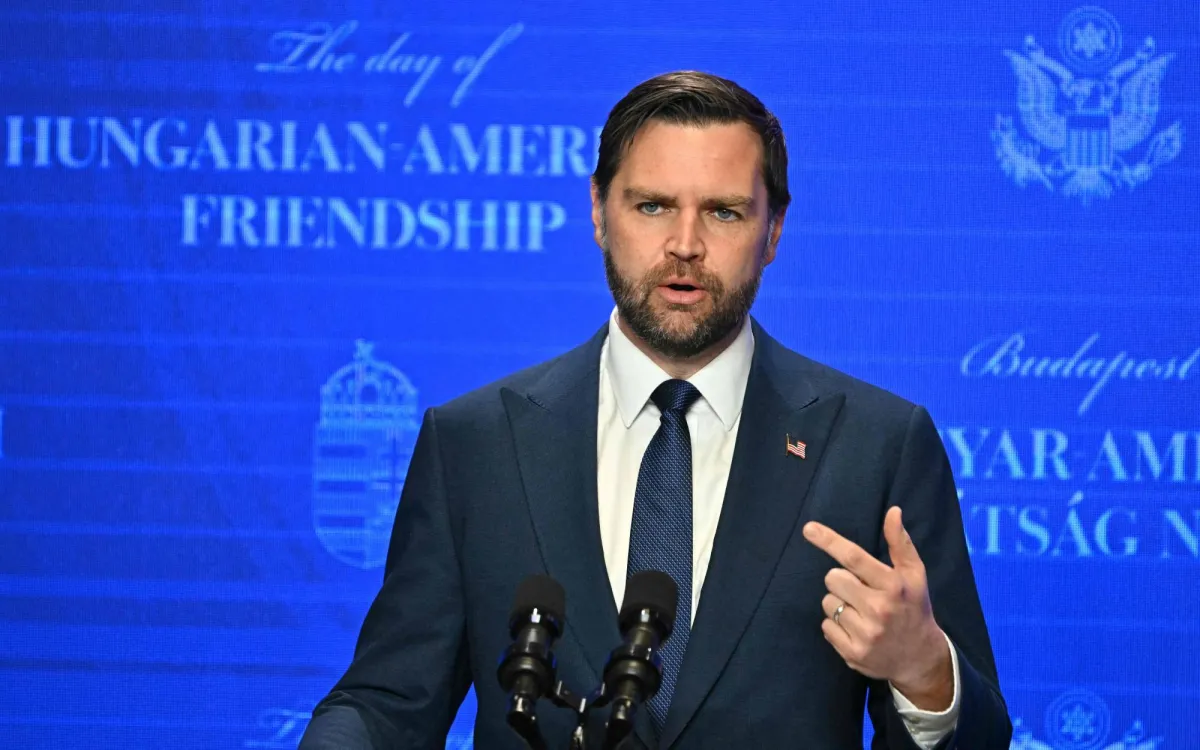
U.S. Vice President J.D. Vance affirmed the possibility of reaching an agreement to end the war in the Middle East, contingent on Iran's willingness to negotiate in good faith. These remarks were made during his visit to Hungary, where he noted the U.S. President's directives for the negotiation team to work diligently towards this goal.
Vance stated, "The President of the United States told me and the entire negotiation team... go and work in good faith to reach an agreement." He emphasized that Iranian cooperation in this context would be key to achieving a peaceful resolution.
Details of the Event
In a related context, the Kremlin welcomed a two-week ceasefire between the United States and Iran, expressing hope that this would allow the U.S. to resume tripartite peace talks regarding Ukraine. In a press conference, Kremlin spokesperson Dmitry Peskov stated, "We received news of the truce with a degree of satisfaction," highlighting the importance of de-escalation in the region.
It is noteworthy that peace talks regarding Ukraine had stalled following the outbreak of war in Iran, which had begun negotiations last year in Istanbul and continued later in Abu Dhabi and Geneva. However, these talks faced significant challenges due to the deadlock associated with territorial issues.
Context and Background
These developments coincide with sharp criticisms from Israeli opposition leaders, who accused Prime Minister Benjamin Netanyahu of failing to achieve the war's objectives. Opposition leader Yair Lapid considered the ceasefire agreement with Iran to be an "unprecedented political disaster," indicating that Israel was not close to the negotiation table when decisions regarding its national security were made.
Other leaders in the Israeli parliament also criticized the agreement, asserting that it provided the Iranian regime with an opportunity to rebuild its strength. Avigdor Lieberman pointed out that any agreement with Iran must include strict conditions related to its nuclear program and its support for terrorism.
Impact and Consequences
Concerns are growing that this agreement could escalate tensions in the region, as Israel continues to carry out airstrikes on Lebanon in response to Iranian-backed attacks. Ten individuals were arrested in Turkey in connection with an attack on the Israeli consulate, reflecting the rising security tensions in the area.
The situation in the Middle East appears to remain complex, with overlapping international and regional interests making it increasingly difficult to reach lasting solutions. Additionally, the ongoing war in Ukraine may affect regional dynamics, as major powers seek to achieve their interests amid these multiple crises.
Impact on the Arab Region
This development poses a significant challenge to the Arab region, requiring a delicate balance between national and international interests. The stability of the Middle East heavily relies on how the involved parties manage these crises and their ability to negotiate in good faith.
In conclusion, hope remains that these talks will lead to positive outcomes that contribute to achieving peace and stability in the region, despite the significant challenges faced.