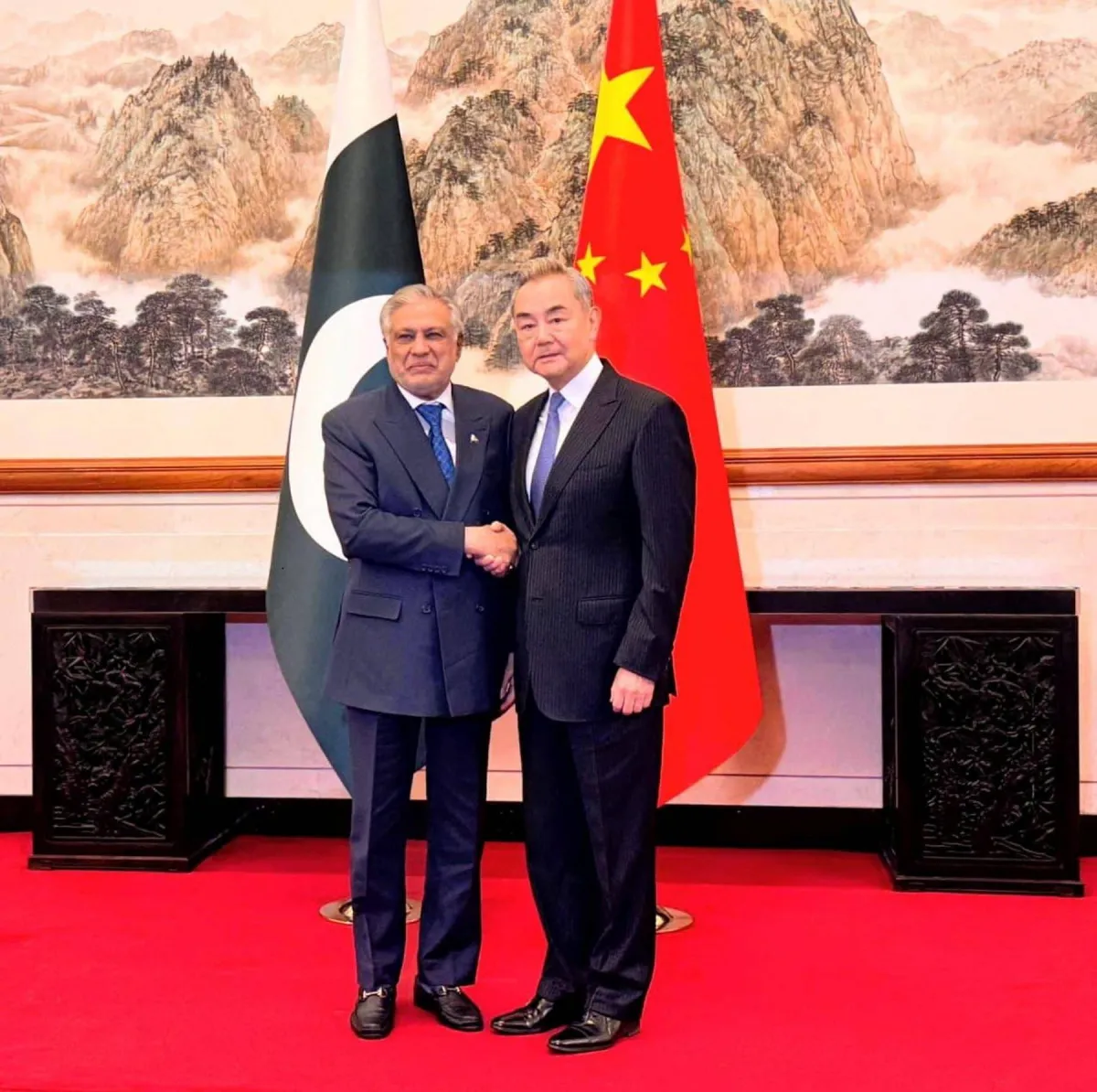
China and Pakistan have urged for an immediate ceasefire in the Middle East, emphasizing the importance of maritime safety and the security of ships and their crews stranded in the waters of the Strait of Hormuz. This call came as part of a five-point initiative issued by the foreign ministers of both countries, who stressed the importance of holding peace talks as soon as possible.
In a press conference, the Chinese Foreign Ministry confirmed that Beijing and Islamabad will enhance their cooperation on issues related to Iran. The ministry's spokesperson noted that the two countries adopt similar positions on major international and regional issues, reflecting the depth of their strategic relations.
Details of the Event
The Pakistani Deputy Prime Minister and Foreign Minister, Ishaq Dar, visited China on an official trip, where he met with his Chinese counterpart, Wang Yi. During this visit, regional developments, bilateral relations, and global issues of mutual interest were discussed. The spokesperson for the Chinese Foreign Ministry, Mao Ning, confirmed that the two ministers will enhance strategic communication and coordination regarding the situation in Iran and will seek new efforts to advocate for peace.
Pakistan is considered one of China's closest partners in the region, and Beijing has called for restraint in the ongoing conflict between Islamabad and Afghanistan. The Chinese Foreign Ministry report also indicated that a special envoy had mediated between the two countries earlier.
Background & Context
China and Pakistan are seeking to mediate to prevent the escalation of conflict in the Middle East, with Islamabad expressing its readiness to host talks between the United States and Iran. These efforts come at a sensitive time, as concerns grow about the implications of war on maritime navigation through the Strait of Hormuz, a vital corridor for global trade.
On February 28, the intensity of the conflict escalated following US-Israeli strikes on Iran, exacerbating the situation in the region. Maritime navigation experienced near-total paralysis, raising concerns among the involved countries.
Impact & Consequences
This initiative from China and Pakistan is considered an important step towards restoring stability in the region. China, a key partner of Iran, has not announced any military assistance to Tehran but has repeatedly called for a ceasefire. This position reflects Beijing's desire to maintain its economic and political interests in the region.
The passage of three Chinese ships through the Strait of Hormuz after coordination with the relevant parties demonstrates China's commitment to securing maritime navigation, as this area is one of the most important global trade routes. The spokesperson for the Chinese Foreign Ministry confirmed that the Strait of Hormuz and its surrounding waters represent a vital route for energy supplies.
Regional Significance
These developments underscore the importance of regional and international cooperation in addressing the escalating crises in the Middle East. Stability in the region is considered essential for Arab national security, especially amid ongoing tensions between major powers.
Furthermore, the peace calls from China and Pakistan may contribute to easing tensions, potentially opening the door for comprehensive dialogue among the concerned parties. In this context, there remains hope for achieving positive outcomes from these initiatives, which could contribute to building a more stable future for the region.