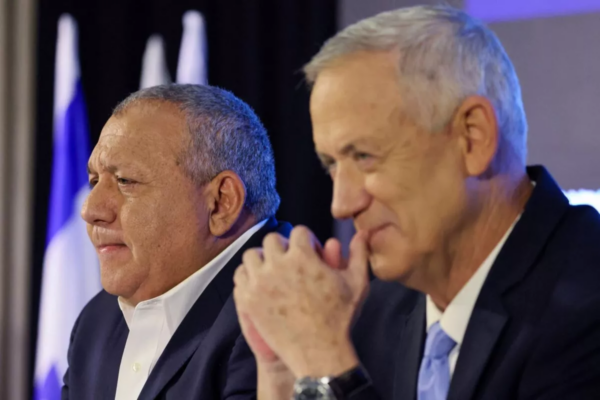
Retired General Gadi Eisenkot, a prominent leader in the Israeli opposition, has called for a meeting of opposition leaders, intentionally excluding Arab parties from this gathering. This call comes at a time when political tensions are escalating in Israel, as Eisenkot aims to unify the ranks to confront the current government.
Eisenkot, who previously served as the Chief of Staff of the Israeli Army, emphasized the importance of coordination among opposition parties to address the political and economic challenges facing the country. The exclusion of Arab parties from the meeting has sparked mixed reactions, with some viewing this decision as a reflection of a policy that marginalizes Arabs in the Israeli political arena.
Details of the Event
Eisenkot's invitation comes at a critical juncture, as Israel is experiencing a severe political crisis, marked by escalating protests against the current government. Eisenkot indicated that the meeting aims to establish a joint action plan to tackle challenges, including security and economic issues.
Eisenkot is considered a central figure in the opposition, striving to strengthen his position amid internal divisions among parties. He has called for a shared vision among Jewish parties to confront the government, noting that Arab parties do not align with this vision.
Background & Context
Historically, the relationships between Arab and Jewish parties in Israel have been fraught with tension. Arab parties represent about 20% of the population, yet they are often excluded from major political decisions. This exclusion reflects a historical policy aimed at marginalizing Arabs in political life.
In recent years, Arab parties have seen improvements in their parliamentary representation, but significant challenges remain in influencing government policies. Their exclusion from Eisenkot's invitation serves as evidence of the persistence of this negative dynamic.
Impact & Consequences
Eisenkot's invitation may exacerbate divisions within Israeli society, as many Arabs feel marginalized and undervalued. This situation could intensify tensions between the Arab and Jewish communities and affect political stability in the country.
On the other hand, Eisenkot may be seeking to bolster his position as a leader of the opposition through this invitation, which could influence the outcomes of upcoming elections. If he succeeds in uniting Jewish parties, he may be able to form a strong front against the current government.
Regional Significance
These developments hold significant importance for the Arab region, as they reflect ongoing tensions between Arabs and Jews in Israel. These dynamics may impact relations between Israel and Arab countries, especially amid attempts at normalization that some Arab nations are pursuing.
Moreover, the exclusion of Arab parties from political dialogue may hinder peace efforts and increase instability in the region. It is crucial for Arab countries to remain vigilant regarding these developments and work to promote dialogue and understanding among all parties.