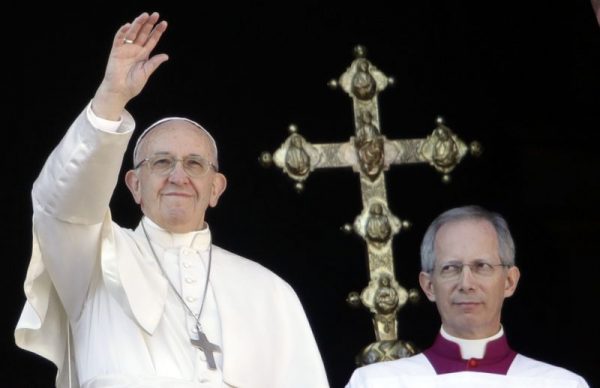
U.S. Secretary of War Pete Hegseth has called on the American people to pray 'every day on their knees' for military victory in the Middle East 'in the name of the Lord Christ.' In contrast, Pope Leo XIV, who was born in the United States, offered a completely different vision of what should be done in Christ's name, pointing out that using religion in the context of wars contradicts Christian teachings.
In a sermon delivered last Thursday morning, just before Easter, the Pope emphasized that the Christian message has been distorted by the desire for domination, which is entirely at odds with the approach of Christ. He explained that there is a tendency among humans to believe they are powerful when they dominate, victorious when they destroy their enemies, and great when they are feared. However, he stressed that God has given us an example not in how to dominate, but in how to liberate.
Details of the Event
Since the United States and Israel began their war on Iran in late February, the Pope has continuously called for an end to violence and a return to dialogue as a means of resolving conflict. Although he did not mention Hegseth by name, he referred to the use of Christianity for purposes that contradict Catholic teachings.
In late March, the Pope warned against using Christ's name in the context of wars, affirming that Christ 'does not listen to the prayers of those who wage wars, but rejects them.' These statements come at a sensitive time as tensions in the region escalate.
Background & Context
Historically, religions have often been used in political and military contexts, exploited to justify wars and conflicts. However, many religious leaders, including the Pope, urge for peace and dialogue as a means of resolving disputes. This vision aligns with Christian teachings that call for love and tolerance.
Calls from religious leaders around the world to end violence are increasing, especially in the Middle East, where many countries are suffering from ongoing conflicts. The Pope, representing a global voice for peace, seeks to promote dialogue among conflicting parties.
Impact & Consequences
The statements from Hegseth and the Pope reflect the division of opinions regarding the use of religion in conflicts. While some see religion as a motivator for fighting, others assert that it should be a tool for peace. This division may affect how the international community responds to current conflicts.
Moreover, the Pope's calls for peace may influence public opinion in the United States, where awareness of the importance of dialogue over violence is growing. Amid escalating tensions in the Middle East, these calls could lead to greater pressure on political leaders to pursue peaceful solutions.
Regional Significance
In the Arab region, the Pope's statements serve as a call to reflect on how religion is used in conflicts. Many Arab countries are suffering from internal and external conflicts, making the need for dialogue and peace more urgent. This message may inspire regional leaders to work towards peaceful solutions rather than relying on military force.
In conclusion, the discussion on the use of religion in wars remains a sensitive and complex topic. While some seek to employ religion as a tool for domination, the voice of peace and dialogue remains the most important in achieving stability in the region.