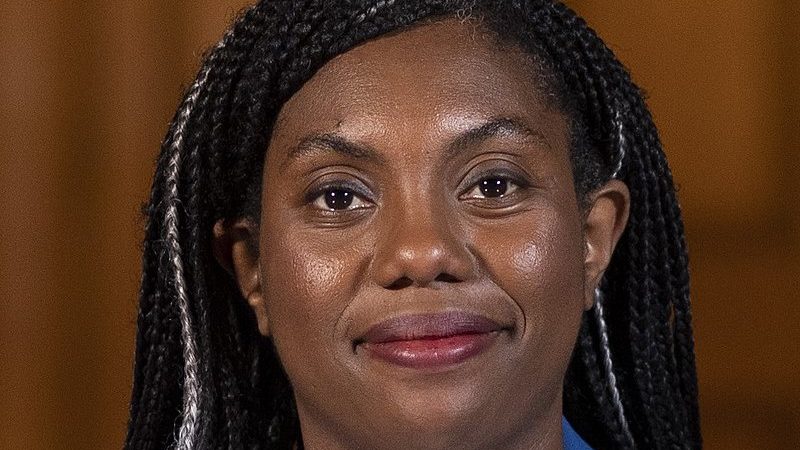
Kemi Badenoch, the leader of the British Conservative Party, has called on the government to reduce taxes imposed on energy bills before contemplating financial assistance for affected families. This statement was made during her appearance on the BBC's "Sunday with Laura Kuenssberg," where she emphasized that providing direct aid to families would incur additional costs reflected in increased taxes.
Badenoch, who did not rule out the possibility of offering direct assistance if energy bills rise significantly, pointed out that the government should bear the burden of reducing taxes on bills instead of focusing on supporting beneficiaries of government aid. This statement comes at a time when concerns are growing over rising energy prices due to geopolitical tensions, especially following the escalation of conflict between the United States and Israel on one side and Iran on the other.
Details of the Event
Last week, British Finance Minister Rachel Reeves confirmed that the government would provide support to those who need it most if energy bills rise due to current crises. Iran has imposed restrictions on the Strait of Hormuz, one of the busiest waterways in the world, leading to a significant increase in oil and gas prices.
Energy bills for millions of households in England, Scotland, and Wales are expected to decrease for three months starting in April, according to the price limits set by the British energy regulator (Ofgem). However, prices are anticipated to rise again afterward due to the impact of the ongoing conflict.
Background & Context
Historically, the United Kingdom has faced several energy crises, the most notable being after the Russian invasion of Ukraine, where the government provided global support for energy bills. At that time, the government, led by Liz Truss, took steps to support families, resulting in an increase in interest rates.
The current government is seeking to reduce the support provided to families, indicating that any support package would be constrained by government borrowing rules and its desire to keep inflation and interest rates as low as possible.
Impact & Consequences
Pressure is mounting on the British government to provide comprehensive support for families, as Liberal Democrat leader Ed Davey has called for universal assistance with energy bills. Additionally, the party's spokesperson on energy, Pippa Hennessy, asserted that the government cannot ignore millions of families who do not receive aid but are facing a cost-of-living crisis.
In contrast, the British Reform Party has proposed abolishing VAT and green taxes on energy bills if the party wins the elections. Meanwhile, the government has called for an increase in domestic oil and gas production in the North Sea, although this will not directly lead to lower energy bills.
Regional Significance
Geopolitical crises in the Middle East directly impact global energy prices, reflecting on Arab countries that heavily rely on oil exports. With rising energy prices, Arab nations may face new challenges in managing their economies, especially with increasing demand for energy amid global crises.
In conclusion, the situation in the United Kingdom remains contingent on developments in geopolitical crises and whether the government will take effective steps to support families affected by rising energy prices.