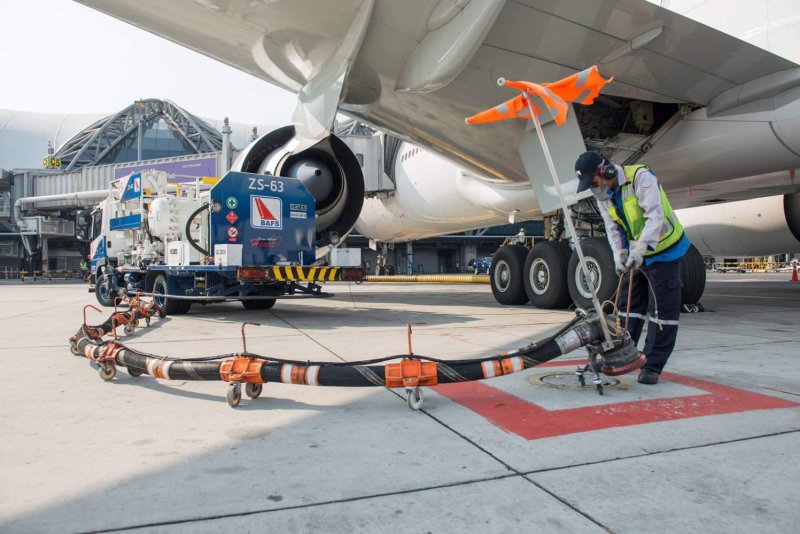
The Bangkok Aviation Fuel Services (BAFS) has called on the Thai government to exempt aviation fuel from the tax of 4.72 baht per liter, indicating that this tax negatively impacts the competitiveness of the aviation sector in the country. This demand arises amidst a significant increase in fuel prices due to global crises, particularly the conflict between Israel and Iran.
Business leaders in the aviation sector support this proposal, as rising fuel prices have compelled some airlines to increase ticket prices. The CEO of BAFS, ML Nathasit Diskul, pointed out that the disparity in tax rates between Thailand and neighboring countries presents an additional challenge.
Details of the Situation
Regional airlines are exploiting existing loopholes to avoid refueling at Thai airports, where high taxes lead to increased operational costs. For instance, airlines operating flights between Bangkok and Phuket or Kuala Lumpur, or between Chiang Mai and Bangkok and Ho Chi Minh City, often avoid refueling in Thailand.
The taxes imposed on aviation fuel are among the largest expenses incurred by airlines. This tax was suspended during the COVID-19 pandemic but was reinstated in 2023, further increasing the pressure on airlines.
Background & Context
Historically, Thailand has been considered a key destination in the regional aviation sector, with the government aiming to enhance its status as an aviation hub in Southeast Asia. However, rising fuel costs and high taxes could jeopardize these ambitions, especially with Vietnam constructing several new international airports.
There is mounting pressure on the Thai government to take immediate action to support the aviation sector, as the Thai Airlines Association has emphasized the need to reduce the tax imposed on aviation fuel. In this context, Nunthaporn Komonsitthiwat, head of the trade department at Thai Lion Air, confirmed that aviation fuel prices have risen by 70% since early March.
Impact & Consequences
If the Thai government does not take urgent steps, the country may lose its competitiveness in the aviation sector to countries like Singapore and Vietnam. ML Nathasit warned that failure to act could lead to a significant decline in Thailand's status as a regional aviation hub.
Airlines expect the effects of rising fuel prices to persist for one to two months, which will lead them to closely monitor travel demand, especially during the Songkran holiday.
Regional Significance
The implications of these developments extend beyond Thailand, as the country’s aviation industry plays a crucial role in the regional economy. A decline in Thailand’s aviation sector could shift travel patterns and economic benefits to neighboring countries.
Ultimately, the call for tax exemption on aviation fuel is a vital step to maintain the competitiveness of Thailand's aviation sector, particularly in the current economic climate.