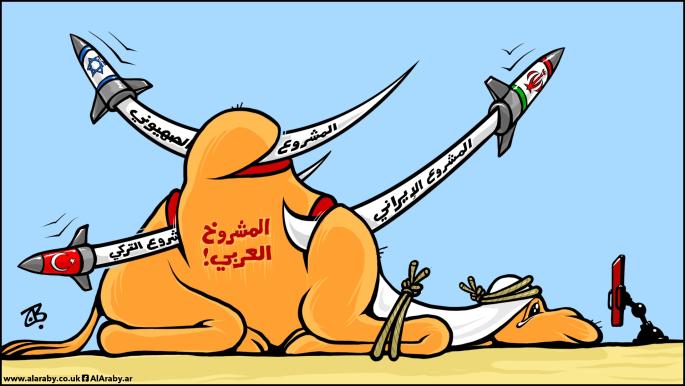
The security challenges facing Arab countries are escalating due to regional and international conflicts that inflict severe losses, despite these nations not being direct participants in these disputes. This situation calls for Arab nations, particularly members of the Gulf Cooperation Council, to convene and develop a unified security strategy aimed at protecting Arab interests and enhancing regional security.
Recent events in the region, including ongoing conflicts in Syria, Yemen, and Libya, illustrate how Arabs are paying the price for conflicts unrelated to them. These losses are not merely statistics; they reflect a painful reality experienced by the Arab citizen, where economies are affected and development is hindered due to these crises.
Event Details
In recent years, the Arab region has witnessed a surge in armed conflicts, exacerbating humanitarian and economic crises. Although many Arab countries are not direct parties to these conflicts, the negative repercussions significantly impact their stability and security. Therefore, the need for a unified security vision has become more urgent than ever.
The Gulf Cooperation Council, which includes countries such as Saudi Arabia, the UAE, and Kuwait, has the potential to serve as an effective platform for coordinating security efforts. Through regular meetings and information sharing, member states can enhance their defensive capabilities and develop joint strategies to address security challenges.
Background & Context
Historically, Arab countries have suffered from internal divisions and regional conflicts that have weakened security coordination. Despite the existence of institutions like the Arab League, the effectiveness of decision-making and implementation has been limited. This situation necessitates a reevaluation of current strategies and the adoption of a more comprehensive approach to tackle security challenges.
Moreover, geopolitical changes in the region, including the emergence of new powers like Iran and Turkey, have complicated the security landscape. These powers seek to expand their influence, requiring Arab nations to unite and work together to safeguard their interests.
Impact & Consequences
If effective steps are not taken to unify security efforts, Arab countries may face further challenges. They could be subjected to increased external interventions, exacerbating internal crises. Additionally, the absence of security coordination could lead to the proliferation of terrorism and an increase in cross-border criminal activities.
On the other hand, unifying the security vision can contribute to enhancing regional stability, paving the way for opportunities in economic development and cooperation across various fields. Countries that adopt joint security strategies will be better positioned to confront challenges and achieve sustainable development.
Regional Significance
The security situation in Arab countries directly affects the lives of citizens. Ongoing crises lead to rising unemployment and poverty, negatively impacting social stability. Therefore, unifying security efforts is not just a political necessity; it is also a humanitarian demand to protect citizens' rights and improve their living conditions.
In conclusion, the current situation requires Arab nations, particularly within the Gulf Cooperation Council, to transcend differences and work together to establish a unified security strategy. This step will be essential for protecting Arab interests and enhancing security and stability in the region.