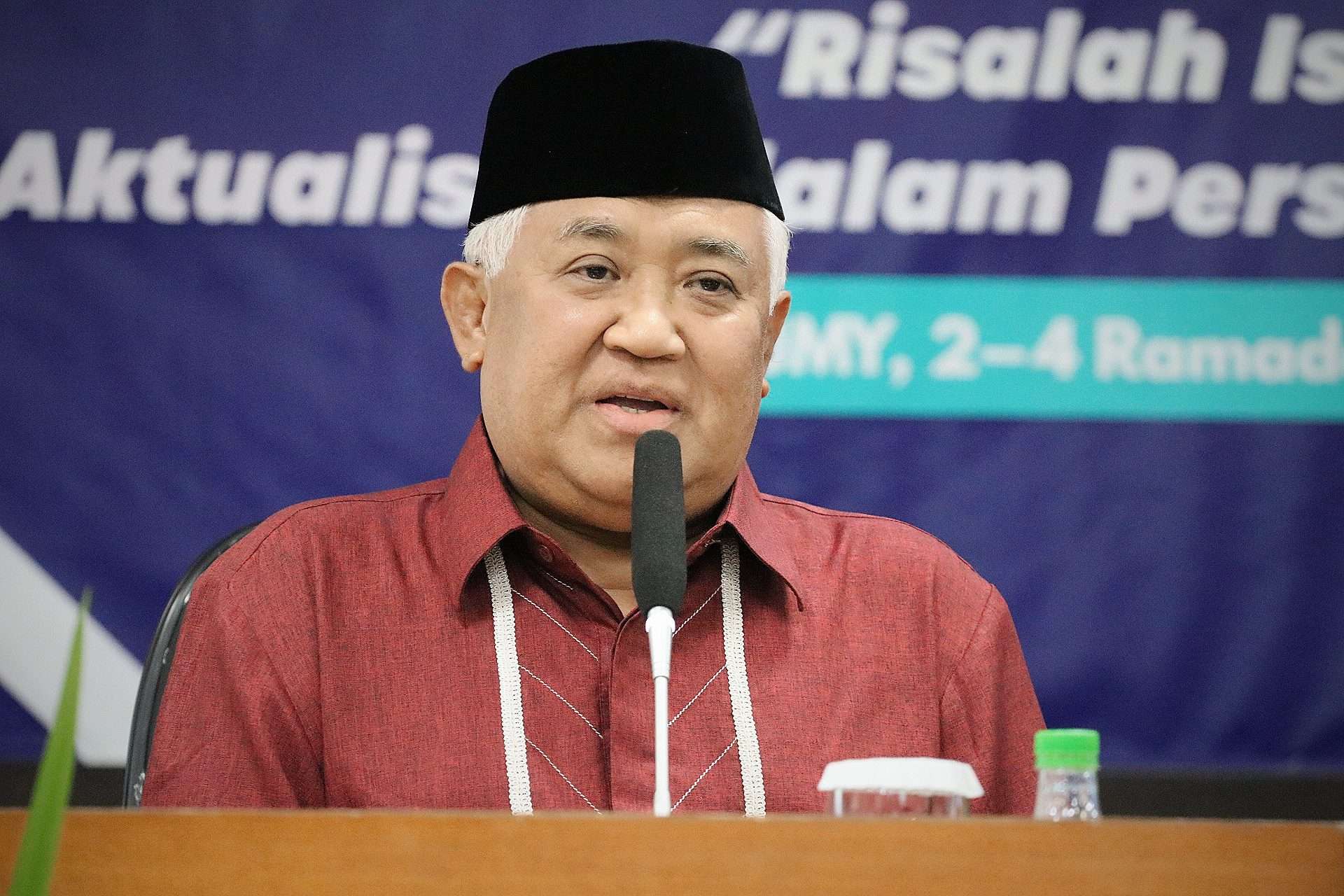
Amid escalating global conflicts, Indonesian Islamic thinker Din Syamsuddin has urged Muslims in Indonesia to unite as a means to achieve global peace. This call came during a meeting held in Jakarta with several Islamic figures and the Iranian ambassador to Indonesia, Mohammad Boroujerdi, where Syamsuddin emphasized the importance of unity among Muslims in facing current challenges.
Syamsuddin pointed out that the current time requires Muslims to transcend sectarian and ethnic disputes, such as those between Sunnis and Shiites, and to focus on the common values that bind them. He affirmed that Islam calls for the strengthening of faith-based brotherhood among Muslims, regardless of their differences.
Details of the Event
During the meeting, Din Syamsuddin noted that Muslims have a strong foundation for unity, represented by the Holy Quran and the Kaaba. He explained that these symbols should motivate Muslims to cooperate and show solidarity, rather than divide due to sectarian or ethnic differences.
Syamsuddin also expressed his solidarity with the Iranian people who are facing challenges and conflicts, hoping that these crises would end soon and mark a new beginning for the revival of Islamic civilization.
Background & Context
This call comes at a time when the world is witnessing an increase in conflicts, particularly in the Middle East, where tensions are rising between major powers such as the United States and Iran. These conflicts directly affect security and stability in the region, necessitating that Muslims enhance their unity to confront these challenges.
Historically, Islamic communities have experienced many periods characterized by division and internal conflicts, which have affected their ability to face external challenges. Therefore, Syamsuddin's call for unity comes within the urgent need to overcome these divisions.
Impact & Consequences
Strengthening unity among Muslims can have a significant impact on global peace. Islamic unity is not just a slogan but a pressing necessity to confront the challenges facing the Islamic nation. If Muslims can transcend their differences, they will be better positioned to influence global events and achieve peace.
Furthermore, cooperation between Islamic countries, such as Indonesia and Iran, can contribute to enhancing regional and international stability. Joint efforts in education and culture can help build bridges of cooperation among peoples.
Regional Significance
In the Arab context, this call emphasizes the importance of unity among Arab and Islamic countries in facing common challenges. Internal conflicts and divisions affecting some Arab countries impact their ability to confront external challenges.
Enhancing cooperation among Islamic and Arab countries can contribute to achieving security and stability in the region, positively reflecting on all peoples in the area. Thus, Syamsuddin's call represents an urgent appeal for all Muslims to work together for a better future.