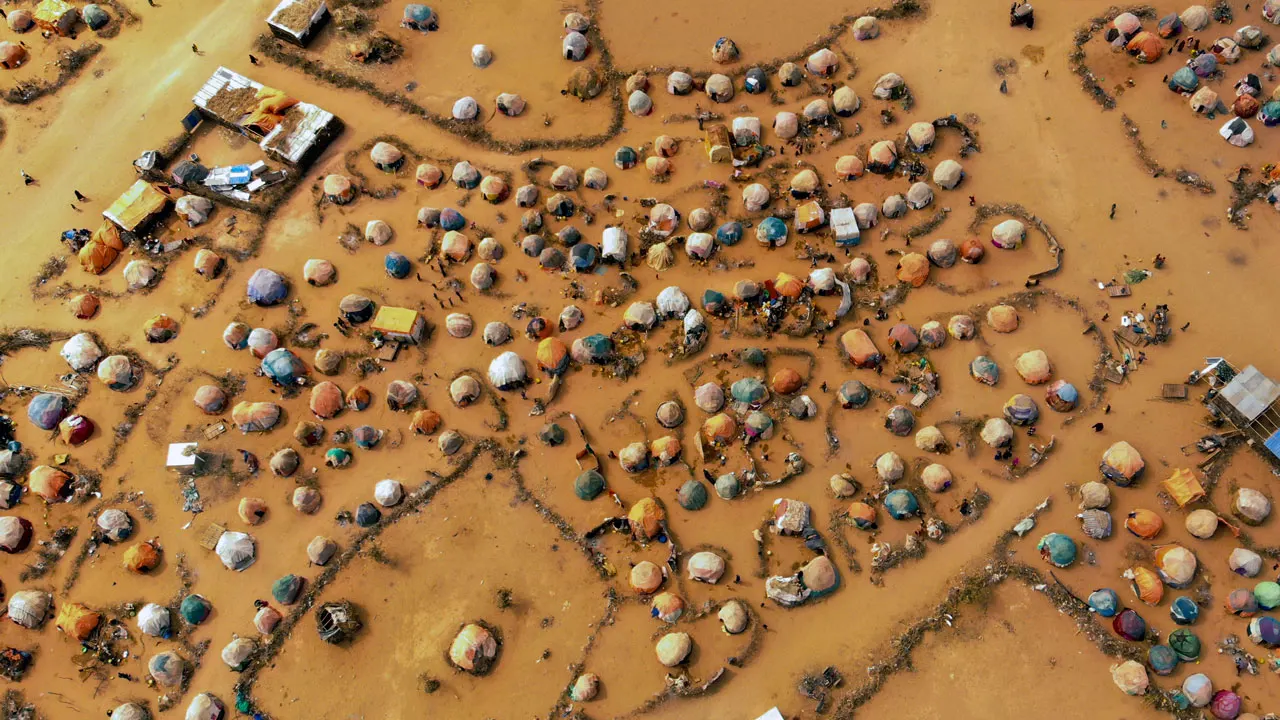
Human Rights Watch has called on the African Court on Human Rights and Peoples to utilize an upcoming advisory opinion to clarify state obligations towards individuals forced to flee due to climate change. The organization asserts that protecting these displaced persons should be a legal obligation for states, and that climate adaptation policies must be grounded in respect for human rights.
In May 2025, the African Bar Association and the African Climate Platform submitted a request for an advisory opinion to the court, seeking an interpretation of state obligations under the African Charter on Human and Peoples' Rights in light of the climate crisis. This request comes amid a growing trend of international and regional courts being approached by organizations and entities seeking legal clarifications regarding states' climate responsibilities.
Event Details
Human Rights Watch based its call on a report it released in August 2025 titled: "Waiting for God: Displacement Due to Floods and the Forced Resettlement of Fishermen in Saint Louis, Senegal." The report documents the suffering of families of fishermen displaced by coastal flooding in 2015 and 2016 from the "Langue de Barbarie" peninsula to the "Khar Yalla" site, which the government and the World Bank acknowledge is unfit for permanent habitation.
Nearly a decade after the floods, families continue to suffer from severe overcrowding, lack of electricity in most homes, absence of waste collection, and seasonal flooding that inundates homes with sewage. Additionally, these families are excluded from a World Bank-funded resettlement project targeting other flood-displaced individuals.
Background & Context
According to data from the "Internal Displacement Monitoring Centre," the number of internally displaced persons due to floods and other natural disasters in Africa has increased nearly sixfold over 15 years, reaching **6.3 million** people in **2023**. This rise reflects the growing challenges faced by the continent as a result of climate change, which directly impacts the lives of millions.
In recent years, the International Court of Justice and the Inter-American Court of Human Rights have issued rulings that established the principle that climate policies must respect human rights and be based on the best scientific evidence. However, no international court has yet comprehensively clarified how to protect the rights of "climate-displaced" communities during the long waiting periods for resettlement.
Impact & Consequences
Concerns are mounting regarding the impact of climate change on human rights, as the failure to take effective action to protect displaced persons could exacerbate humanitarian crises on the continent. The lack of clarity regarding legal obligations of states may contribute to the spread of poverty and social discrimination, further increasing the suffering of affected communities.
This call from Human Rights Watch represents an important step towards enhancing legal awareness regarding the rights of climate-displaced persons and may pave the way for further legal actions to protect these individuals. Emphasizing human rights in climate adaptation policies is essential to ensure that displaced persons are not marginalized.
Regional Significance
While the focus in this context is on the African continent, issues related to climate displacement are not confined to Africa alone. The Arab region also faces similar challenges, as the impacts of climate change, such as droughts and floods, intensify, leading to population displacement. Strengthening the rights of displaced persons in the context of climate change is vital to addressing these challenges.
In conclusion, this development serves as a call for serious reflection on how to protect the rights of climate-displaced persons, both in Africa and in the Arab region. Commitment to human rights in adaptation and resettlement policies is a necessary step towards achieving social and climate justice.