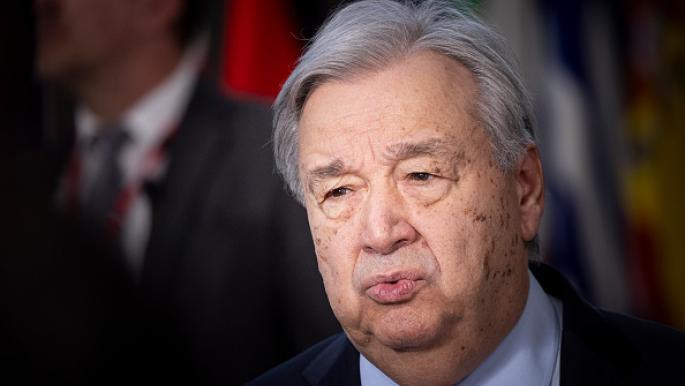
UN Secretary-General Antonio Guterres called today for an end to the US-Israeli war on Iran, stressing the importance of resorting to dialogue as a means to resolve conflicts. This appeal comes at a time when tensions in the region are escalating, threatening regional stability and security.
Guterres, speaking at a press conference, noted that the continuation of military actions would only exacerbate the humanitarian situation in Iran and increase the suffering of civilians. He also urged the international community to take effective steps to pressure the concerned parties to cease hostilities and sit at the negotiating table.
Details of the Event
Guterres's statements come at a sensitive time, as fears grow over the escalation of conflict between Iran and both the United States and Israel. Recently, there have been several military operations and mutual threats, heightening tensions in the Middle East. The UN Secretary-General, who has long called for peace and stability, expressed concern over the negative impact this war could have on regional and international security.
He also emphasized the necessity of respecting human rights at all times, indicating that war does not justify the violation of the rights of individuals or groups. He called for the protection of civilians and the provision of humanitarian assistance to those affected by the conflict.
Background & Context
Historically, relations between Iran and the United States have been marked by increasing tensions since the Islamic Revolution in 1979. These tensions significantly escalated after the US withdrawal from the Iranian nuclear deal in 2018, leading to the imposition of severe economic sanctions on Tehran. In response, Iran expanded its nuclear program, raising concerns within the international community.
As for Iranian-Israeli relations, they are characterized by intense hostility, with Israel viewing Iran as an existential threat. Israel has carried out several military operations against Iranian targets in Syria, complicating the situation in the region further.
Impact & Consequences
The continuation of the war between the United States and Israel on one side and Iran on the other could lead to dire consequences for regional security. An escalation of the conflict may destabilize neighboring countries such as Iraq, Syria, and Lebanon, intensifying sectarian conflicts.
Moreover, this war could impact the global economy, particularly in the energy sector, as Iran is one of the major oil-exporting countries. Any escalation in the conflict could lead to rising oil prices and affect global markets.
Regional Significance
The Arab countries neighboring Iran are among the most affected by the current tensions. The war could lead to an influx of refugees and increased sectarian tensions in the region. Additionally, any escalation could impact peace efforts in other conflict areas such as Yemen and Syria.
Ultimately, hope remains pinned on the international community to pressure the concerned parties to cease hostilities and return to the negotiating table, as peace is the only option to ensure the region's stability and security.