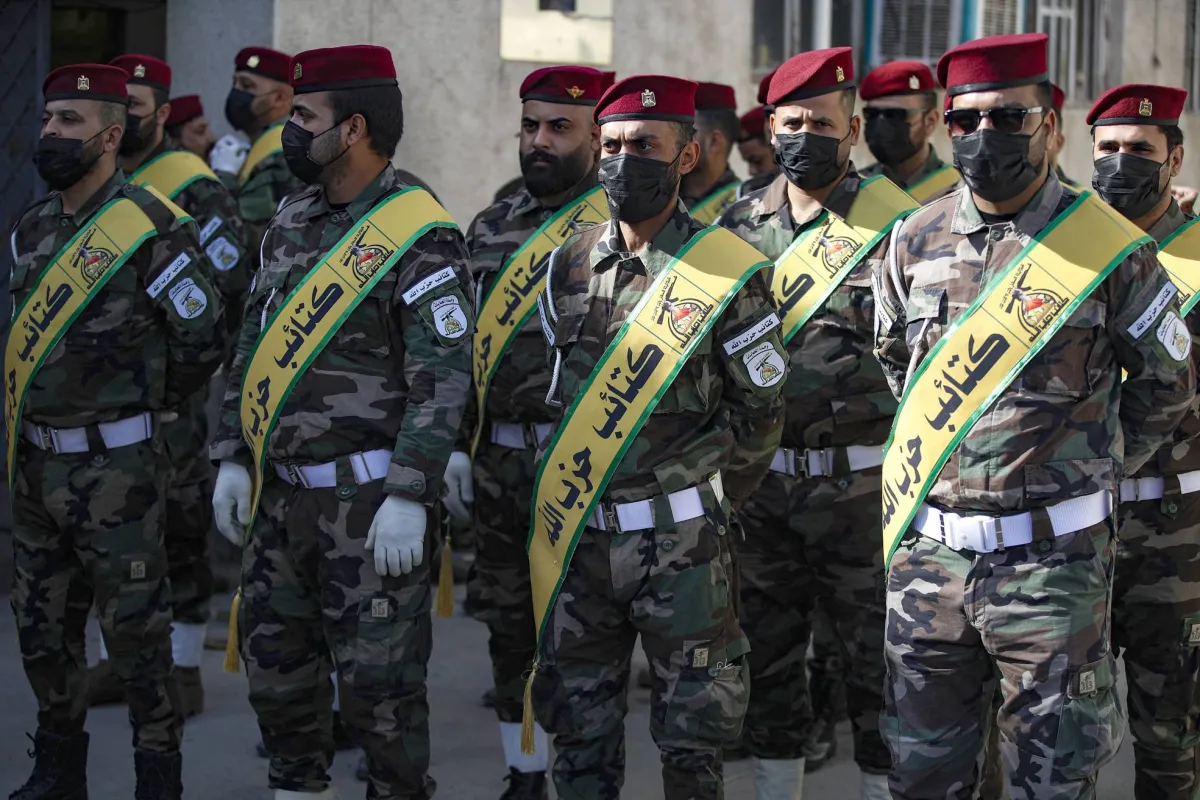
Calls are increasing for Iraqis to enlist in support of Iran in the regional war ignited between the United States and Israel on one side and Iran on the other. Although Iraqi law criminalizes this type of activity, some Iranian-aligned groups continue their movements unofficially, sparking widespread debate in Iraqi circles.
Since the onset of the war, Iraq has taken two contradictory paths, with the official government seeking to distance the country from the cycle of conflict, while Iranian-aligned armed factions pursue a parallel course targeting sites believed to have American interests. These factions, such as Hezbollah Brigades, have launched campaigns of support for Iran, including calls for fundraising and military volunteering.
Details of the Event
At the end of January, the Secretary-General of the Hezbollah Brigades, Abu Hussein Al-Hamidawi, called on those he referred to as “mujahideen” to prepare for a “total war” in support of Iran, indicating the possibility of carrying out suicide operations. Additionally, a controversial Friday preacher in Najaf has opened special offices for volunteering, despite these activities contradicting Iraqi laws.
It is noteworthy that Iraqi laws, specifically Article 165 of the Penal Code, criminalize military mobilization against a foreign state and impose penalties that can reach the death penalty if this leads to war with Iraq. Nevertheless, it appears that the official authorities have not taken any deterrent measures against these activities, raising questions about the state’s stance towards these groups.
Background & Context
Historically, Iraq has witnessed the recruitment of volunteers in similar contexts, as the late President Saddam Hussein allowed Arab volunteers to enter Iraq during the American invasion in 2003. The number of these volunteers reached around 6,000 fighters, who were trained in street fighting and urban warfare. These experiences raise concerns about the potential repetition of the current scenario, as current activities contribute to internal division.
While the Iraqi government seeks to maintain its sovereignty and stability, these activities could exacerbate security conditions, especially with increasing regional and international pressures. There are also fears that these activities could exploit young volunteers in conflicts that do not benefit Iraq.
Impact & Consequences
Many observers believe that these activities could worsen security conditions in Iraq, as they may contribute to increasing divisions among different factions. Furthermore, the government’s failure to take decisive action may reflect a weakness in its ability to control the internal situation, potentially leading to exacerbated economic and social crises.
Moreover, these activities could negatively impact Iraq's relations with other countries, especially those seeking to support Iraq's stability. External interventions, whether from Iran or others, could complicate the political landscape in Iraq, increasing tensions.
Regional Significance
The repercussions of these activities extend beyond Iraqi borders, potentially affecting the stability of the entire region. Regional conflicts, particularly those involving Iran, could escalate situations in neighboring countries, threatening regional security. Additionally, the increase in armed activities may enhance instability in the region, adversely affecting peace and development efforts.
In conclusion, Iraq's future hangs in the balance between conflict and stability, as the current situation requires swift action from the Iraqi government to ensure that the country does not slip into a new cycle of violence and conflicts.