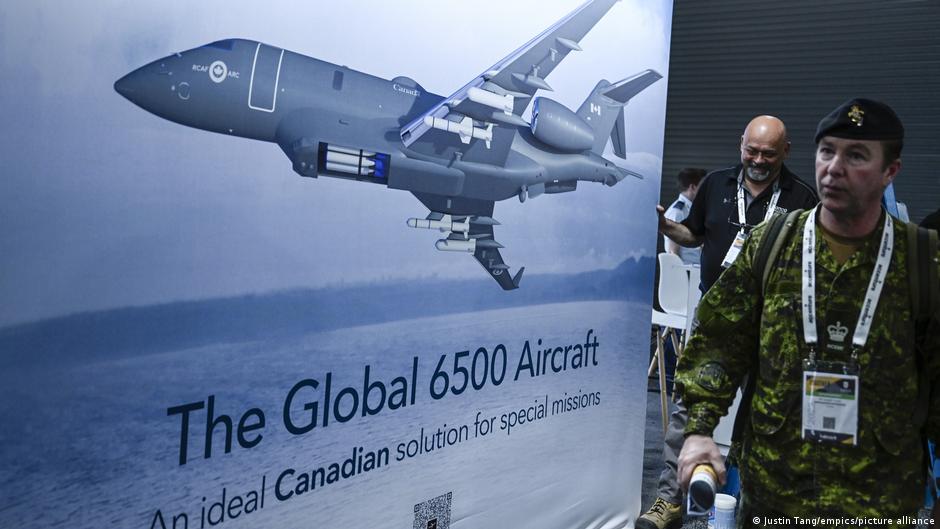
In a strategic move aimed at bolstering national security, Canadian Prime Minister Mark Carney announced on Wednesday the government's decision to forgo purchasing early warning radar aircraft from the United States in favor of the Swedish surveillance aircraft GlobalEye. This aircraft, based on the Canadian Bombardier Global 6500, is part of Canada's efforts to enhance its defensive capabilities in the Arctic region.
During a defense conference in Ottawa, Carney emphasized that GlobalEye will be a key asset for the Canadian Armed Forces in detecting and mitigating threats in the Arctic. This decision aligns with the Canadian government's goal of diversifying its military spending away from traditional reliance on the United States, especially after Canada had previously engaged with the European Defense Fund.
Details of the Acquisition
The GlobalEye aircraft is equipped with an advanced suite of sensors and mission systems, enabling it to monitor aircraft and missile movements from distances of up to hundreds of kilometers. It is capable of detecting hostile activities in the air or from ships, and directing fighter jets toward their targets. However, Carney did not provide details regarding the size of the fleet or the potential cost of the contract.
Simultaneously, Swedish company Saab announced plans to invest in research and development in Canada as part of any potential deal, reflecting its commitment to enhancing defense cooperation with Canada.
Background & Context
This decision comes amidst increasing tensions between Canada and the United States, particularly after former President Donald Trump initiated a trade war against Canada, which sparked widespread discontent in the country. Trump had previously suggested that Canada should become the 51st state of the United States, provoking angry reactions in Canada. Since then, the Canadian government has begun reviewing its plans to purchase American F-35 aircraft and exploring alternative options to bolster its military capabilities.
In recent years, Canada has heavily relied on its partnership with the United States to monitor over 4.4 million square kilometers of Canadian land and waters. However, the shift towards enhancing self-reliance reflects Canada's desire to become more independent in defense matters.
Impact & Consequences
This decision may affect defense relations between Canada and the United States, as Canada seeks to reduce its dependence on American military equipment. This shift could pave the way for increased cooperation with European countries in defense, indicating a transformation in Canadian military strategies.
Furthermore, this decision may encourage other countries in the region to reassess their defense partnerships, potentially leading to changes in military balances in North America. Additionally, investing in local defense technology could enhance Canadian industrial capabilities and create new job opportunities.
Regional Significance
While this news appears to focus on Canadian-American relations, it has broader implications for regional and international security. Tensions among major powers could reshape military alliances, affecting Arab nations seeking to enhance their defense capabilities. Given the increasing security challenges in the region, Arab countries might benefit from studying Canada's experiences in diversifying their defense partnerships.
In conclusion, Canada's decision to purchase the Swedish GlobalEye aircraft represents a significant step toward enhancing its defensive capabilities in the Arctic and reflects the Canadian government's desire for greater independence in defense matters.