Canadian Prime Minister Mark Carney's statements at the World Economic Forum regarding the importance of building a new global system based on human rights and sustainable development have sparked questions about the double standards adopted by his government. While warning against the actions of major powers, Canada has shown support for the U.S.-Israeli war against Iran, which has drawn widespread criticism.
On January 20, 2026, Carney delivered a speech in Davos that received international acclaim, calling on middle powers like Canada to work together to build a new global system. However, just one month later, his government supported the war launched by the United States and Israel against Iran, despite this conflict contradicting Article 2(4) of the United Nations Charter, which prohibits the use of force against any state.
Details of the Event
The war on Iran marks a new beginning of conflicts that are ravaging the region, starting with an American bombing of an Iranian school that resulted in the deaths of over 170 people, most of whom were children. The war has systematically targeted the Iranian healthcare system, exacerbating the humanitarian situation there.
Although the war is unpopular in Canada, the government initially supported it. However, following the negative reactions it received after the Davos speech, the government began to scale back its support. On March 3, Carney acknowledged that the United States and Israel acted without support from the United Nations or consultation with allies.
Context and Background
Historically, Canada has supported an international system based on laws, but this support seems to be waning amid rising political pressures. While Canada adopts a discourse condemning Russia's actions in Ukraine, it ignores the violations committed by the United States and Israel against Iran. This contradiction reflects a double standard in the Canadian government's approach.
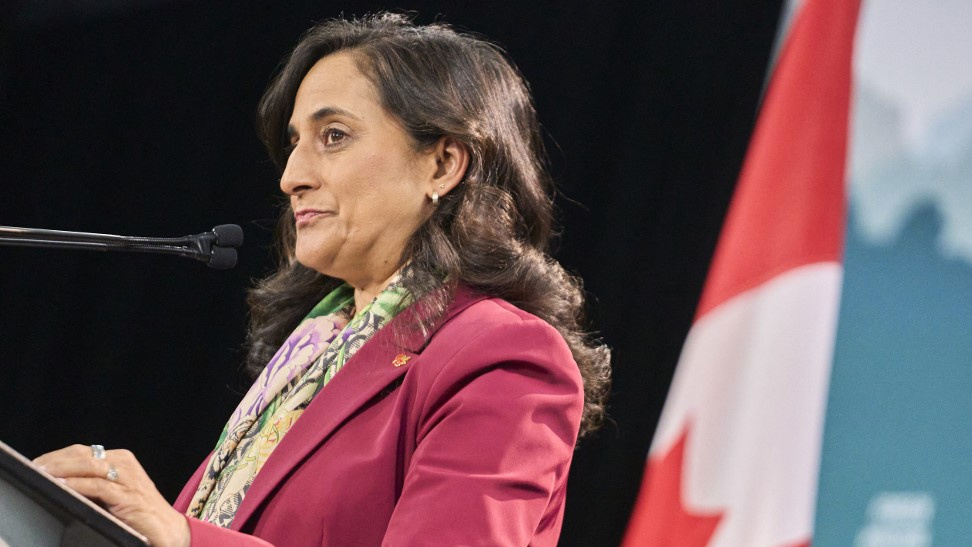
Statements from Canadian Foreign Minister Anita Anand on social media show that Canada tends to blame Iran more than the actual aggressors. She focuses on Iran's responses to attacks while ignoring the original actions that led to the escalation.
Impact and Consequences
The war on Iran is causing significant economic damage at the international level, including in Canada. The Canadian economy is suffering from the repercussions of this war, impacting many Canadians with ties to the region. There are also concerns that this war could lead to Canada losing its territories, either through the secession of the energy-rich province of Alberta or through the annexation of other lands.
Protecting Canada from these risks requires a strong system of international law, which necessitates robust leadership from middle powers. However, it seems that the Canadian government prefers to support a rules-based system that favors a small group of Western countries at the expense of the rest of the world.
Impact on the Arab Region
Events in Iran directly affect the Arab region, where many countries are suffering from the repercussions of regional conflicts. The war on Iran could exacerbate humanitarian crises in the region, prompting Arab countries to take clear stances regarding these events.
In conclusion, the double standards adopted by Canada in its foreign policy emerge as an obstacle to achieving stability in the region, necessitating a comprehensive reassessment of international policies.