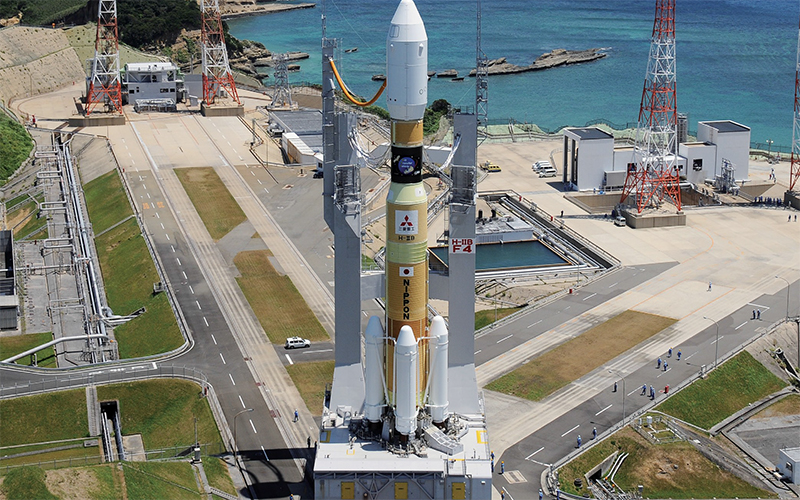
The Japan Aerospace Exploration Agency (JAXA) has announced the cancellation of the first flight test of its experimental RV-X rocket, which was scheduled for March 30, due to a malfunction in the fuel supply separation system. This decision came after technicians at the rocket testing center in Akita Prefecture discovered that the device responsible for separating the fuel supply pipes did not operate correctly.
This incident marks the fifth time the first flight test of the RV-X rocket has been postponed, as the launch was initially set for March 7 but was delayed three times due to weather conditions. On March 25, the test was canceled again due to issues related to the equipment connecting the rocket to external apparatus.
Details of the Event
The RV-X rocket is approximately 7.3 meters long and has a diameter of 1.8 meters, operating with a motor that uses liquid oxygen and liquid hydrogen. The testing program aims to collect the necessary data to develop reusable rockets, which is part of Japan's plan to adopt this technology in its future main rockets. This allows for satellite launches at lower costs and greater frequency.
This step is part of Japan's strategy to enhance its capabilities in the space sector, as it seeks to become one of the leading countries in this field. However, the repeated delays in testing raise concerns about the project's timeline.
Background & Context
Historically, Japan has been one of the leading countries in space, launching its first satellite in 1970. Since then, it has made significant progress in developing space technologies, including reusable rockets. However, technical challenges such as those faced by JAXA with the RV-X reflect the difficulties countries encounter in achieving their ambitious goals in this field.
Japan aims to adopt reusable rocket technology, which has proven successful in the United States with the SpaceX program. This technology could significantly reduce launch costs, making space more accessible to many countries and companies.
Impact & Consequences
The postponement of the first flight test of the RV-X rocket may affect the overall timeline of Japan's space projects. With increasing competition in the space sector, Japan may find itself lagging behind other countries like the United States and China, which are striving to enhance their capabilities in this area.
These developments are significant not only for Japan but also for other countries seeking to develop their space programs. Reusable technology could open new avenues for international cooperation in space, contributing to the achievement of shared goals in space exploration.
Regional Significance
Although Japan is far from the Arab region, developments in space affect all countries. Many Arab nations are moving towards developing their own space programs, such as the United Arab Emirates, which launched the Hope Probe to Mars. Japanese experiments could serve as an inspiration for Arab countries in their pursuit of space exploration goals.
In conclusion, developments in the field of space remain a fascinating topic as countries strive to make progress in this area. Despite ongoing challenges, there is hope that Japan can overcome these obstacles and achieve its ambitious goals.