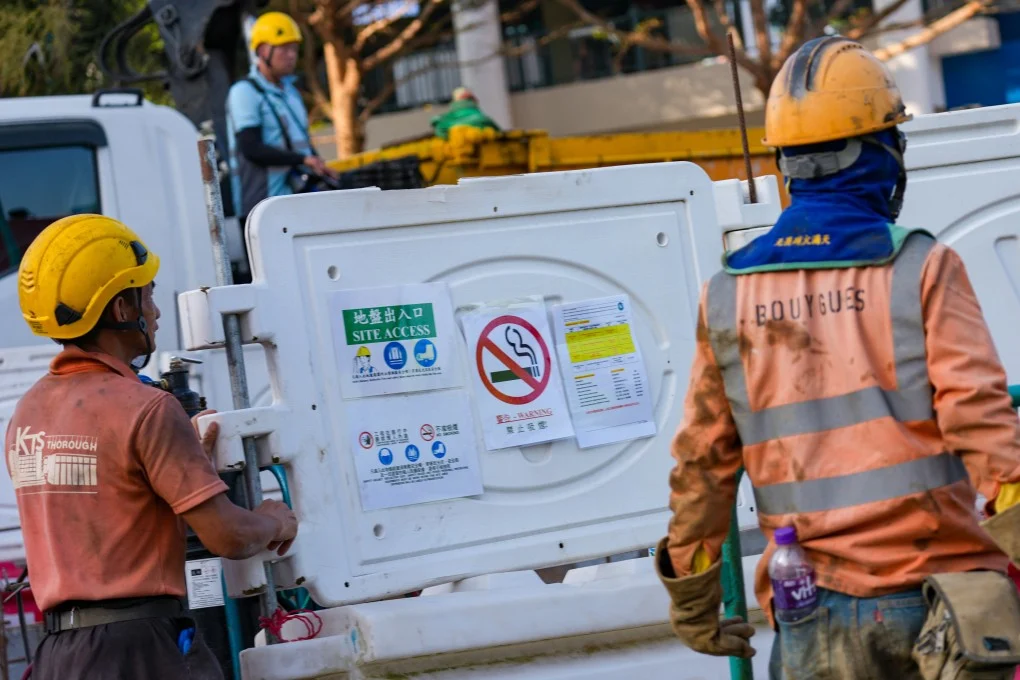
Hong Kong labor authorities have announced the cancellation of the idea of creating designated smoking areas at construction sites, as part of a proposed smoking ban. This decision comes after a devastating fire that occurred in the Tai Po area last November, which resulted in several casualties. Labor Commissioner Sam Hui Cheung Shum confirmed that the ban will cover all areas of construction sites, reflecting the government's commitment to improving safety in these locations.
In a press conference held on Monday, Hui explained that authorities face difficulties in enforcing the ban if designated smoking areas are allowed. He noted that the use of drones equipped with thermal sensors will be part of efforts to enhance inspections at construction sites, contributing to more effective enforcement of the ban.
Details of the Event
The proposed smoking ban at construction sites is part of the government's efforts to improve safety standards following the tragic incident in Tai Po. A fire broke out in one of the buildings, leading to the deaths of several individuals and injuries to others. This incident raised widespread concerns about the safety of workers at construction sites, prompting authorities to take stringent measures.
The new ban will replace existing restrictions that allowed smoking in certain areas of construction sites. This change aims to reduce risks associated with smoking, especially in environments containing flammable materials. Additionally, the use of drones will help better monitor sites, enhancing authorities' ability to enforce the new laws.
Background & Context
Historically, Hong Kong has faced significant challenges regarding safety at construction sites. The city has witnessed numerous fatal incidents that have raised community concerns. In recent years, the government has introduced a range of laws and measures to improve working conditions, including enhancing safety standards and providing training for workers.
The incident that occurred in Tai Po served as a wake-up call for authorities, highlighting the urgent need for stricter measures. An investigation into the incident has led to calls from labor unions and civil society for the implementation of stricter laws to protect workers.
Impact & Consequences
This ban is expected to have a significant impact on the work culture at construction sites in Hong Kong. The cancellation of smoking areas may lead to changes in workers' behaviors, contributing to improved public safety. Furthermore, the use of modern technology such as drones may open new avenues for monitoring work sites.
However, this ban may face resistance from some workers who consider smoking a part of their daily routine. Therefore, it will be essential for the government to educate workers about the benefits of this ban and how to improve the overall work environment.
Regional Significance
While this news focuses on Hong Kong, issues related to safety at work sites are a global concern. In many Arab countries, construction sites still face safety issues, necessitating similar actions to improve conditions. Hong Kong's experience could serve as a model for Arab countries on how to address workplace safety issues.
In conclusion, the proposed smoking ban at construction sites represents an important step toward improving worker safety. By utilizing modern technology and strengthening laws, Hong Kong can set new safety standards in the workplace, which could have a positive global impact.