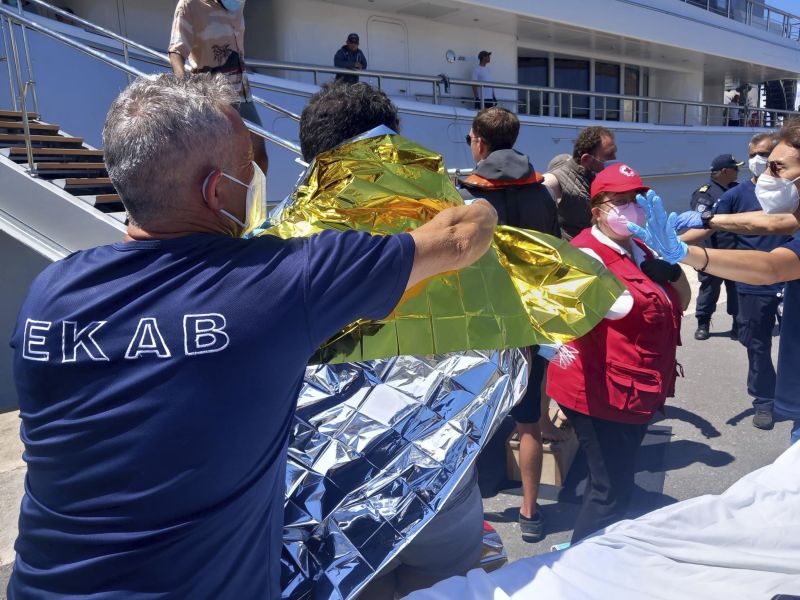
A boat carrying irregular migrants sank in the Aegean Sea off the coast of Bodrum, resulting in the deaths of 18 individuals. According to the Turkish Coast Guard, 21 others were rescued during the search operations that took place after the incident.
The incident occurred early this morning, Wednesday, when the boat sank at approximately 6 AM local time, equivalent to 3 AM GMT. Several coast guard boats and aircraft were dispatched to the scene after receiving a distress call, activating emergency protocols.
Details of the Incident
Following the distress call, search and rescue operations began immediately, with several units from the coast guard deployed to the area. These efforts resulted in the rescue of 21 individuals, while the bodies of 18 migrants were recovered. Authorities are still continuing search operations for any potential missing persons, although the destination that the migrants were heading to remains unclear.
The Bodrum area is considered one of the hotspots for migrants attempting to cross the Aegean Sea to the Greek islands, as many seek to escape difficult conditions in their home countries.
Background & Context
Incidents of migrant boats capsizing in the Mediterranean and Aegean Seas are recurring, as many seek a better life in Europe. These incidents reflect the dire humanitarian conditions faced by migrants, as well as the significant risks they encounter during their maritime journeys.
Over the years, the number of migrants attempting to cross the sea has increased, exacerbating the humanitarian crisis. Reports have shown that many of these migrants face harsh conditions, including shortages of food and water, as well as the danger of drowning.
Impact & Consequences
These incidents raise international concern about how to address the migration crisis, as pressures mount on European governments to provide effective solutions. There is also a growing need for greater international cooperation to tackle this humanitarian phenomenon.
The deteriorating conditions in some migrants' home countries, such as Syria and Afghanistan, require a swift response from the international community. The continuation of these incidents could lead to worsening humanitarian crises, necessitating coordinated efforts to assist these individuals.
Regional Significance
These incidents serve as a stark reminder of the challenges facing the Arab region, where ongoing political and economic crises continue to drive people to migrate. The situation in countries like Syria and Libya contributes to the increasing numbers of migrants, requiring a comprehensive response from neighboring countries and the international community.
As many seek a safe haven, Arab countries must enhance their efforts to provide suitable living conditions, which may reduce the phenomenon of irregular migration.
In conclusion, these incidents remain a reminder of the need for collective action to address humanitarian challenges and provide the necessary support to migrants facing significant risks in their journey towards hope.