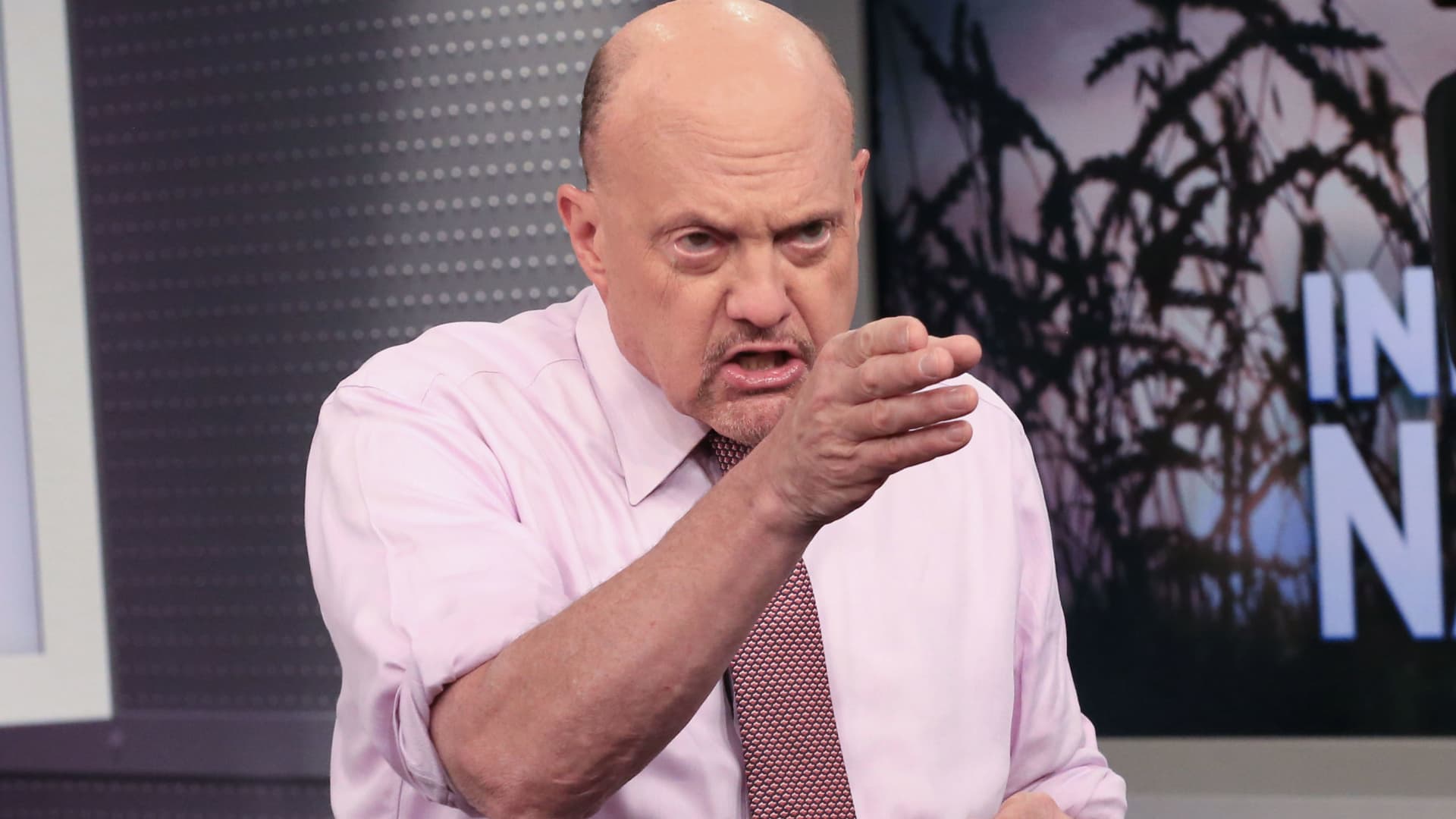
In the "Mad Money" program on CNBC, financial analyst Jim Cramer emphasized that investors should exercise caution before assuming that the stock market has hit its bottom. He explained that the primary driver of the market currently is interest rates, not the geopolitical events occurring in the region.
During his talk on Monday, Cramer pointed out that the S&P 500 index may have reached its low on March 30, but he confirmed that this shift was not due to stock-related factors but rather a decline in bond yields following remarks from Federal Reserve Chair Jerome Powell, who indicated a delay in raising interest rates despite rising oil prices.
Details of the Market Dynamics
Cramer described Powell's statements as highly significant, impacting bonds, oil prices, and most importantly, stocks. This change in expectations helped stabilize stocks, despite escalating tensions in the Middle East. Cramer asserted that headlines related to Iran, oil prices, or even potential disruptions in the Strait of Hormuz were not the main drivers of last week's market rise; rather, it was the interest rates.
Cramer warned that if interest rates were to increase, the market could head towards a significant bear market. He noted sectors sensitive to interest rates, such as housing, banking, and utilities, which could be significantly affected by any changes in monetary policy.
Background & Context
Interest rates are considered one of the key factors influencing financial markets. Historically, when interest rates rise, investors tend to shy away from stocks and gravitate towards bonds, leading to a decline in stock prices. In recent years, markets have experienced significant volatility due to changes in monetary policy, especially under the current global economic conditions.
The relationship between interest rates and stock market performance is crucial for investors to understand. As rates rise, borrowing costs increase, which can dampen consumer spending and business investment, further impacting stock valuations.
Impact & Consequences
The financial markets currently face significant risks, as inflationary pressures remain high, and geopolitical tensions continue to affect markets. Companies are expected to begin issuing weaker forecasts as the earnings season approaches, which may increase uncertainty in the market. The real test for the market will come when more companies start announcing their results in the coming weeks.
Investors should remain vigilant as they navigate these uncertain waters, keeping a close eye on interest rate trends and their implications for various sectors.
Regional Significance
The implications of interest rate changes extend beyond the U.S. markets, affecting global financial systems and economies. As major economies adjust their monetary policies, the ripple effects can lead to shifts in investment flows and currency valuations, impacting emerging markets and international trade.
Understanding the interconnectedness of global markets is essential for investors, especially in a time of heightened geopolitical tensions and economic uncertainty.