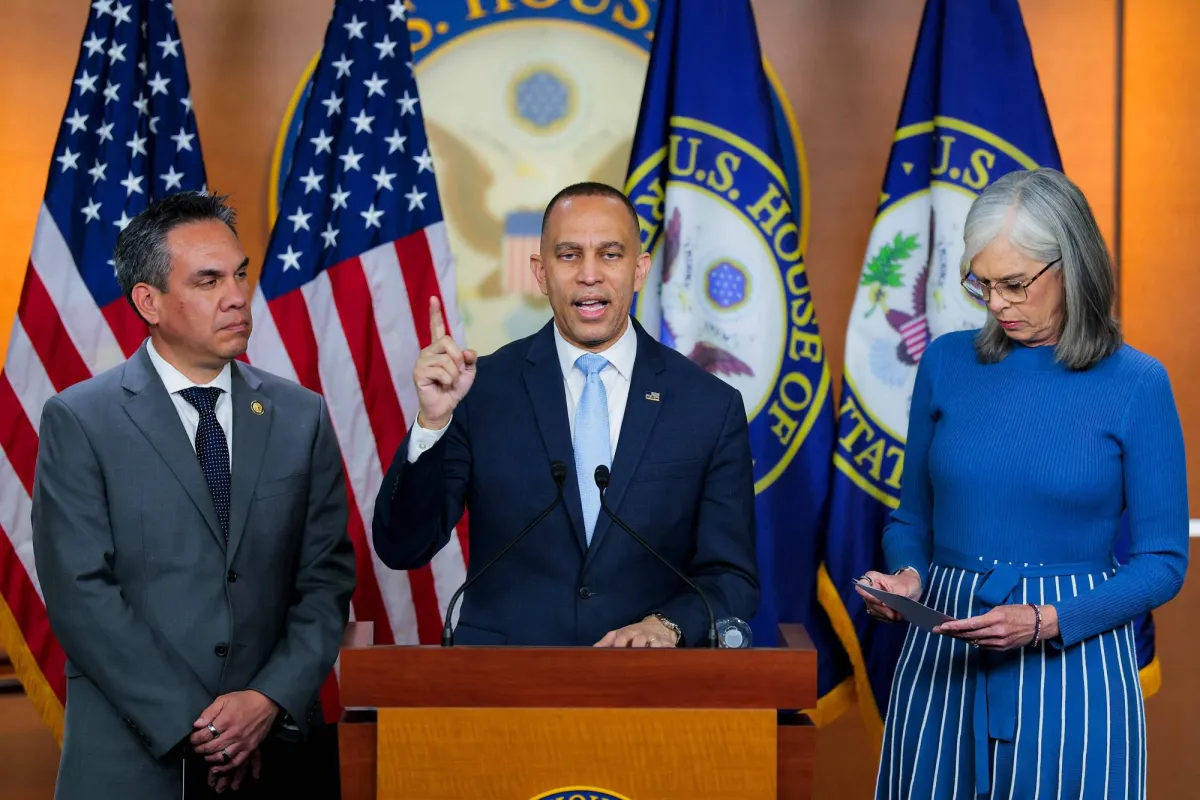
The ceasefire agreement with Iran has elicited mixed reactions in the US Congress, with Democrats expressing skepticism about the war's effectiveness, while Republicans view it as a diplomatic victory for President Trump.
Notable reactions came from the senior Democrat on the Senate Foreign Relations Committee, Jeanne Shaheen, who described the de-escalation as a "long-awaited step" following over a month of a war lacking a clear objective, highlighting the increasing costs borne by the American people.
Details of the Ceasefire Agreement
In a statement from her office, Shaheen called for a "real assessment of what President Trump's war has achieved," noting the deaths of 13 American servicemen and the war's impact on the global economy. She expressed concern that US actions may have prompted Iran to pursue nuclear weapons.
Conversely, some Republicans welcomed the agreement, praising Trump's negotiation skills, while Republican leadership remained largely silent, except for Senator Lindsey Graham, who warned that the diplomatic path must lead to correct outcomes regarding the Iranian regime.
Background & Context
These developments come at a sensitive time as the midterm elections approach in November. The Trump administration has faced significant pressure following his controversial remarks about "destroying an entire civilization," placing Republicans in a defensive position.
Historically, US-Iranian relations have been marked by increasing tensions, particularly after the US withdrawal from the nuclear agreement in 2018. Reports have indicated that Iran has been enriching uranium at a rate of 60%, raising international concerns about its pursuit of nuclear weapons.
Impact & Consequences
Concerns are growing that this agreement could escalate tensions in the region, with some observers suggesting that Iran may seize this opportunity to strengthen its position in negotiations. There are also calls within Congress to review previous agreements, which could lead to further political division.
At the same time, the US Secretary of Defense has warned that the United States is prepared to seize Iranian uranium if Tehran refuses to hand it over, reflecting the potential for ongoing military tensions.
Regional Significance
This development represents a turning point in US-Iranian relations and could significantly impact the stability of the Arab region. Any escalation in tensions could have negative repercussions for neighboring countries, especially those grappling with internal conflicts.
Moreover, this agreement may open the door for Iran to enhance its influence in the region, raising concerns among Arab nations wary of Iranian expansionism.
In conclusion, the future of US-Iranian relations remains uncertain, as involved parties must navigate these developments cautiously to ensure that conditions in the region do not worsen.