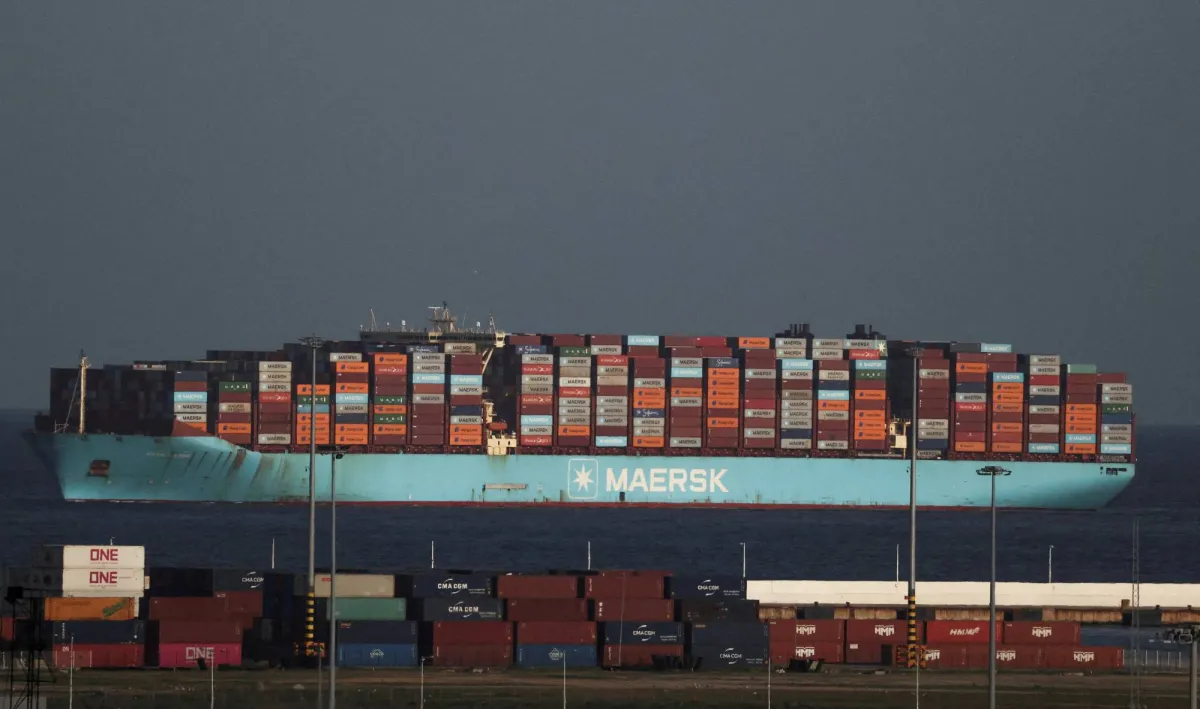
The Danish shipping group Maersk announced on Wednesday that the ceasefire between the United States and Iran may create opportunities for ships to transit the Strait of Hormuz. However, the company confirmed that this situation does not yet provide complete maritime certainty.
These statements come at a time when the region has witnessed military escalation since February, when the war began with American and Israeli strikes on Iran, followed by Iranian attacks across the region, leading to the closure of the Strait of Hormuz, significantly affecting shipping and global supply chains.
Details of the Event
In its statement to Reuters, Maersk clarified that any decision regarding transiting the Strait of Hormuz will depend on ongoing risk assessments, close monitoring of the security situation, and guidance from relevant authorities and partners. The company noted that it is currently adopting a cautious approach and will not make any changes to specific services at this time.
In a related context, Shell provided an initial glimpse into the negative impacts of the war on the profits of major oil companies, as it lowered its gas production forecasts for the first quarter of the year. It also indicated a rise in oil trading profits and a decline in short-term liquidity.
Background & Context
Brent crude prices, the global benchmark, rose in the first quarter of the year to their highest levels in years, nearing $120 per barrel, following airstrikes targeting Iran. The closure of the Strait of Hormuz exacerbated the situation, as this strait is a vital artery for global oil movement.
Shell projected that its working capital would fluctuate between -10 and -15 billion dollars, reflecting unprecedented volatility in commodity prices. It also anticipated its gas production in the first quarter to range between 880 and 920,000 barrels of oil equivalent per day, compared to its previous forecasts.
Impact & Consequences
Markets expect these developments to lead to a significant increase in Shell's capital, highlighting the exceptional nature of the current situation. Additionally, trading results in the chemicals and products sector of Shell are expected to be much higher than the previous quarter.
Despite the rise in oil prices, investors remain cautious, as the continuation of the conflict could lead to slower economic growth and complicate the monetary policy of the U.S. Federal Reserve.
Regional Significance
These events directly impact Arab countries, many of which rely on oil exports. Continued disruptions in the Strait of Hormuz could lead to rising energy prices, negatively affecting the economies of the region.
In conclusion, the situation in the Strait of Hormuz remains under observation, as any changes in the security situation could significantly affect shipping and global markets.