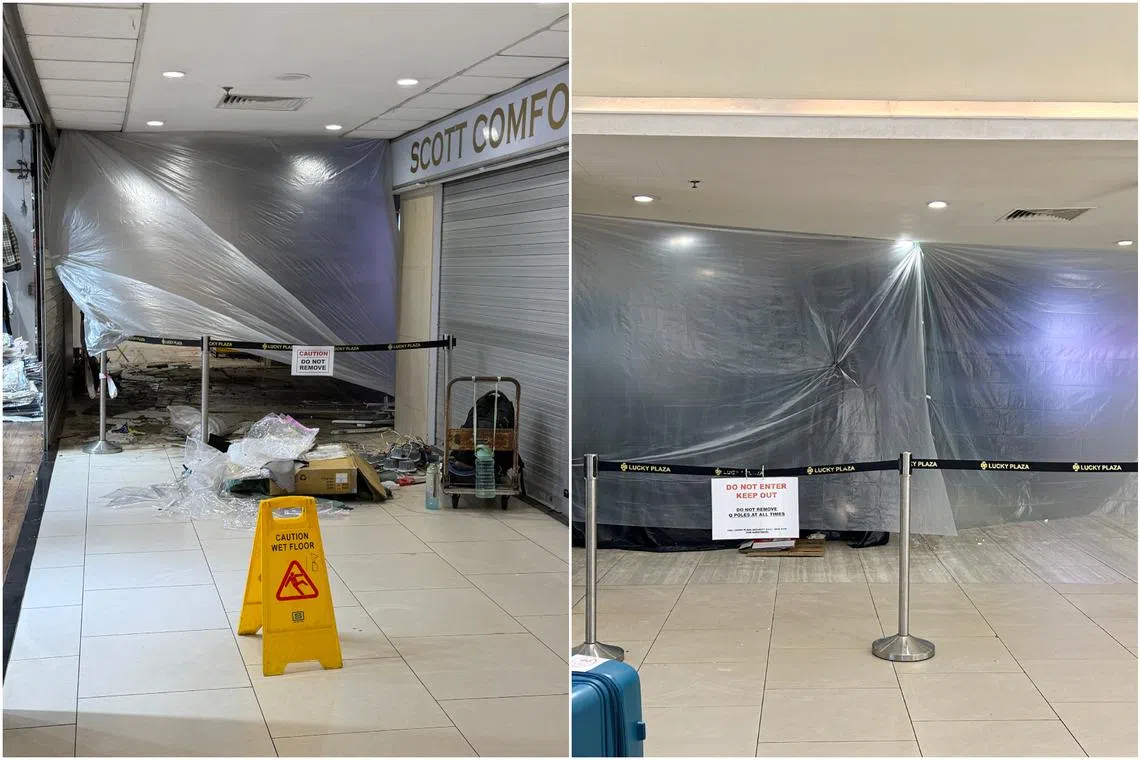
A false ceiling collapsed at Lucky Plaza, a popular shopping destination, early this morning, causing concern among visitors and residents in the area. The sound of the collapse echoed throughout the mall, prompting authorities to close the area for damage assessment.
Initial reports indicate that the cause of the collapse was improper installation of the ceiling, a claim confirmed by officials from the construction authority. Despite the incident, the authority reassured the public that the building remains structurally sound, indicating minimal risk to visitors.
Details of the Incident
The incident occurred at Lucky Plaza, one of the city's leading commercial centers. Emergency teams were dispatched to the scene immediately, where visitors and staff were safely evacuated, confirming that no injuries were reported.
Comprehensive investigations are currently underway to determine the exact reasons behind the collapse, with experts suggesting that improper installation may have resulted from non-compliance with required engineering standards.
Background & Context
Lucky Plaza is a premier shopping center in the region, attracting a large number of visitors daily. This incident comes at a sensitive time, as concerns about the safety of commercial buildings have increased following several similar incidents in recent years.
Impact & Consequences
The collapse may have significant repercussions for Lucky Plaza's reputation, as visitors might avoid the location due to safety concerns. Additionally, the incident could affect businesses within the center, potentially leading to financial losses.
Regional Significance
This event highlights the critical need for adherence to engineering standards in construction to ensure building safety. As urban areas continue to develop, maintaining safety protocols is essential to prevent future incidents.
In conclusion, the Lucky Plaza ceiling collapse serves as a reminder of the importance of rigorous safety measures in commercial construction, emphasizing the need for thorough inspections and compliance with engineering regulations.