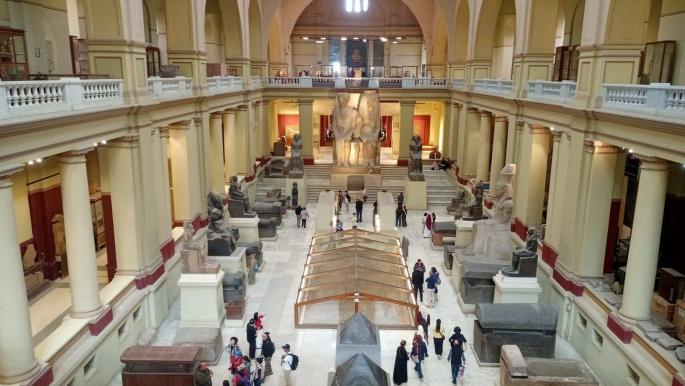
This year, the Egyptian Museum celebrates 130 years since its establishment, contributing to the transformation of chaos into an institutional project for preserving artifacts. Since its opening in 1902, the museum has become a symbol of Egyptian culture and history, drawing visitors from all over the world.
The museum was founded at a time when Egyptian artifacts were neglected and looted, prompting a group of intellectuals and enthusiasts to consider creating an institution to safeguard this heritage. The museum's location was chosen in the heart of Cairo to serve as an attraction for visitors and researchers alike.
Event Details
The history of the Egyptian Museum is filled with significant events, having undergone numerous expansions and updates over the years. Initially, the collection was small, but over time, many valuable artifacts from various periods of ancient Egypt were gathered. Today, the museum houses more than 120,000 artifacts, making it one of the largest museums in the world.
Among the famous exhibits, visitors can see the Tutankhamun treasures, discovered in 1922, along with numerous mummies and statues that reflect the grandeur of ancient Egyptian civilization. Periodic exhibitions are also organized to highlight different aspects of Egyptian history.
Background & Context
The establishment of the Egyptian Museum occurred during a critical historical period when Egypt was under British occupation. This situation influenced how the museum was managed and how artifacts were collected, as there was significant pressure to preserve Egyptian cultural identity. The museum has played a role in raising awareness of the importance of cultural heritage, leading to increased international interest in Egyptian artifacts.
Over the years, the museum has become a center for research and study, attracting scholars and researchers from around the world. It has also played an important role in education, offering educational programs for students and visitors to introduce them to the history of Egyptian civilization.
Impact & Consequences
The Egyptian Museum is considered a symbol of national pride, reflecting the history and civilization of ancient Egypt. Its impact extends beyond the country's borders, contributing to the enhancement of cultural tourism, which benefits the Egyptian economy. Cultural tourism is one of the main sources of revenue, and many people working in this sector rely on visits to the museum.
Furthermore, the museum plays a vital role in fostering cultural relations between Egypt and other countries, hosting international exhibitions and participating in global cultural events. This reflects the museum's importance as a cultural institution that contributes to dialogue between civilizations.
Regional Significance
The Egyptian Museum is not just a local institution; it has a significant impact on the Arab region as a whole. It represents a part of Arab cultural identity and reflects a shared history among Arab countries. The museum's success in attracting visitors enhances the importance of culture and heritage in the Arab world.
In recent years, many Arab countries have shown increased interest in their cultural heritage, leading to the establishment of new museums and the development of existing ones. This trend reflects the desire of Arab nations to preserve their cultural identity and promote tourism.
In conclusion, the Egyptian Museum celebrates 130 years since its establishment, reflecting Egypt's commitment to preserving its cultural heritage. The museum is not just a place for displaying artifacts; it is a symbol of national identity and a source of pride for all Egyptians.