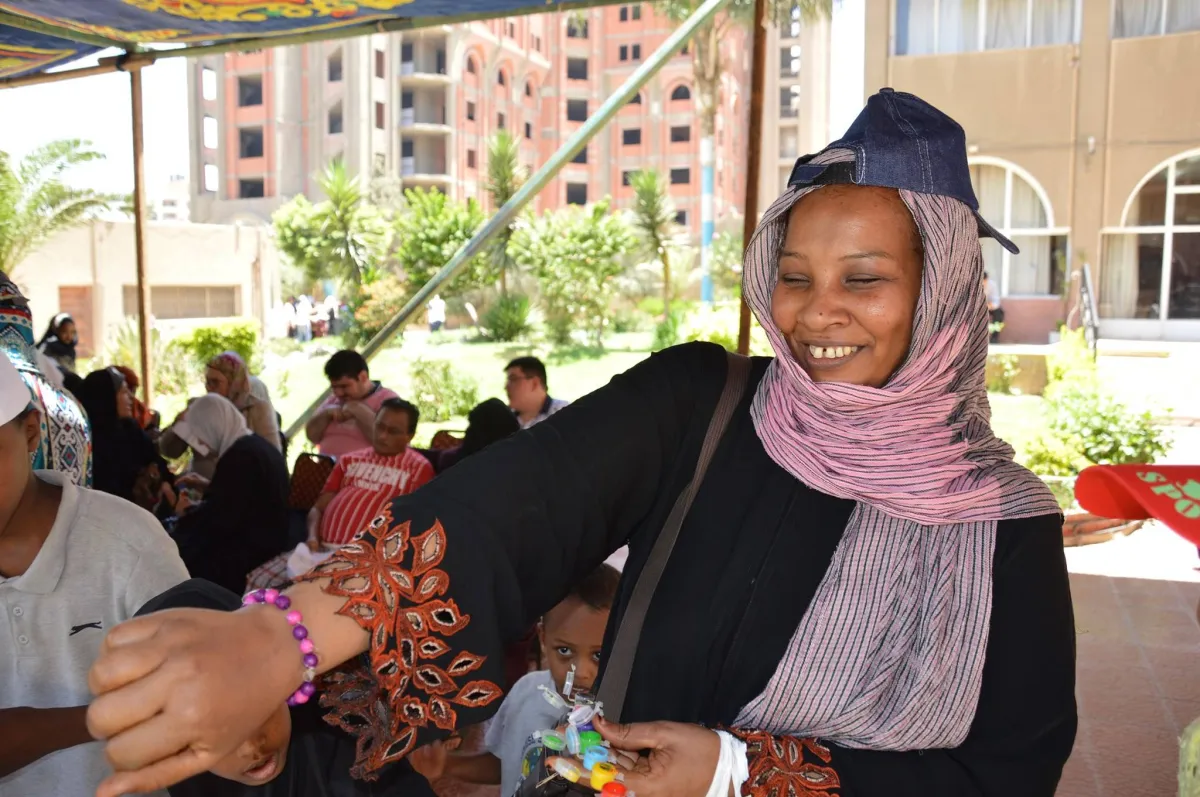
Egypt welcomes over 9 million expatriates and refugees, showcasing their unique Eid al-Adha rituals while preserving their traditions. The diverse foods and social customs among Syrians, Sudanese, Palestinians, and Yemenis reflect a spirit of solidarity and community.
Traditional dishes and various types of meat dominate the celebrations of Eid al-Adha. Expatriates seek a sense of familiarity and social solidarity, especially amidst challenging economic conditions and increasing regional tensions.
Details of the Celebrations
The Sudanese rituals in Egypt begin a week before the Day of Arafah, with the preparation of red henna, a prominent adornment feature. Sudanese sweets are also made, and families start preparing special dishes for the holiday. Nuseiba Said, a Sudanese resident in Giza, mentions that some families buy a sacrificial animal or share one due to economic constraints, while others ensure that meat is distributed among Sudanese families.
For Syrian celebrations, traditional dishes and sweets are abundant, such as mansaf and maamoul. Khaled Mohammed, a young Syrian living in Cairo, states that the first day of Eid begins with visits to family and friends, followed by outings to entertainment venues.
Background & Context
The significance of social visits during Eid al-Adha is particularly evident in the context of war and displacement. Palestinians in Egypt blend Egyptian and Palestinian traditions, striving to maintain their identity through traditional foods and heritage music. Khaled Abu Fahm, a member of the Palestinian Artists Union, emphasizes that Palestinians aim to preserve their traditions and pass them on to new generations.
Yemeni customs also manifest during Eid al-Adha celebrations, with Yemeni families preparing traditional foods and buying new clothes for children. Firdaws Salem, a Yemeni living in Giza, notes that the festive atmosphere enhances solidarity among Yemenis, as the meat from sacrifices is distributed to needy families.
Impact & Consequences
These celebrations contribute to strengthening social bonds among expatriates, helping to alleviate their struggles amid difficult circumstances. The rituals reflect their desire to maintain cultural identity despite the challenges they face in foreign lands.
These celebrations serve as an opportunity to strengthen relationships among diverse communities in Egypt, contributing to social peace and understanding between cultures. The sharing of foods and traditions fosters a sense of belonging and identity.
Regional Significance
These rituals are part of the diverse social fabric in the Arab region, reflecting the challenges faced by refugees and expatriates. These celebrations highlight the importance of solidarity among Arab peoples and reinforce values of cooperation and mutual support.
Ultimately, the Eid al-Adha celebrations in Egypt embody the human spirit, as everyone seeks to share joy and happiness despite the difficult circumstances they endure.