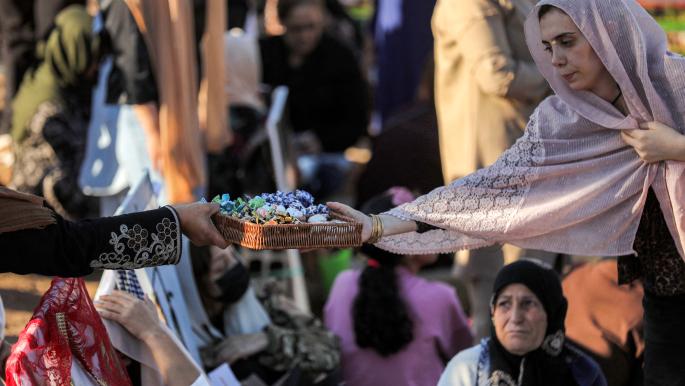
This year, Syrians are celebrating the blessed Eid al-Adha with a spirit of optimism and hope, as shops are noticeably crowded with the approach of the holiday. Despite the difficult economic conditions facing the country, citizens strive to maintain their traditions and customs associated with this religious occasion.
The festive atmosphere is evident in the markets, which are filled with shoppers looking for holiday essentials, including new clothes, sacrificial animals, and sweets. Family visits also play a crucial role in the celebration, as relatives and friends gather to exchange greetings and celebrate together.
Details of the Celebration
The sacrificial offering is one of the most prominent rituals of Eid al-Adha, with many Syrians slaughtering animals and distributing the meat to those in need. Although the prices of sacrificial animals have risen this year, many insist on performing this ritual, reflecting their commitment to traditions and customs.
Reports indicate that markets have seen an increase in demand for meat and food supplies, as citizens seek to meet their celebratory needs. Some families have also reduced their spending in other areas to save money for the holiday celebrations.
Background & Context
Syria has been experiencing difficult economic conditions for years due to ongoing conflict and economic sanctions. Nevertheless, Eid al-Adha represents an opportunity for citizens to express hope and optimism for a better future. Historically, the holiday embodies values of solidarity and sharing among individuals, which Syrians strive to uphold in the current circumstances.
The celebrations of Eid al-Adha in Syria are influenced by various factors, including the security and economic situation. Despite all the challenges, the holiday remains a symbol of hope and renewal in the hearts of Syrians.
Impact & Consequences
The celebration of Eid al-Adha in Syria reflects the people's ability to adapt to difficult circumstances. While citizens face significant economic challenges, they continue to maintain the spirit of the holiday. This has a positive impact on the community, as it strengthens family and social bonds.
These celebrations also represent a powerful message of resilience and defiance, proving that Syrians are capable of facing difficulties while preserving their cultural and religious heritage. This also highlights the importance of the holiday as a means to enhance national identity in the current context.
Regional Significance
Eid al-Adha in Syria is not just a religious occasion; it also reflects the challenges faced by many Arab countries. Many nations are experiencing similar conditions in terms of economic and political crises, making the holiday celebrations a symbol of hope throughout the region.
The ability of Syrians to celebrate Eid al-Adha under these difficult circumstances reflects a spirit of resistance and challenge, which can inspire other peoples in the region to confront their own challenges.
In conclusion, Eid al-Adha in Syria remains a symbol of hope and optimism, as citizens strive to maintain their traditions and customs despite all difficulties. This collective spirit reflects the strength of the Syrian community and its ability to adapt to changing circumstances.