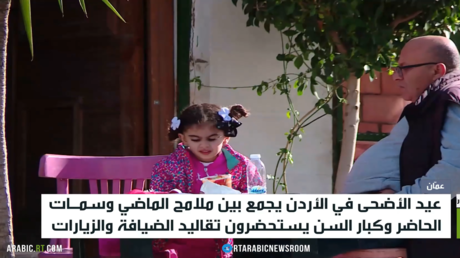
Jordanians celebrate Eid al-Adha, blending past traditions with present celebrations. Despite changes in rituals, the essence of joy and togetherness remains in everyone's hearts.
In Jordanian neighborhoods, the spirit of Eid is manifested through festive atmospheres that fill the streets. People are keen to revive ancestral traditions, such as sacrificing animals and distributing meat to the needy, reflecting values of generosity and sharing.
Event Details
The celebrations of Eid al-Adha begin on the morning of the first day, where people head to mosques to perform the Eid prayer. Homes and streets are adorned with lights and decorations, and traditional dishes like mansaf and cakes are prepared. Children wear new clothes and welcome the holiday with toys and sweets, creating an atmosphere of joy and happiness.
Some rituals have changed over time, as the use of social media has become part of the celebrations, with people exchanging greetings and photos across various platforms. Additionally, some families have started adopting new ways to celebrate, such as organizing cultural and artistic events that bring generations together.
Background & Context
Eid al-Adha is one of the most important Islamic holidays, celebrated on the tenth day of Dhu al-Hijjah. The holiday symbolizes sacrifice and redemption, commemorating the story of the Prophet Ibrahim and his son Ismail. In Jordan, these traditions are deeply rooted in popular culture, passed down through generations.
Historically, Eid represented an opportunity to renew family and social bonds. Over time, some practices have changed, but the core values of the holiday remain intact. Eid continues to symbolize closeness and communication among individuals and communities.
Impact & Consequences
Eid al-Adha significantly impacts social and economic life in Jordan. It enhances family and social ties and promotes values of cooperation and sharing. Additionally, commercial activity increases during the holiday period, as people buy clothing and sacrificial animals, revitalizing local markets.
The sacrificial animals are an essential part of the celebrations, as the act of sacrificing supports needy families. This reflects the spirit of social solidarity that characterizes Jordanian society and reinforces values of giving and sharing.
Regional Significance
Eid al-Adha is not just a local celebration; its impact extends to all Arab countries. Muslims across various nations share this occasion, enhancing cultural and religious ties among them. The celebrations reflect the cultural diversity in the Arab world, with rituals varying from one country to another.
The manifestations of Eid are evident in different Arab countries, where everyone celebrates with their unique traditions. This diversity reflects the richness of Arab culture and fosters understanding and communication among peoples.
In conclusion, Eid al-Adha remains a symbol of sacrifice and love, bringing generations together and strengthening social bonds. Despite changes in some rituals, the essence of the holiday remains present in everyone's hearts, making it a special occasion in the lives of Jordanians and Arabs alike.