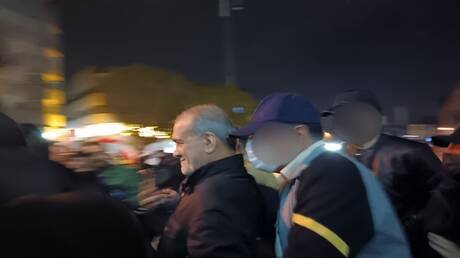
Tehran witnessed large celebrations today marking the foundation of the Islamic Republic, attended by President Masoudi Bezhakian and Foreign Minister Abbas Araghchi. The celebrations were characterized by a wide public turnout, with thousands of citizens gathering in the streets to celebrate this national occasion.
These celebrations come as part of the annual commemoration of the establishment of the Islamic Republic, which represents a historic turning point in Iran following the 1979 Islamic Revolution. Numerous cultural and artistic events were organized, along with military displays that reflect the strength and determination of the Iranian people.
Event Details
The celebrations began with a massive parade in the streets of Tehran, where participants raised Iranian flags and images of historical leaders. Musical and artistic performances reflecting Iranian cultural heritage were also organized. President Bezhakian delivered a speech to the attendees, emphasizing the importance of national unity and the role of the Islamic Republic in enhancing independence and national sovereignty.
Foreign Minister Abbas Araghchi also highlighted the significance of this occasion in strengthening Iranian national identity, pointing to the challenges the country faces under current regional and international circumstances. He noted that the Islamic Republic has managed to withstand numerous pressures and achieve successes on various fronts.
Background & Context
The Islamic Republic was established in Iran following the success of the 1979 Islamic Revolution, led by Imam Khomeini. This revolution was the result of years of tyranny and corruption, where the Iranian people succeeded in overthrowing the Shah's regime. Since then, the Islamic Republic has become a symbol of resistance against Western powers and foreign interventions in the region.
Over the years, Iran has faced numerous challenges, including economic sanctions and international isolation. However, the Iranian government has managed to maintain stability in the country and develop its military and economic capabilities. Iran has become a key player in the region, striving to enhance its influence in the Middle East.
Impact & Consequences
The celebrations of the foundation of the Islamic Republic serve as a powerful message to the world, reflecting the Iranian people's will to preserve their national identity and independence. These events contribute to enhancing national spirit and reflect the solidarity between the government and the people, which helps strengthen internal stability.
Moreover, these celebrations come at a sensitive time for the region, where many Arab countries are facing political and economic challenges. Strengthening national identity in Iran may influence neighboring countries, potentially serving as a model for confronting external pressures.
Regional Significance
The Islamic Republic of Iran is considered one of the main powers in the region, exerting significant influence over many Arab countries. Today's celebrations reflect Iran's strength and determination to face challenges, which may affect relations between Iran and Arab states.
In light of the existing tensions in the region, these celebrations may present an opportunity to reassess relations between Iran and Arab countries, potentially contributing to enhancing dialogue and understanding among different parties. Additionally, the reinforcement of national identity in Iran may encourage some Arab nations to strengthen their own national identities in the face of challenges.
In conclusion, the celebrations of the foundation of the Islamic Republic in Tehran reflect a long history of struggle and challenges, emphasizing the importance of national unity in facing adversities. These events are not merely celebrations but an expression of the Iranian people's will to maintain their identity and independence in the face of external pressures.