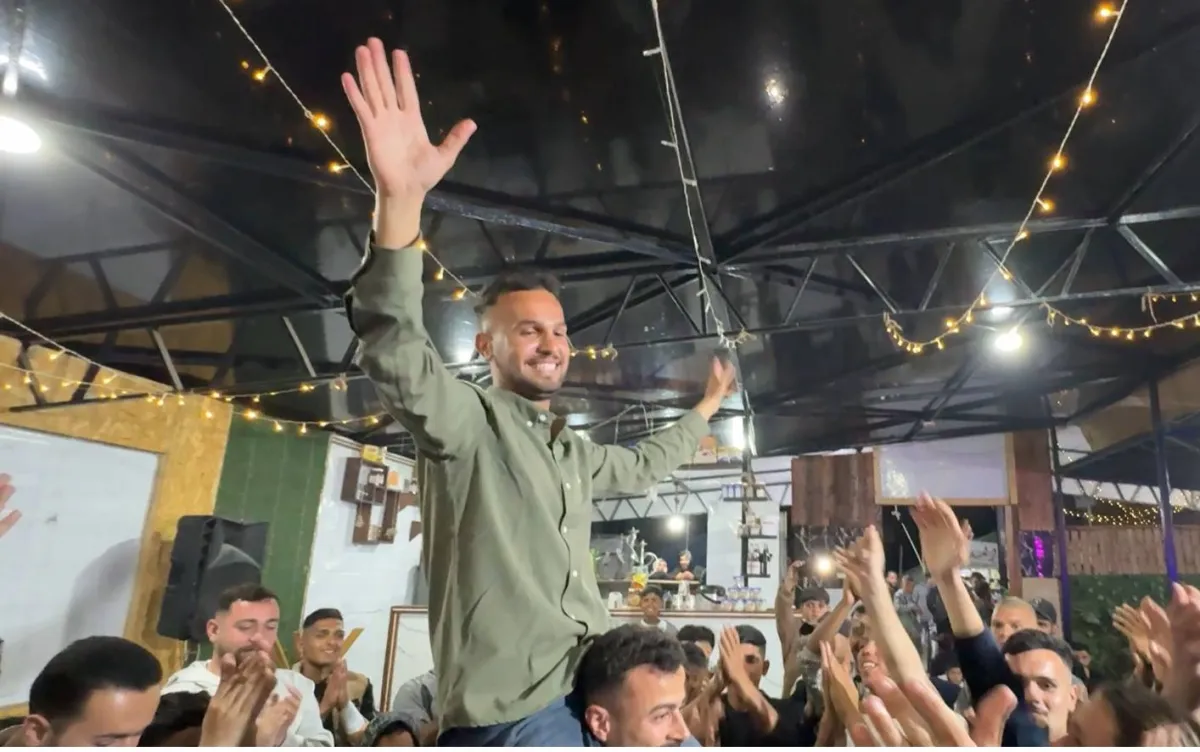
Despite the ongoing Israeli violations after the announcement of a ceasefire agreement in Gaza, residents of the enclave have expressed their joy through celebratory ululations, cutting through the sound of aircraft and bombings. These moments reflect the Palestinians' desire to live amidst pain.
Since last October, Israeli violations have not ceased, and the number of casualties has risen, but the people of Gaza, who have suffered near-total destruction, did not hesitate to celebrate. In Khan Younis, the Beach Camp, and Shuja'iyya, public celebrations were held in the presence of relatives and neighbors, a scene that has been missing from the enclave for two years of war.
Details of the Celebrations
Alia Moussa, a thirty-three-year-old woman who lost her husband in an Israeli airstrike, got married last April. She says, "I settled for a symbolic dowry of no more than 1500 Jordanian dinars, as the matter is no longer significant under these difficult circumstances." Alia held a limited wedding amidst the tents of displaced persons, indicating that "the war has not stopped, but we seek joy despite the pain."
Young Abdullah Farhat, who has suffered from difficult economic conditions, married a young woman who lost her husband at the beginning of the war. Farhat confirmed that he did not care about social criticism and held his wedding in a shelter center at the Beach Camp, stating, "The war imposed a new reality on us."
Background & Context
Israel has imposed strict restrictions and a suffocating blockade on Gaza since the 1990s, tightening them after Hamas took control of the enclave 19 years ago. Unemployment rates have soared from 29.7% in 2007 to 45% in 2023, exacerbating the suffering of the population.
Ayman Mohsen, from the Shuja'iyya neighborhood, held his wedding in a wedding hall despite financial challenges. He paid 4000 shekels (approximately $1300) to host a celebration for friends and relatives, saying, "I lost my brother during the war, but we seek joy amidst difficulties."
Impact & Consequences
These celebrations indicate the Palestinians' ability to adapt to difficult circumstances and their desire to live despite the pain. As wedding gatherings gradually return, some wedding halls have begun to welcome clients, reflecting hope for the restoration of normal life.
However, challenges remain, as many wedding halls were destroyed during the war, making it more difficult to hold weddings. The high costs of rent and services make it challenging for many to organize their celebrations.
Regional Significance
This phenomenon expresses the resilience of the Palestinian people in the face of challenges and highlights the importance of joy in people's lives even in the toughest circumstances. These events also reflect the need for international support for Palestinians in rebuilding their lives.
In conclusion, the ululations of joy in Gaza remain a symbol of hope and will, as residents strive to overcome pain and seek joy amidst the destruction.