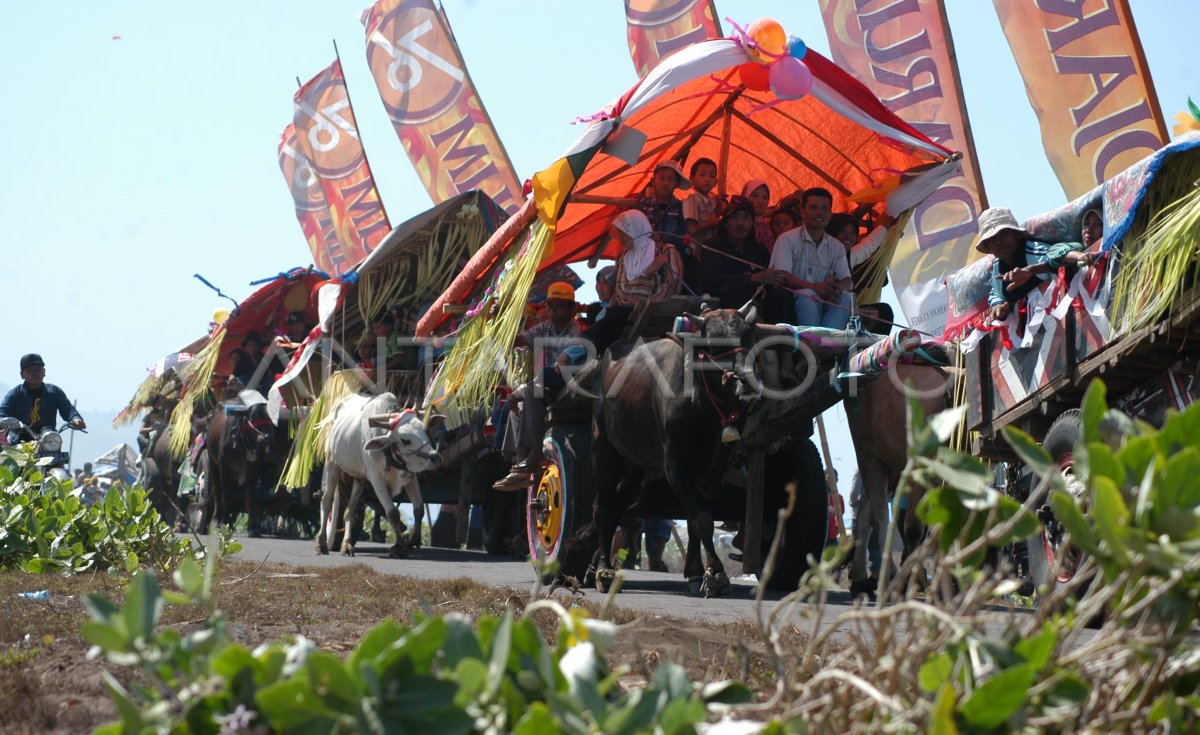
The town of Jember in Indonesia is one of the regions that preserves its rich cultural traditions, hosting the 'Bigon' festival annually after Eid al-Fitr. The 'Bigon' is a traditional mode of transport consisting of a wooden cart pulled by a pair of oxen, which was used in the 19th century to transport agricultural produce from coastal areas.
Despite a significant decline in the number of carts since the 19th century, 'Bigon' still holds a special place in the hearts of the local residents, symbolizing the local culture, particularly in the Ambulu area of Jember Regency.
Event Details
The 'Bigon' festival takes place seven days after Eid al-Fitr, coinciding with the 'Eid al-Kutub' celebrations, where participants travel from the Sumberjoglo municipality to Watu Ulo beach. During this event, participants carry traditional foods such as 'kutub' and vegetables, enjoying communal meals on the beach, which strengthens social bonds within the community.
This festival is more than just a celebration; it is an expression of cultural pride and local identity, as the residents of Ambulu demonstrate their commitment to preserving their cultural heritage. Fahrul Asrawi, the acting head of Ambulu municipality, states that this event symbolizes the cultural richness that must be preserved.
Background & Context
Historically, 'Bigon' was the primary means of transport for residents of the coastal areas in Jember, used for transporting agricultural produce and other materials. Over time, as transportation methods evolved, its daily use declined, but maintaining it as part of cultural heritage has become essential.
The 'Bigon' festival began in 1989, first organized on the seventh day after Eid al-Fitr, becoming an annual tradition that combines cultural pride with community celebration.
Impact & Consequences
The 'Bigon' festival represents an opportunity to enhance cultural awareness among the younger generations, encouraging youth to participate in traditional activities and learn about their heritage. This event also contributes to boosting local tourism, attracting visitors from various regions to enjoy the cultural traditions.
The festival illustrates how ancient traditions can adapt to modern times, as 'Bigon' is still used in daily life by farmers to transport fertilizers and crops, highlighting the importance of preserving cultural heritage amidst rapid changes in the world.
Regional Significance
Although the 'Bigon' festival is held in Indonesia, it carries significant implications for Arab countries, demonstrating how different cultures can maintain their traditions in the age of globalization. It also emphasizes the importance of preserving cultural identity in the face of modern challenges.
In conclusion, the 'Bigon' festival serves as a model for how to celebrate cultural heritage, enhancing social ties and contributing to pride in cultural identity.