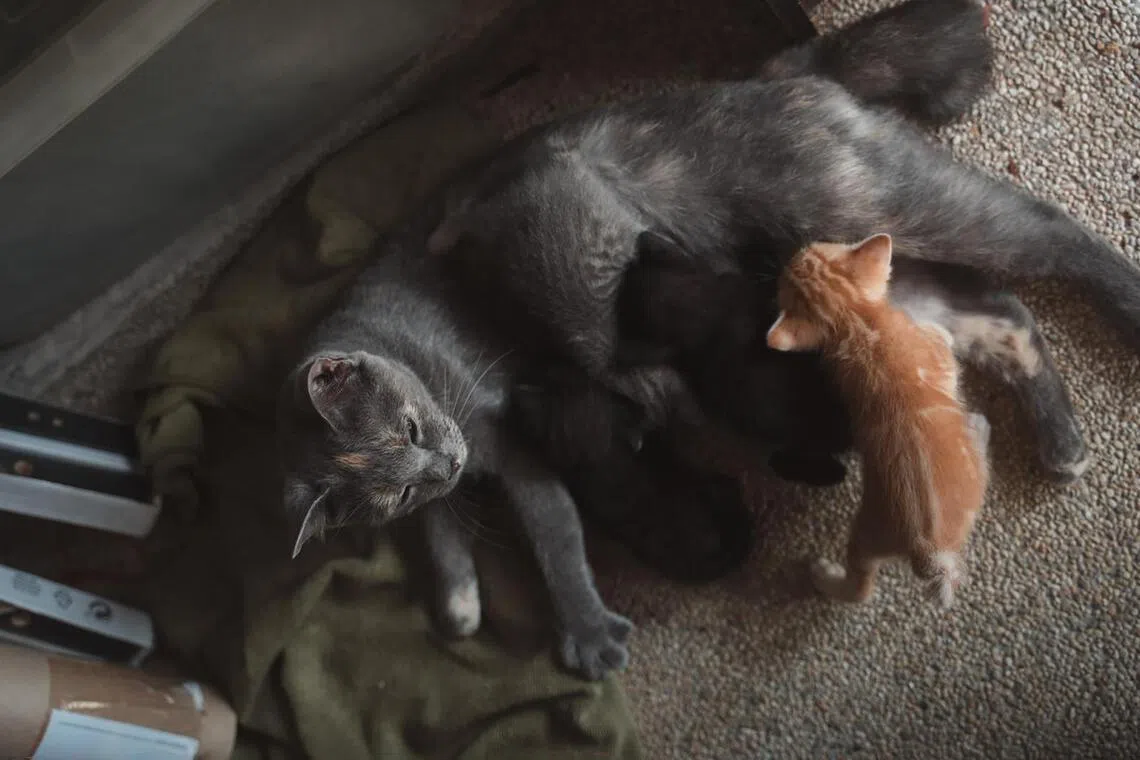
Recent studies indicate that motherhood in the animal kingdom is not merely an easy responsibility; it demands attention and perseverance. Cats play a crucial role in illustrating how mothers in the animal kingdom confront significant challenges in caring for their offspring.
Cats are among the animals that display complex behaviors in nurturing their young, as they take care of feeding, protecting, and teaching them how to survive. These behaviors reflect the deep bond between mother and offspring, demonstrating that motherhood requires substantial emotional and physical commitment.
Understanding Maternal Behaviors
Research shows that despite their independence, cats exhibit strong maternal behaviors, dedicating considerable time to caring for their young and meeting their needs. This behavior extends to many other animal species, highlighting the importance of motherhood in the animal world.
These maternal behaviors include closely monitoring the young, ensuring their safety, and teaching them how to hunt and interact with their surroundings. Such efforts indicate that motherhood requires a high level of attention and perseverance, which poses a significant challenge in the animal kingdom.
Background & Context
Historically, motherhood has been a fascinating subject in biological and behavioral studies. Research has shown that many animal species exhibit advanced maternal behaviors, suggesting that these behaviors may be part of evolutionary development. Motherhood is a critical factor in the survival of species, as mothers contribute to teaching their young how to survive and adapt to their environment.
Understanding these maternal behaviors can provide insights into the evolutionary pressures that shape species and their survival strategies. The nurturing role of mothers is essential not only for the immediate survival of their young but also for the long-term continuity of species.
Impact & Consequences
This research underscores the significance of motherhood in maintaining species and their continuity, as mothers play a vital role in teaching their young the necessary skills for survival. This indicates that motherhood is not just a responsibility but a vital process that impacts the future of species.
By recognizing the challenges faced by mothers in the animal kingdom, we can better appreciate the intricate dynamics of survival and adaptation. The lessons learned from these studies can inform conservation efforts aimed at protecting endangered species and their habitats.
Regional Significance
In the Arab region, studying maternal behaviors in animals enhances our understanding of biodiversity and conservation efforts. These studies contribute to the broader knowledge of how species interact with their environments and the importance of preserving their natural habitats.
Ultimately, the insights gained from understanding animal motherhood can aid in the conservation of threatened species, ensuring that future generations can thrive in their natural ecosystems.