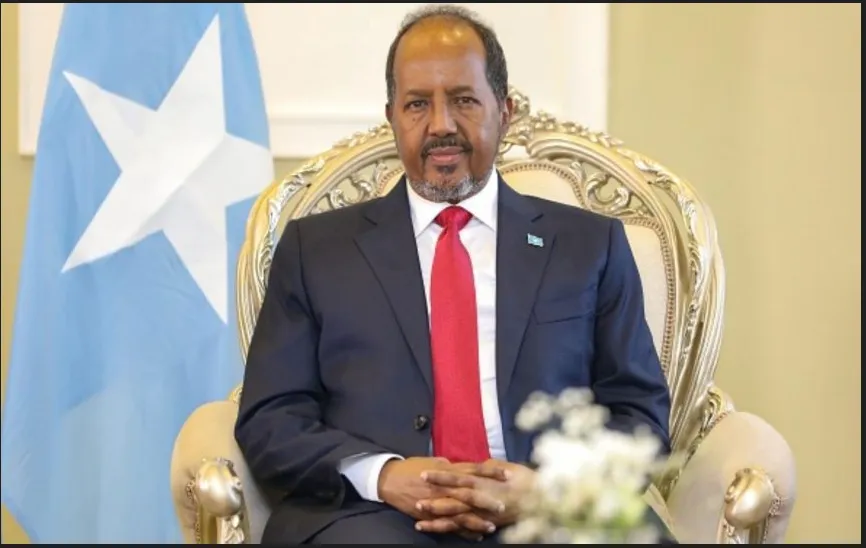
Over the past four days, Southwest Somalia has experienced critical political developments, as the region's president, Abdulaziz Laftagareen, resigned after seven years in power. This move reflects the escalating disputes between the federal government in Mogadishu and the regional administration. These events open the door to questions about the potential for this model to be replicated in other rebellious regions such as Galmudug and Puntland.
This change is a dual test for federal authority, as the government seeks to assert its control over regions that resist its power. An expert in African affairs noted that this shift is not necessarily replicable in other states due to differences in political and security dynamics.
Details of the Event
The federal government announced full control over Baidoa, the temporary capital of Southwest Somalia, stating that this step was taken in response to the will of the people. However, the government's efforts to resolve issues in the region faced opposition from the previous administration. In a related context, Laftagareen announced his resignation after the government deemed the elections he conducted as illegal.
Following his resignation, Ahmed Mohamed Hussein, the Minister of Finance in his government, was appointed as the acting head of the regional administration. This change has raised concerns in the region, as the new administration expressed fears over the federal government's use of military equipment provided by Turkey.
Background & Context
The roots of the disputes between the federal government and the states of Southwest Somalia, Galmudug, and Puntland stem from constitutional and power-related issues. The latter states reject certain provisions of the new constitution, complicating relations between the central government and the regions. In this context, the Somaliland separatist region is considered a special case, enjoying greater autonomy.
Expert Abdulwali Jama Bari pointed out that the ousting of Laftagareen represents a significant shift in the balance of power, but it does not constitute a long-term strategic resolution. Current political crises may lead to escalated confrontations or perhaps push for renegotiation of the federal system.
Impact & Consequences
Several potential scenarios could unfold regarding the future of federal disputes in Somalia. The first scenario is gradual escalation, which could lead to limited military confrontations. The second scenario involves renegotiating the federal system, which is the most realistic if an agreement is reached on the electoral process and the powers of the center and the states.
The third scenario suggests a possibility of worsening political crises, potentially leading to a comprehensive political system crisis rather than just a single state crisis. This situation requires the federal government to take urgent steps to address disputes and achieve comprehensive national agreements.
Regional Significance
The events in Somalia hold particular importance for the Arab region, reflecting the challenges faced by countries in building stable political systems. Additionally, internal conflicts in Somalia could impact regional security, necessitating greater international attention.
In conclusion, the future of Somalia hangs in the balance, dependent on the federal government's ability to address disputes with rebellious states and achieve political stability that ensures national unity and enhances the prospects for free and fair elections.