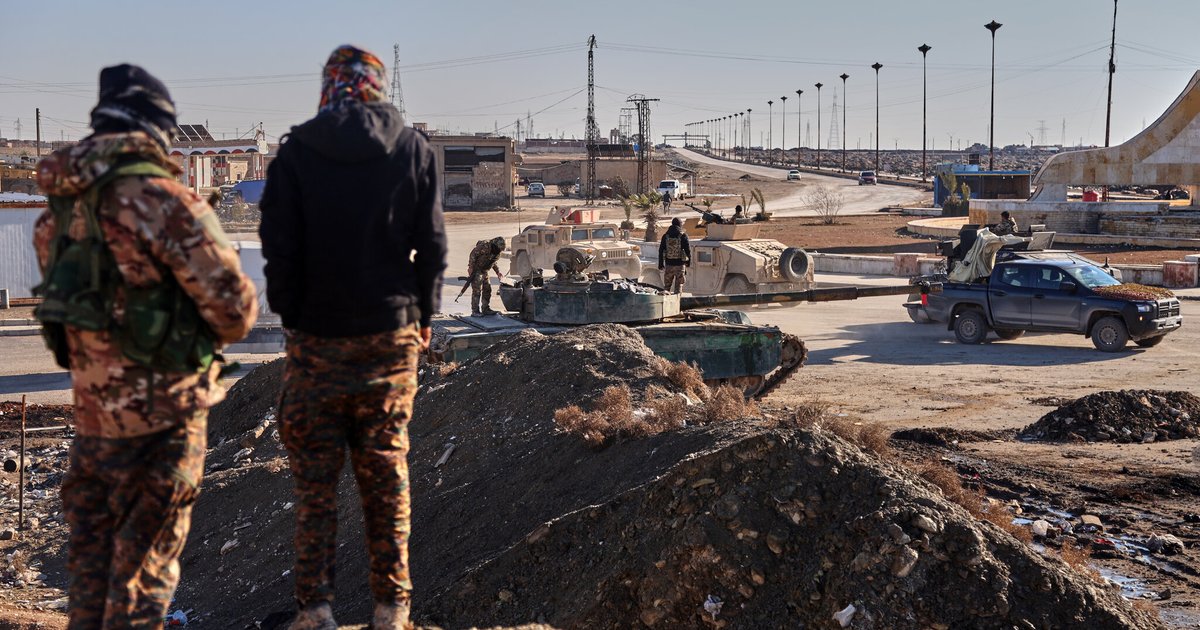
Recent clashes between Syrian government forces and the Syrian Democratic Forces (SDF) have led to chaos in prisons holding members of the Islamic State (ISIS), resulting in mass escapes and transfers of detainees, including German nationals.
These events mark a serious development in the ongoing conflict in Syria, where SDF-run prisons have held numerous ISIS members for years, raising questions about the fate of these detainees, especially with increasing fears of the group's resurgence in the area.
Details of the Incident
Recently, prisons holding ISIS members in northeastern Syria have experienced significant disorder, as clashes between government forces and the SDF have led to mass escape operations. Reports indicate that some detainees were transferred to Iraq, while others managed to escape within Syrian territory. This chaos comes at a sensitive time, as the SDF had previously asserted its ability to secure the prisons and maintain control over them.
Reports also include information about the number of German detainees held in these prisons, with some believed to have escaped. This situation raises significant concerns in Germany, where fears are growing about the potential return of these individuals to the country, which could threaten domestic security.
Background & Context
Since the emergence of ISIS in 2014, the region has witnessed complex conflicts, with many members of the group arrested in Syria and Iraq. Following the defeat of ISIS in several areas, thousands of fighters were detained in prisons managed by the SDF, which is considered a key ally of the United States in the fight against terrorism. However, the security situation in the region remains fragile, making these prisons vulnerable to breaches.
Historically, the SDF has faced significant challenges in managing these prisons, having been pressured by the international community to ensure that these individuals do not return to terrorist activities. As the conflict between the SDF and Damascus escalates, the situation appears to have become more complicated.
Impact & Consequences
Prison escapes serve as a serious warning to local and international authorities, as they may lead to a resurgence of ISIS activity in the region. Furthermore, these events could bolster the group's position, providing it with an opportunity to reorganize and regain some of its former strength.
On an international level, these events may affect relations between the involved countries, particularly between Germany and those holding ISIS members. There are concerns that these individuals may return to their home countries, potentially raising new security issues related to terrorism.
Regional Significance
The repercussions of these events extend beyond Syria, as they could impact stability across the entire region. The return of ISIS members to activity could lead to an escalation of violence in neighboring countries, threatening regional security.
Moreover, the situation in Syria remains a significant concern for Arab countries, as events there exemplify the complex conflicts facing the region. It is crucial for Arab nations to collaborate in addressing the security challenges arising from these events.
In conclusion, attention remains focused on the developments in Syria, where international and local efforts are required to ensure that ISIS does not return to activity and to protect regional and international security.