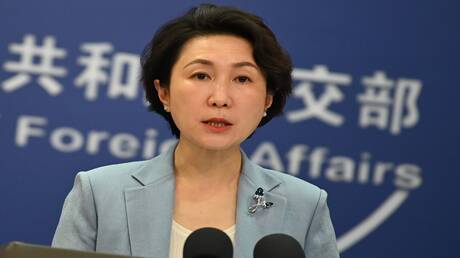
The Chinese Foreign Ministry spokesperson, Mao Ning, accused the United States of undermining the neutral status of the Panama Canal through unilateral coercion practices. She asserted that these accusations are intended to obscure Washington's dominant nature.
Mao Ning's remarks came in response to American criticisms regarding China's role in the region, where she considered these criticisms to reflect the United States' desire to impose its hegemony over other nations, including Panama.
Details of the Incident
The Panama Canal is regarded as one of the most important waterways in the world, connecting the Atlantic and Pacific Oceans, and plays a vital role in global trade. In recent years, the canal has witnessed increasing tensions between major powers, particularly between the United States and China, as Beijing seeks to enhance its influence in Latin America.
In this context, Mao Ning confirmed that the United States employs intimidation and coercion tactics to compel countries to adopt positions that align with its interests, thereby threatening the neutrality that the Panama Canal should enjoy. She pointed out that this behavior contradicts the principles of international law.
Background & Context
The Panama Canal was established in the early 20th century and was under American control until 1999, when it was handed over to Panama. Since then, the canal has become a symbol of national sovereignty, but international tensions surrounding it have not ceased. In recent years, Chinese investments in Panama have increased, raising concerns in Washington.
Historically, the United States has considered the Latin American region within its sphere of influence, but China's economic rise and expansion in the area have altered this landscape. Beijing aims to strengthen its trade and political relations with Latin American countries, increasing competition with the United States.
Impact & Consequences
These tensions could lead to significant changes in international relations, as Panama may move to strengthen its ties with China at the expense of the United States. This could negatively impact American interests in the region and increase Washington's isolation.
Furthermore, these developments could escalate tensions between major powers, potentially affecting regional and international stability. Any change in control over the Panama Canal could impact global trade flows, reflecting on the global economy.
Regional Significance
The relationships between major powers and their influence on smaller nations are also crucial issues for Arab countries. The tensions between the United States and China may open opportunities for Arab nations to strengthen their ties with Beijing, particularly in investment and trade.
Additionally, China's increasing influence in Latin America could encourage Arab nations to seek new partnerships with Beijing, potentially leading to changes in traditional alliances in the region.
In conclusion, the issue of the Panama Canal remains an example of how international tensions affect smaller nations and how the balance of power in the world can shift.