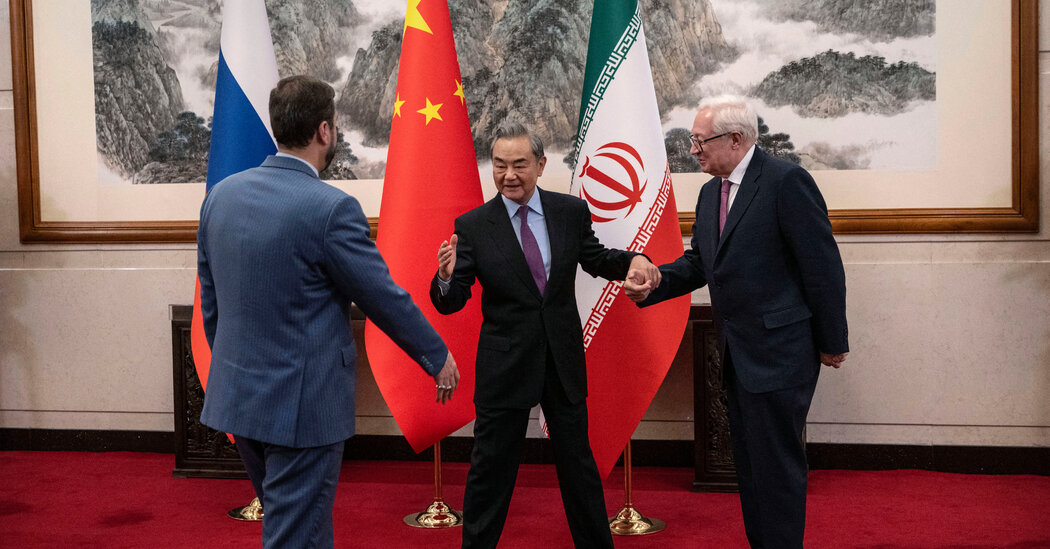
China anticipates that the ongoing war on Iran will accelerate the decline of the United States, providing Beijing with a strategic opportunity to enhance its economic and political influence. According to The Economist, China is observing the situation with satisfaction, relying on long-term strategies.
In its analysis of the war waged by the United States in collaboration with Israel against Iran, China draws inspiration from Napoleon Bonaparte's famous saying, "Never interrupt your enemy when he is making a mistake." Beijing bets that this war will hasten the pace of American decline, granting it a significant strategic opportunity.
Details of the Event
The British magazine considers the war on Iran, aimed at weakening a regional adversary and ending its nuclear ambitions, to be a potential historical mistake made by Washington. A month into the war, estimates in Beijing suggest that the United States may be in a position of weakness, as China watches the situation with ease.
The magazine confirms that China has not felt disoriented; rather, it is calmly monitoring events. This perspective is based on the strategies of Chinese President Xi Jinping, who has faced criticism for focusing on national security and self-reliance.
Background & Context
As navigation in the Strait of Hormuz falters, President Xi's proactive decisions to stockpile crude oil, with reserves reaching 1.3 billion barrels, and the rapid diversification of energy sources have proven to be a long-term vision. While the West pays the price of "recklessness" through rising energy costs, China is providing itself with a buffer through facilities for Iranian oil trade.
President Xi is working to build an alternative and independent system, fortified against shocks that may arise from the United States using the financial and military system as a weapon. Chinese experts view American military intervention in Iran as a display of confusion and a decline in power, reflecting a lack of a "day after" plan.
Impact & Consequences
Beijing expects that the Iranian crisis will drain American resources, affecting the United States' ability to exert influence in the South China Sea or fulfill its commitments to Taiwan. Furthermore, Asian allies dependent on the United States may suffer collateral economic damage, making them more cautious about angering China.
China hopes that the end of the war on Iran will bring new opportunities, as it anticipates winning lucrative reconstruction contracts in the Gulf region. Additionally, countries affected by the blockade of the Strait of Hormuz are expected to turn towards Chinese green energy technology, enhancing Beijing's position as a major provider of global energy security.
Regional Significance
The war on Iran is considered a pivotal event in the region, as it may lead to radical changes in political and economic alliances. China's strategies to enhance its influence could affect relations between Arab states and the United States, necessitating a reevaluation of political and economic stances.
In conclusion, forecasts suggest that the war on Iran may indeed change the world, but not in the way Washington intended. As the United States adjusts to the state of turmoil, China remains cautious, reflecting the challenges it faces in a changing global order.